
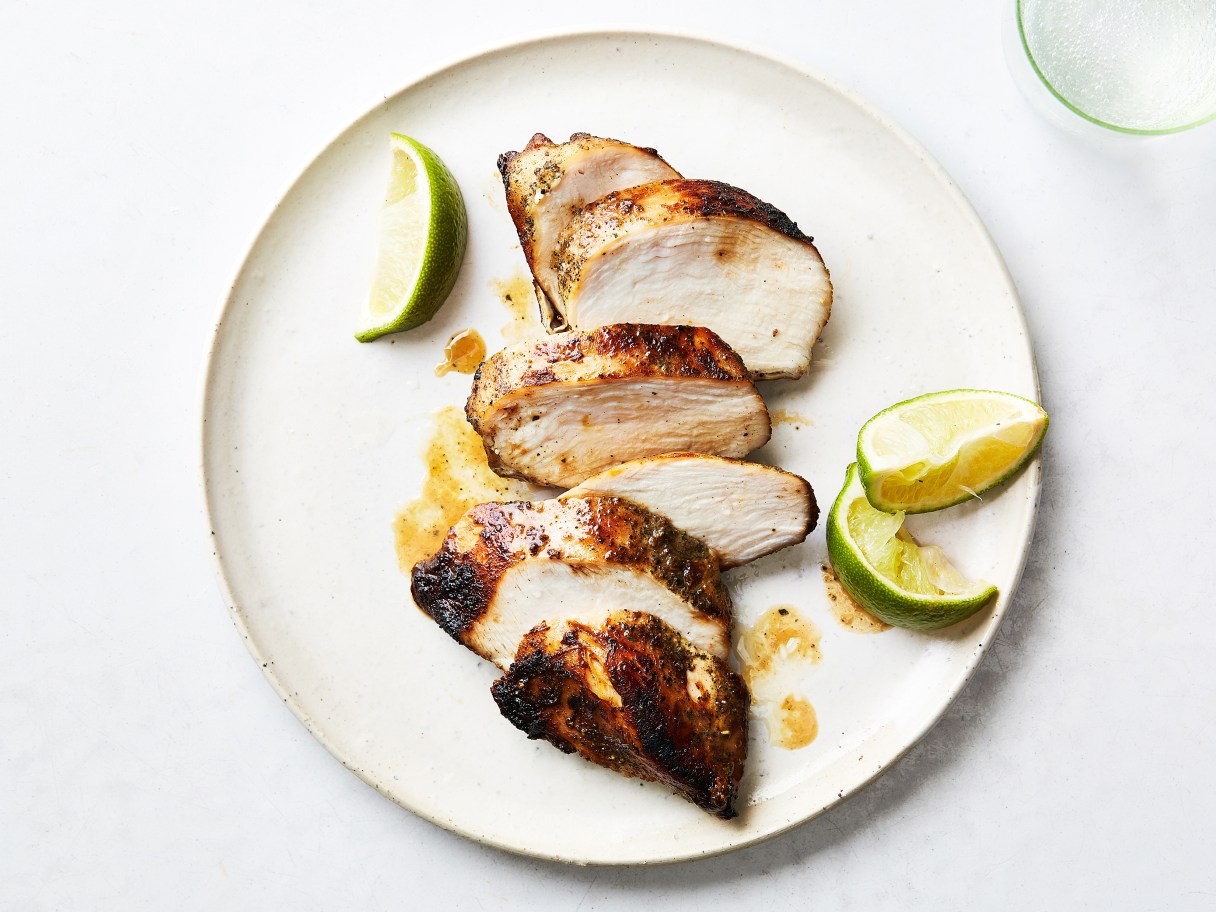
In the 1723 cookery book “The Cooks and Confectioners Dictionary,” author John Nott shares a recipe for chicken breasts, in which the skins get lifted and stuffed with grated bacon, anchovies and herbs. According to the Oxford English Dictionary, it’s one of the first written accounts of the noun cluster “chicken breasts” in the English language. It’s also a great way to cook white meat so that it doesn’t dry out.
One major design flaw of the chicken breast is that its thickness varies significantly from end to end. This makes for vexingly uneven cooking – especially when the meat comes boneless and skinless. By the time the wide, bulbous side has cooked through, the lither, tapered side (not to mention the outer edges of the entire breast) has gone stringy, practically desiccated.
But here’s the thing: You don’t have to accept that ugly lopsidedness. Take control of your life – and your chicken.
The trick to keeping breast meat tender and juicy is to alter its anatomy completely. There are a few key ways to do this. The easiest is to carve the breast in half crosswise where the thicker end meets the thinner end. This way you can pull the thinner pieces off the heat earlier, allowing the thicker ones to finish cooking for another minute or two.
Another method is to ensure the meat retains its natural moisture. What makes a chicken breast juicy is water, not fat (after all, white meat is very lean). A simple dry brine – a mixture of salt, sugar and spices – provides that bit of insurance. It’s the salt that’s most crucial, as it draws out the meat’s water. That water then dissolves the salt on the surface of the meat and, through diffusion, the two re-enter the meat, seasoning the chicken thoroughly.