
WASHINGTON (AP) – It has become something of a ritual for U.S. presidents trying to demonstrate their resolve against North Korea’s ever-escalating aggression.
Beginning with Dwight Eisenhower’s visit to the front lines of wartime Korea, U.S. leaders have traveled to the barbed and mined demilitarized zone dividing the Korean Peninsula, peering across the barren north through binoculars, hearing broadcast propaganda, and reaffirming their commitment to standing with the South.
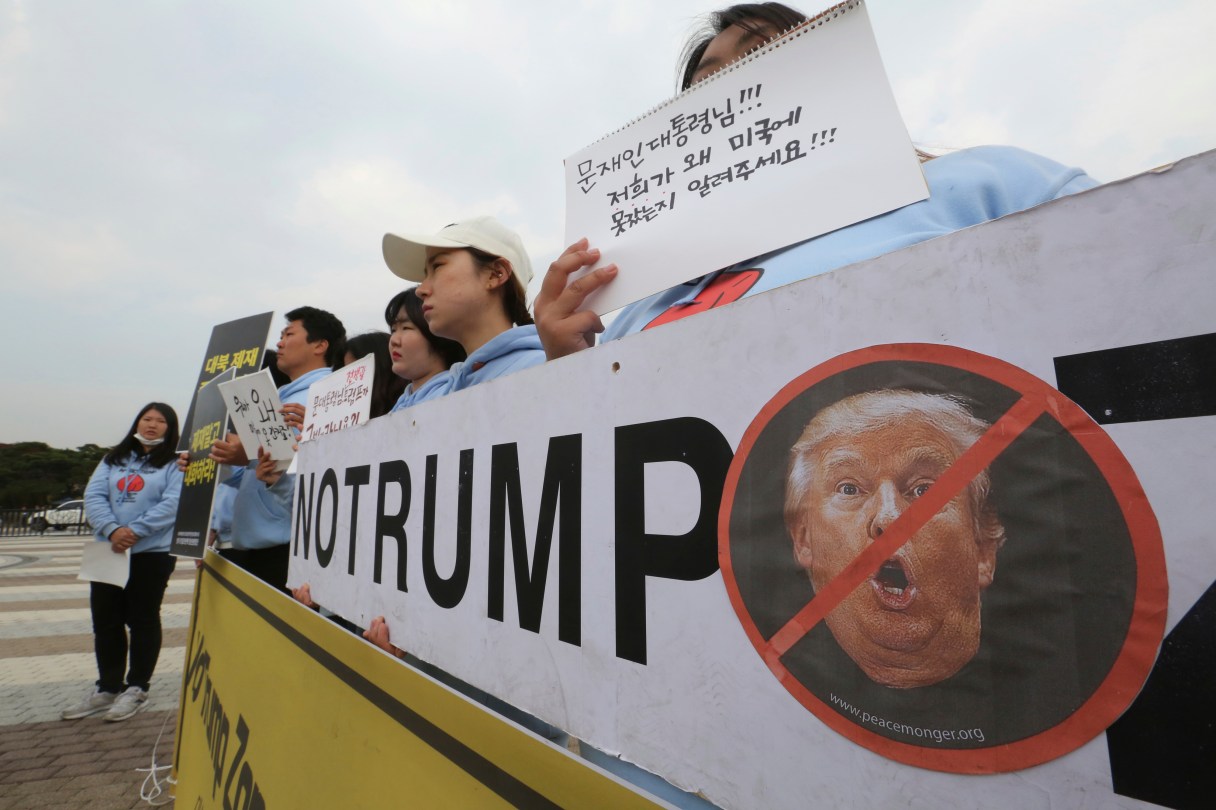
After leaving the possibility of the visit dangling, the White House announced definitively Tuesday that President Donald Trump would not be following in their footsteps and will be forgoing a visit to the DMZ as he sets out on his maiden Asia trip.
A senior administration official told reporters during a White House briefing that Trump will instead be visiting Camp Humphreys, a military base about 40 miles south of Seoul, to highlight the U.S.-South Korean partnership and South Korea’s burden-sharing. His tight schedule, officials said, wouldn’t accommodate both stops.
The official, who spoke on condition of anonymity to provide details ahead of the trip, noted that several Trump administration officials, including Defense Secretary Jim Mattis, Secretary of State Rex Tillerson and Vice President Mike Pence, had already made the trip to the border that has separated the North and South for 64 years.