
Tuesday, November 10, 2026Nov 10

Ancient Greek tomb dig finds marble statues

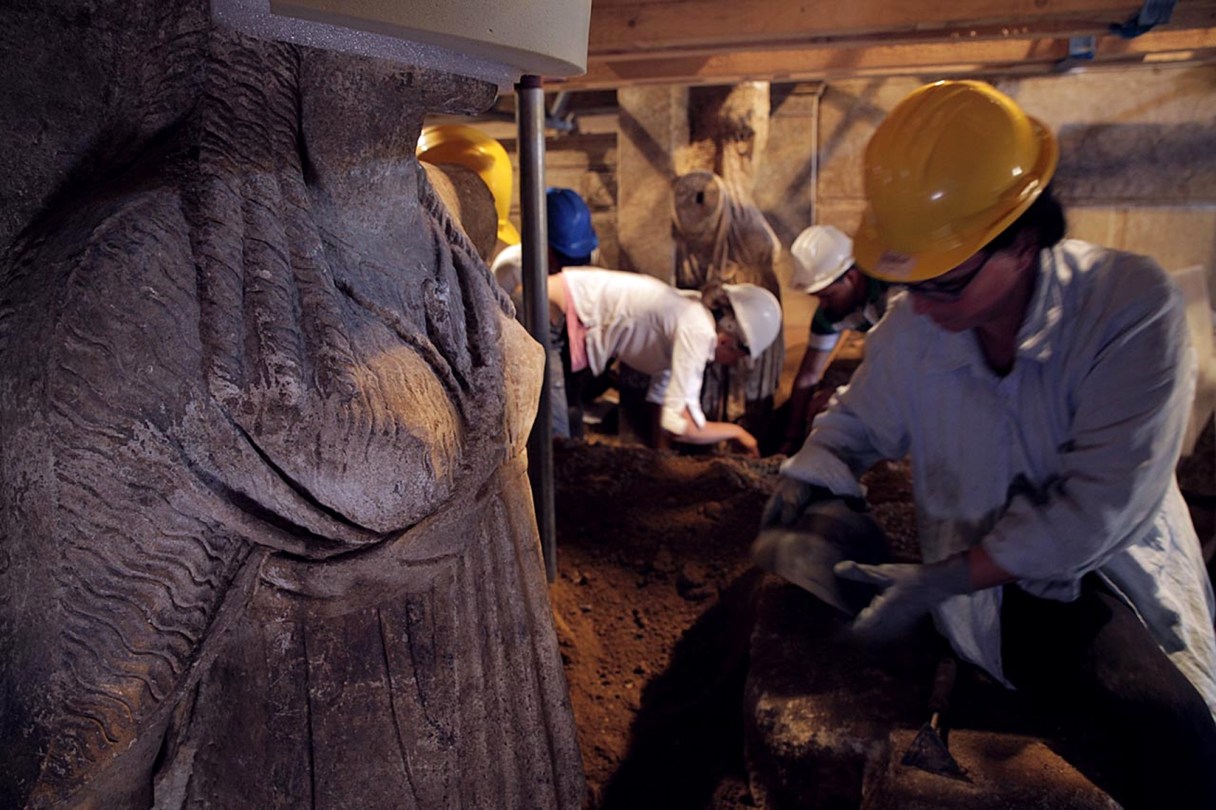
In this photo released on Thursday, Sept. 11, 2014 by the Greek Culture Ministry, excavation staff work between two approximately life-sized female statues on a wall leading to a yet unexplored inner room of a huge underground ancient tomb, in Amphipolis, northern Greece. The tomb dates between 325 B.C. — two years before the death of ancient Greek warrior-king Alexander the Great — and 300 B.C. Archaeologists have also discovered two large marble sphinxes on the facade of the barrel-vaulted tomb, which was originally topped by a marble lion on a high plinth. It is not yet  known who the tomb was built for, although Alexander himself was buried in Egypt. (AP Photo/Culture Ministry)
In this photo released on Thursday, Sept. 11, 2014 by the Greek Culture Ministry, excavation staff work between two approximately life-sized female statues on a wall leading to a yet unexplored inner room of a huge underground ancient tomb, in Amphipolis, northern Greece. The tomb dates between 325 B.C. — two years before the death of ancient Greek warrior-king Alexander the Great — and 300 B.C. Archaeologists have also discovered two large marble sphinxes on the facade of the barrel-vaulted tomb, which was originally topped by a marble lion on a high plinth. It is not yet known who the tomb was built for, although Alexander himself was buried in Egypt. (AP Photo/Culture Ministry) In this photo released on Thursday, Sept. 11, 2014 by the Greek Culture Ministry, excavation staff work between two approximately life-sized female statues on a wall leading to a yet unexplored inner room of a huge underground ancient tomb, in Amphipolis, northern Greece. The tomb dates between 325 B.C. — two years before the death of ancient Greek warrior-king Alexander the Great — and 300 B.C. Archaeologists have also discovered two large marble sphinxes on the facade of the barrel-vaulted tomb, which was originally topped by a marble lion on a high plinth. It is not yet known who the tomb was built for, although Alexander himself was buried in Egypt. (AP Photo/Culture Ministry)

ATHENS, Greece (AP) – Archaeologists inching through a large 2,300-year-old tomb in northern Greece on Thursday uncovered two marble female statues flanking the entrance to one of three underground chambers, in another sign of the unusual attention and expense lavished on the unknown person buried there.

The dig has gripped the public imagination amid non-stop media coverage, which Greek archaeologists say is placing an unfair burden on the excavation team.

A Culture Ministry statement said the statues show “exceptional artistic quality.” Their upper sections were discovered last week, but their bodies – clad in semi-transparent robes – emerged after part of a blocking wall was removed.

Less than half the tomb, which bears signs of having been plundered in antiquity, has been explored, and removing the tons of earth that fill it will take weeks. Although no burials have been found so far, the opulence points to some senior official linked with ancient Greek warrior-king Alexander the Great.

The barrel-vaulted tomb is among the biggest of its period in antiquities-rich Greece. Excavator Katerina Peristeri believes the mound was originally topped by a stone lion on a large plinth, found a few kilometers away 100 years ago, that was probably removed during Roman times. She has also voiced strong hopes that the site hasn’t been looted.