
Thursday, October 29, 2026Oct 29

This story is free to read.

US warship clash site known for congested nighttime traffic

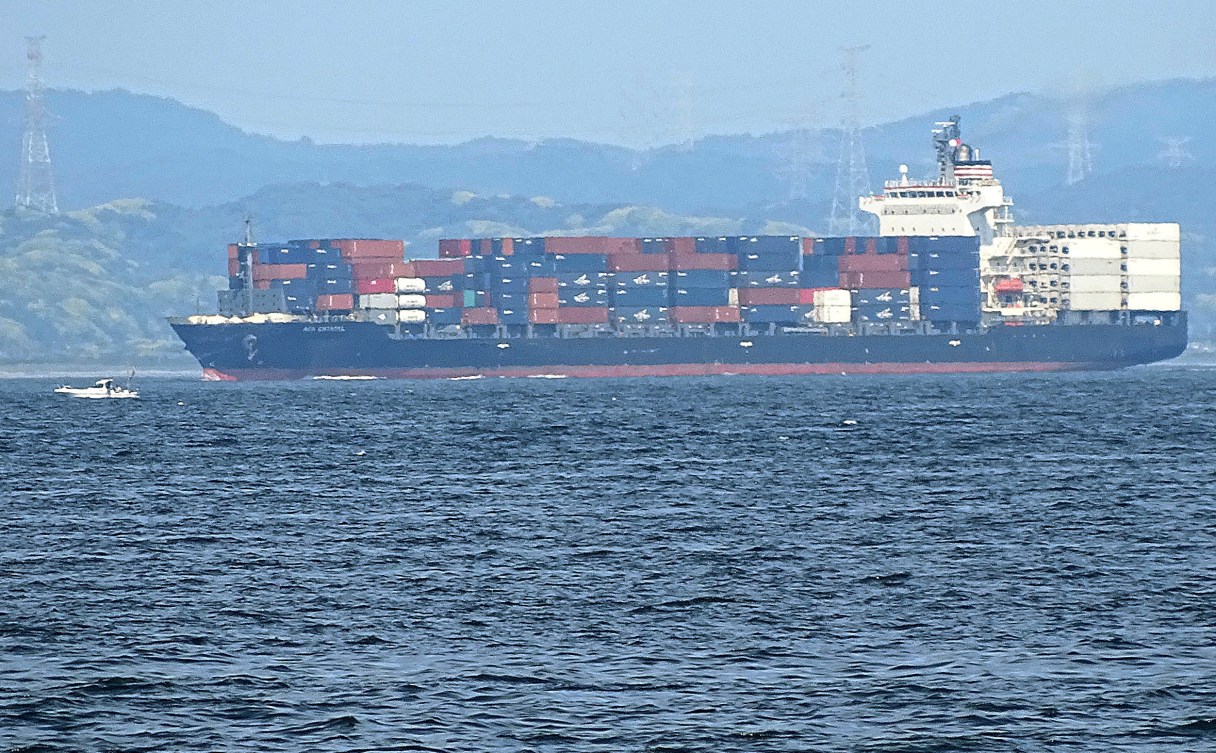
In this June 17, 2017, photo, the damaged Philippine-registered container ship ACX Crystal cruises off Yokosuka, south of Tokyo, after colliding with the USS Fitzgerald off Japan earlier in the day. Experts generally agree that the ACX Crystal, coming from behind, tried to pass the USS Fitzgerald on the right side. Extensive damage to the destroyer’s starboard side and that to the container on its port side suggest that, but it is too early to determine which side is responsible, they say. (AP Photo/Eugene Hoshiko)
In this June 17, 2017, photo, the damaged Philippine-registered container ship ACX Crystal cruises off Yokosuka, south of Tokyo, after colliding with the USS Fitzgerald off Japan earlier in the day. Experts generally agree that the ACX Crystal, coming from behind, tried to pass the USS Fitzgerald on the right side. Extensive damage to the destroyer’s starboard side and that to the container on its port side suggest that, but it is too early to determine which side is responsible, they say. (AP Photo/Eugene Hoshiko) In this June 17, 2017, photo, the damaged Philippine-registered container ship ACX Crystal cruises off Yokosuka, south of Tokyo, after colliding with the USS Fitzgerald off Japan earlier in the day. Experts generally agree that the ACX Crystal, coming from behind, tried to pass the USS Fitzgerald on the right side. Extensive damage to the destroyer’s starboard side and that to the container on its port side suggest that, but it is too early to determine which side is responsible, they say. (AP Photo/Eugene Hoshiko)

TOKYO (AP) – The site of a fatal collision between a U.S. Navy destroyer and a container ship off Japan’s coast is notorious for congested sea traffic, particularly during the night when merchant ships are trying to reach Tokyo’s port by daybreak.

The USS Fitzgerald collided with the ACX Crystal about 12 nautical miles (14 miles, 22 kilometers) off the southern tip of the Izu Peninsula in the early hours of Saturday just as the two ships were to merge into heavy traffic.

Maritime officials and ship operators call the area a convergence zone, where ships coming from the east and west converge with others leaving Tokyo. On average, about 400 ships pass through the waters each day.

The area, also known for strong tides, is the most accident-prone in Japanese waters. The Japan Transport Safety Board investigated 28 serious collisions between 2008 and 2014, including one between a Japanese navy submarine and a fishing boat in 1988 in which 30 people died.

“Because many ships unload their cargo in Tokyo during the day, they want to be there early in the morning. Many of them pass through the area during the night,” said Hiroshi Ando, an official in the Japanese coast guard’s navigation safety department. “It’s known as one of the busiest waters, where ships from different routes merge.”