
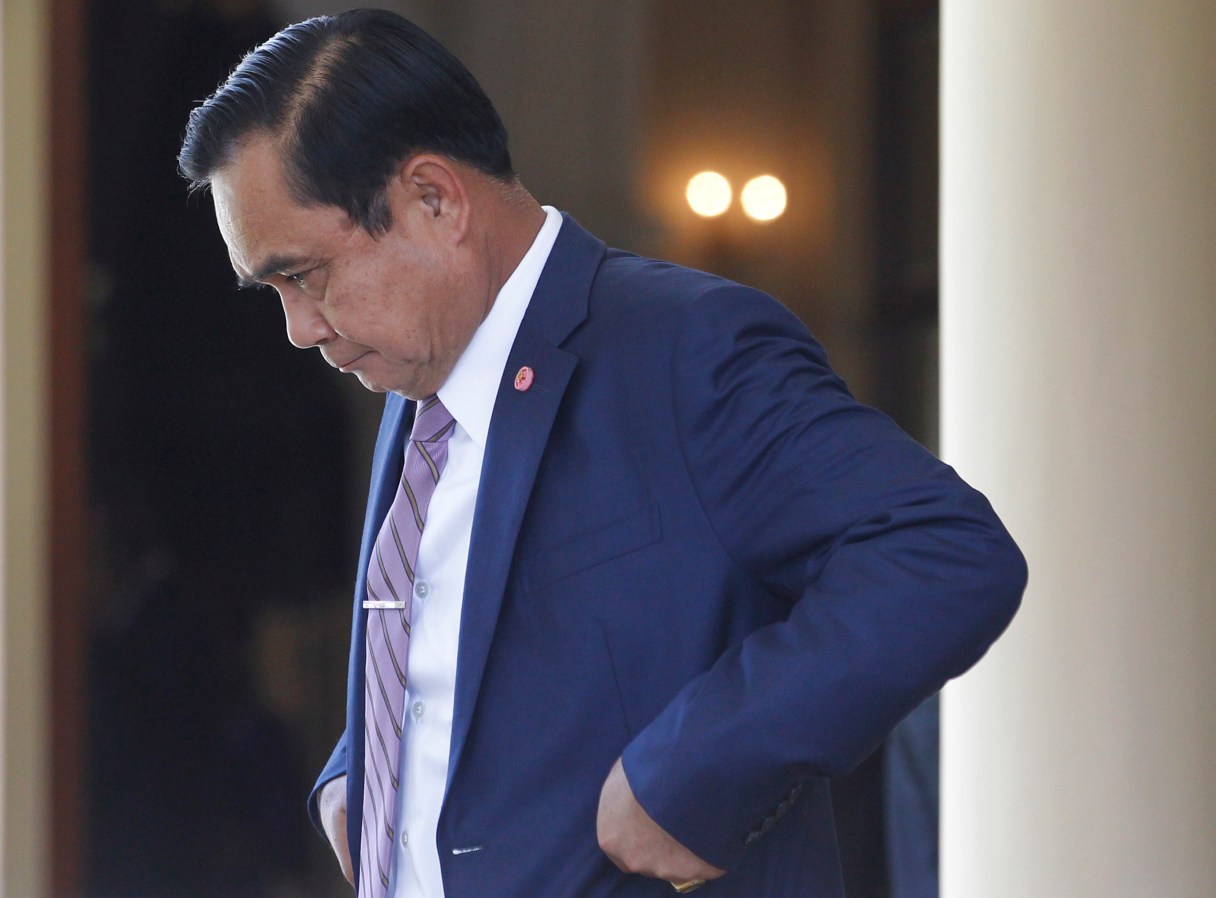
BANGKOK (AP) – The United Nations joined international rights groups Thursday in criticizing a decision by Thailand’s military government to invoke a law that gives the junta chief near-absolute authority without any accountability.
Junta chief and Prime Minister Prayuth Chan-ocha on Wednesday lifted martial law, which he imposed shortly before taking power in a coup last year, and instead invoked Article 44 of a junta-imposed interim constitution, which allows him to take any measures to promote public order and unity. Thai officials said martial law was lifted because of foreign pressure.
U.N. High Commissioner for Human Rights Zeid Ra’ad Al Hussein said giving Prayuth unfettered authority “clearly leaves the door wide open to serious violations of fundamental human rights.” His statement, issued in Geneva, noted that Article 44 not only effectively allows Prayuth to issue any legislative, executive or judicial order, but “also annihilates freedom of expression” by giving him extensive censorship powers.
“In effect, this means the sweeping away of all checks and balances on the power of the government, rendering the lifting of martial law meaningless,” he said.
Both martial law and Article 44 provide legal underpinnings for actions taken in the name of law and order. But while martial law defines acceptable actions, such as arrests without warrants, censorship and bans on public gatherings, Article 44 is vaguer and more broadly worded, allowing the junta chief to take any action he deems necessary not only to maintain order but also “for the benefit of reform in any field and to strengthen public unity and harmony.”