
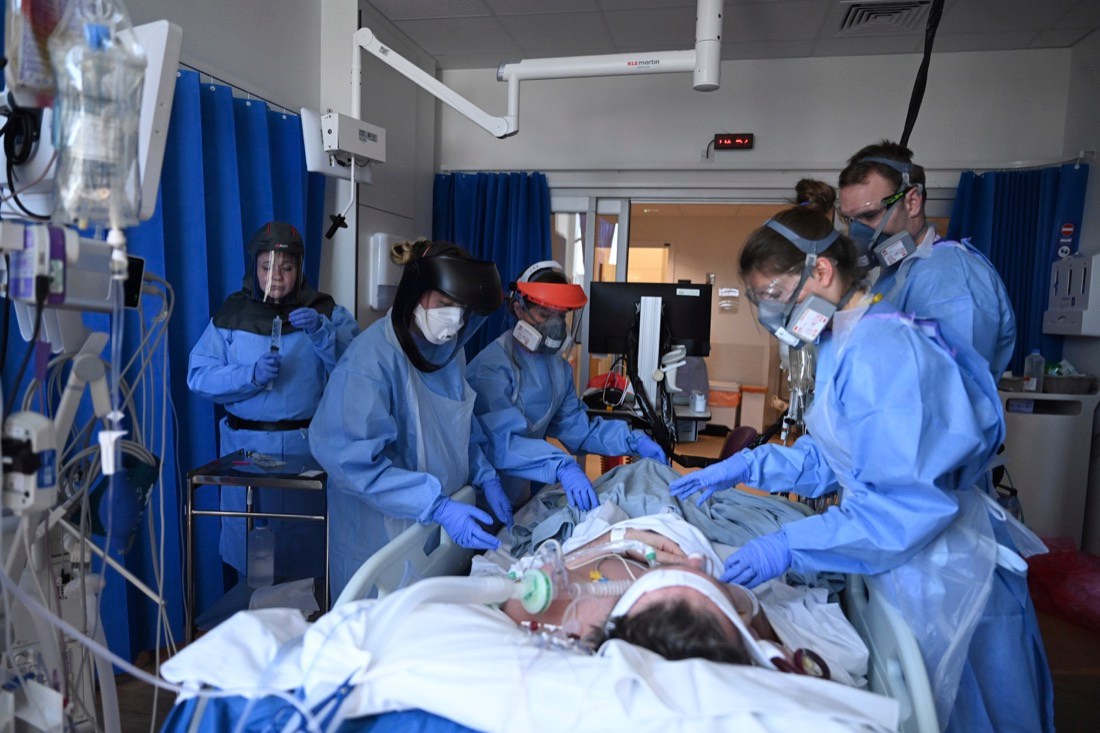
ROME (AP) – From the marbled halls of Italy to the wheat fields of Kansas, health authorities are increasingly warning that the question isn’t whether a second wave of coronavirus infections and deaths will hit, but when – and how badly.
As more countries and U.S. states chaotically re-open for business – including some where infection rates are still rising – managing future cases is as important as preventing them.
In India, which partly eased its virus lockdown this week, health authorities scrambled Wednesday to contain an outbreak at a massive market. Experts in hard-hit Italy, which just began easing some restrictions, warned lawmakers that a new wave of virus infections and deaths is coming. They urged intensified efforts to identify possible new victims, monitor their symptoms and trace their contacts.
Germany warned of a second and even a third wave, and threatened to re-impose virus restrictions if new cases can’t be contained. German Chancellor Angela Merkel was meeting Wednesday with the country’s 16 governors to discuss further loosening restrictions that have crippled Europe’s largest economy.
“There will be a second wave, but the problem is to which extent. Is it a small wave or a big wave? It’s too early to say,” said Olivier Schwartz, head of the virus and immunity unit at France’s Pasteur Institute.