
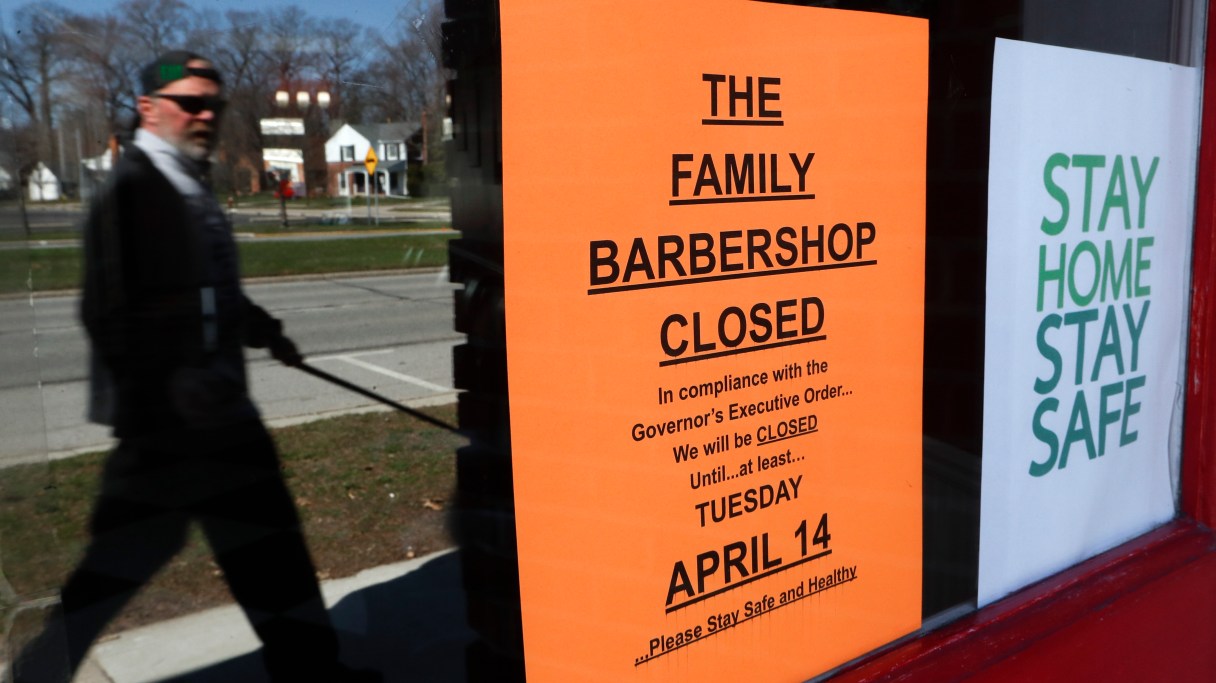
WASHINGTON (AP) – A grim snapshot of the U.S. job market’s sudden collapse emerged Friday with a report that employers shed hundreds of thousands of jobs last month because of the viral outbreak that’s brought the economy to a near-standstill.
The loss of 701,000 jobs, reported by the Labor Department, ended nearly a decade of uninterrupted job growth, the longest such streak on record. The unemployment rate surged in March from a 50-year low of 3.5% to 4.4% – the sharpest one-month jump in the jobless rate since 1975.
And that’s just a hint of what’s to come.
For the April jobs report that will be released in early May, economists expect as many as a record 20 million losses and an unemployment rate of around 15%, which would be the highest since the 1930s.
The enormous magnitude of the job cuts is inflicting far-reaching damage on economies in the United States and abroad, which are widely believed to be sinking into severe recessions. As rising numbers of people lose jobs – or fear they will – consumer spending is shrinking. That pullback in spending, which is the primary driver of the economy, is intensifying pressure on those businesses that are still operating.