
Thursday, October 29, 2026Oct 29

This story is free to read.

Satellite almost on empty gets new life after space docking

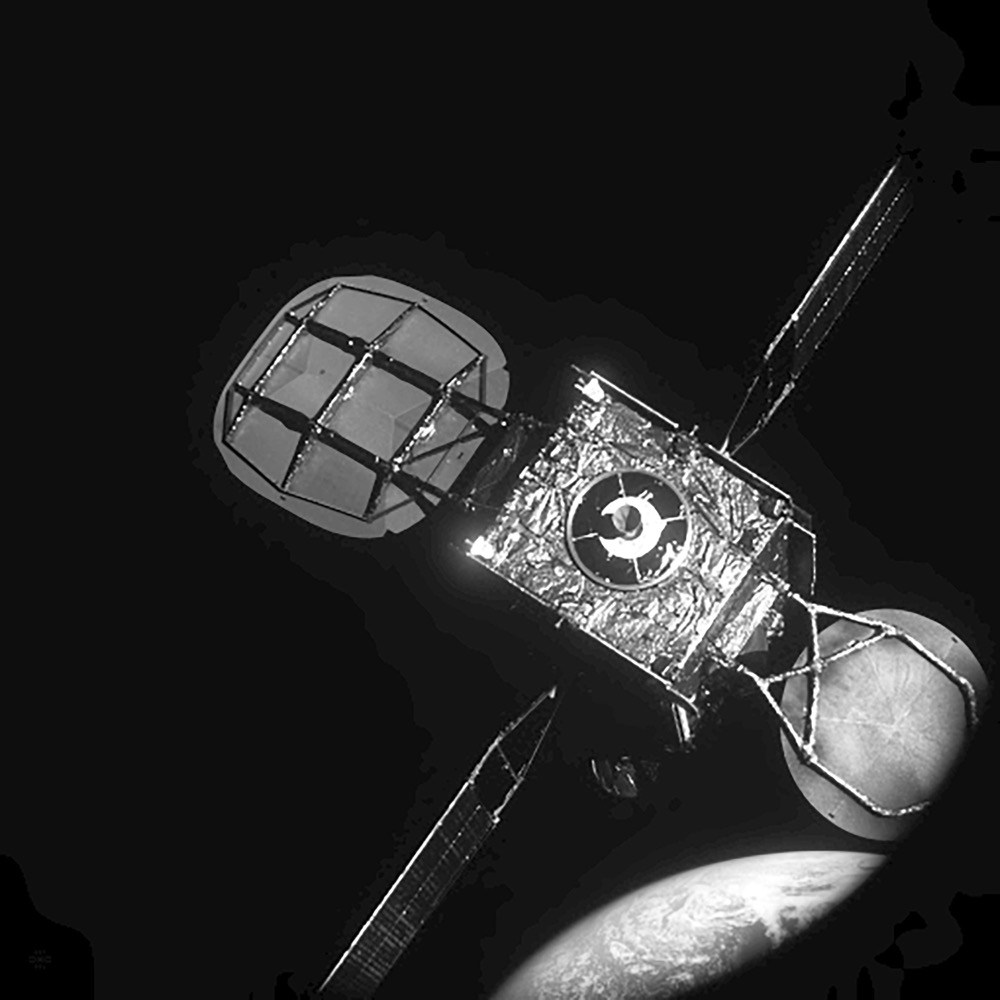
This Tuesday, Feb. 25, 2020 photo provided by Northrop Grumman shows the Intelsat 901 satellite as the Mission Extension Vehicle-1 approaches it in orbit around the Earth, bottom right. The Northrop Grumman MEV-1 will serve as a guide dog of sorts for its aging Intelsat companion which is almost out of fuel. (Northrop Grumman via AP)
This Tuesday, Feb. 25, 2020 photo provided by Northrop Grumman shows the Intelsat 901 satellite as the Mission Extension Vehicle-1 approaches it in orbit around the Earth, bottom right. The Northrop Grumman MEV-1 will serve as a guide dog of sorts for its aging Intelsat companion which is almost out of fuel. (Northrop Grumman via AP) This Tuesday, Feb. 25, 2020 photo provided by Northrop Grumman shows the Intelsat 901 satellite as the Mission Extension Vehicle-1 approaches it in orbit around the Earth, bottom right. The Northrop Grumman MEV-1 will serve as a guide dog of sorts for its aging Intelsat companion which is almost out of fuel. (Northrop Grumman via AP)

CAPE CANAVERAL, Fla. (AP) – A communication satellite almost out of fuel has gotten a new life after the first space docking of its kind.

Northrop Grumman and Intelsat announced the successful link-up nearly 22,500 miles (36,000 kilometers) above Earth on Wednesday. It’s the first time two commercial satellites have joined in orbit like this.

The recently launched satellite – Northrop Grumman’s Mission Extension Vehicle, or MEV-1 – will serve as a guide dog of sorts for its aging Intelsat companion.

Company officials called it a historic moment for space commerce, akin to the three-spacewalker capture of a wayward Intelsat satellite 28 years ago.

“We’re pushing the boundaries of what many thought would be impossible,” said Tom Wilson, president of SpaceLogistics, a subsidiary of Northrop Grumman. “The impossible is now a reality. Today is a great example of that.”