
Friday, November 13, 2026Nov 13

Dangerous helicopter bird strikes on the rise, FAA warns

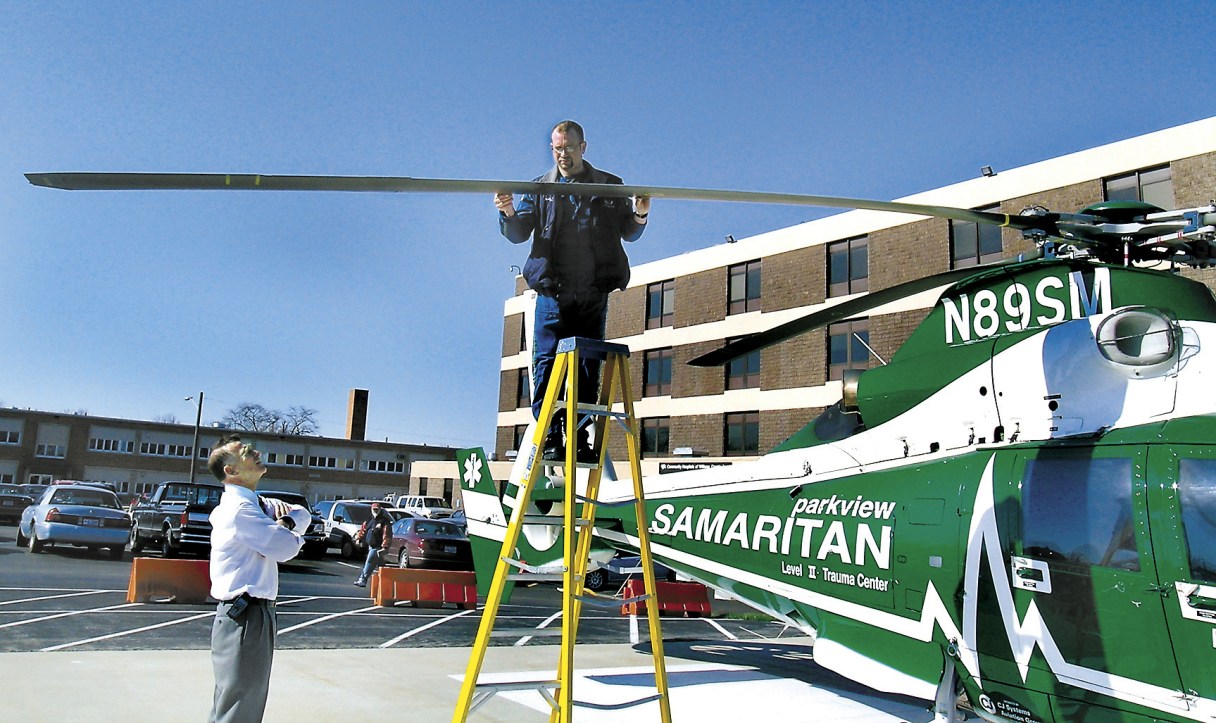
In this Wednesday, April 14, 2004, file photo, Parkview Samaritan helicopter pilot Brad Wilson checks the rotor blade for damage after being struck by a bird while flying, just one mile from Community Hospitals of Williams County, in Bryan, Ohio, the destination landing pad to transport a patient. Reports of helicopter bird strikes are up dramatically in recent years, including incidents that damage the aircraft and create the potential for crashes, according to the Federal Aviation Administration. In 2013, there were 204 reported helicopter bird strikes, a 68 percent increase from 2009 when there were 121 reports and an increase of over 700 percent since the early 2000s, said Gary Roach, an FAA helicopter safety engineer. (Carla Allshouse/The Bryan Times via AP, File) MANDATORY CREDIT

WASHINGTON (AP) – The crew of a Dallas police helicopter was searching for a capsized boat last March, when there was a loud explosion and wind rushed through a huge hole in the windshield.

The pilot, Sgt. Todd Limerick, put a hand over one eye, his face covered in blood and Plexiglass shards. He kept his other hand on the controls until the co-pilot, Cpl. Laurent Lespagnol, took over and landed the aircraft.

“My first thought was that we had been shot. My second was the engine blew up,” Lespagnol said in an interview. It wasn’t until they had landed that they found the cause wedged between the cockpit seats – a 3-pound American coot, a duck-like bird.

Reports of helicopter bird strikes are up dramatically in recent years, including incidents, like the one in Dallas, that damage the aircraft and create the potential for crashes, according to the Federal Aviation Administration. In 2013, there were 204 reported helicopter bird strikes, a 68 percent increase from 2009 when there were 121 reports and an increase of over 700 percent since the early 2000s, said Gary Roach, an FAA helicopter safety engineer.

The increase is due partly to greater awareness among pilots about the importance of reporting bird strikes since the January 2009, when US Airways Flight 1549 was ditched in New York’s Hudson River after the airliner’s two engines sucked in geese.