
Thursday, October 29, 2026Oct 29

This story is free to read.

Study: Dinosaurs were declining long before asteroid hit

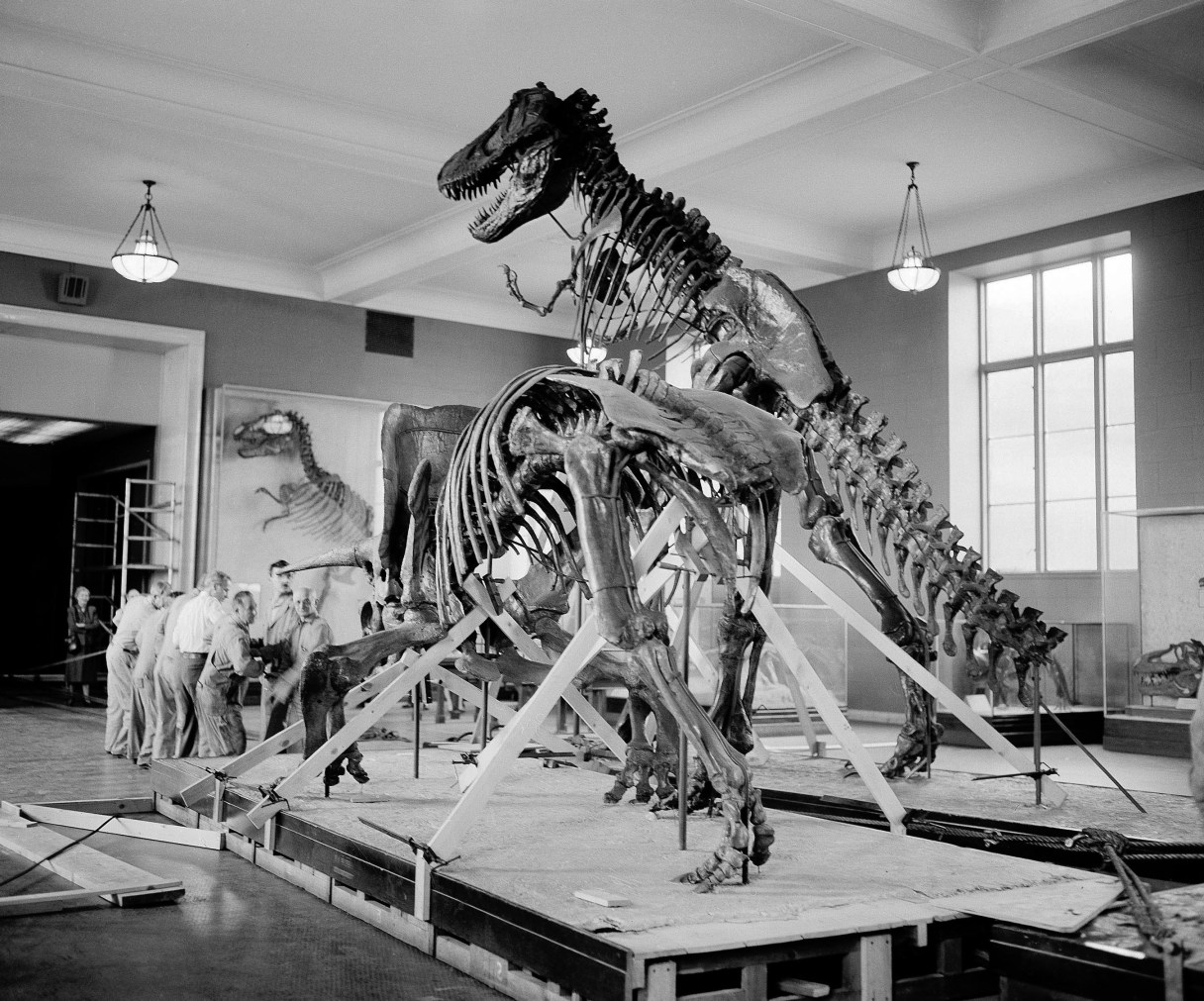
FILE - In this Nov. 29, 1954, file photo, workers use block and tackle to move the skeleton of one of four dinosaurs in the Cretaceous Hall of the American Museum of Natural History in New York. Dinosaurs died out rather abruptly some 66 million years ago. But a new study published Monday, April 18, 2016 says that long before an asteroid strike doomed them, they were already in decline. (AP Photo/Anthony Camerano, File)
FILE - In this Nov. 29, 1954, file photo, workers use block and tackle to move the skeleton of one of four dinosaurs in the Cretaceous Hall of the American Museum of Natural History in New York. Dinosaurs died out rather abruptly some 66 million years ago. But a new study published Monday, April 18, 2016 says that long before an asteroid strike doomed them, they were already in decline. (AP Photo/Anthony Camerano, File) FILE - In this Nov. 29, 1954, file photo, workers use block and tackle to move the skeleton of one of four dinosaurs in the Cretaceous Hall of the American Museum of Natural History in New York. Dinosaurs died out rather abruptly some 66 million years ago. But a new study published Monday, April 18, 2016 says that long before an asteroid strike doomed them, they were already in decline. (AP Photo/Anthony Camerano, File)

NEW YORK (AP) – Dinosaurs were in decline long before an asteroid strike polished them off about 66 million years ago, a study says.

It’s the latest contribution to a long-running debate: Did the asteroid reverse the fortune of a thriving group of animals? Or were dinosaurs already struggling, and the disruptive effects of the asteroid pushed them over the edge to extinction? Or were the dinosaurs headed for oblivion anyway?

While some have argued that dinosaurs began petering out some 5 million or 10 million years before their final doom, the new paper suggests it started happening much earlier, maybe 50 million years before the asteroid catastrophe.

In terms of species, “they were going extinct faster than they could replace themselves,” said paleontologist Manabu Sakamoto of the University of Reading in England.

He led a team of British scientists who analyzed three large dinosaur family trees, looking for evidence of when extinctions began to outnumber the appearances of new species.