
Sunday, November 1, 2026Nov 1

This story is free to read.

Study finds ship noise disrupting humpback whale feeding

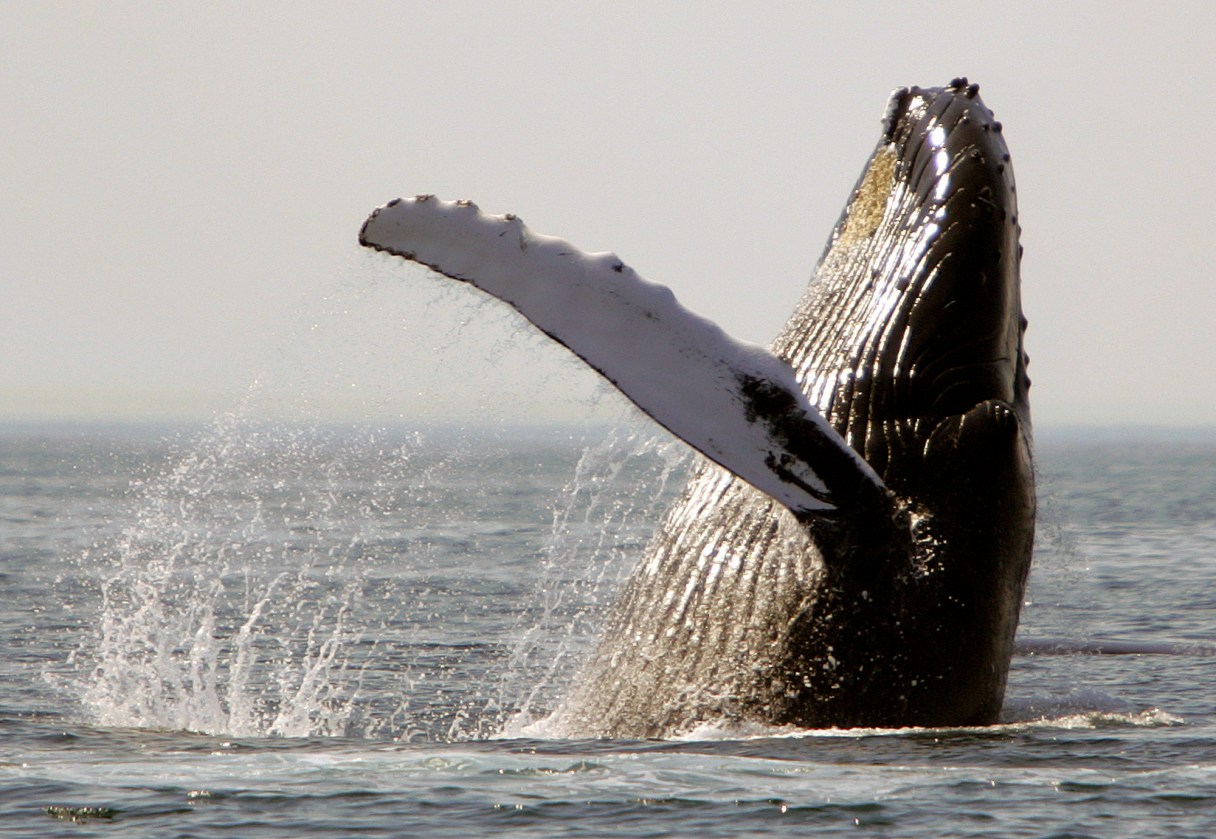
FILE - In this Aug. 22, 2005 file photo, a humpback whale breaches on Stellwagen Bank about 25 miles east of Boston. A study in the Royal Society's journal Biology Letters published Wednesday, Aug. 10, 2016, found that noise from shipping in North Atlantic coastal waters is impacting the feeding behavior of humpback whales. (AP Photo/Michael Dwyer, File)
FILE - In this Aug. 22, 2005 file photo, a humpback whale breaches on Stellwagen Bank about 25 miles east of Boston. A study in the Royal Society's journal Biology Letters published Wednesday, Aug. 10, 2016, found that noise from shipping in North Atlantic coastal waters is impacting the feeding behavior of humpback whales. (AP Photo/Michael Dwyer, File) FILE - In this Aug. 22, 2005 file photo, a humpback whale breaches on Stellwagen Bank about 25 miles east of Boston. A study in the Royal Society's journal Biology Letters published Wednesday, Aug. 10, 2016, found that noise from shipping in North Atlantic coastal waters is impacting the feeding behavior of humpback whales. (AP Photo/Michael Dwyer, File)

CONCORD, N.H. (AP) – A study has found that noise from shipping in North Atlantic waters is impacting the feeding behavior of humpback whales.

Writing in the Royal Society’s journal Biology Letters Wednesday, researchers found that some whales in the Gulf of Maine changed their foraging behavior due to ship noise. Some decreased the speed that they descended while others demonstrated fewer side-rolls – a technique used by the whales for feeding on sand lance fish.

Humpbacks migrate to the Caribbean to mate and give birth and return to New England waters in the spring to feed. They live up to 50 years but face a myriad of threats, from ship strikes to becoming entangled in fishing gear. One dead humpback washed up on a New Hampshire beach in June.