
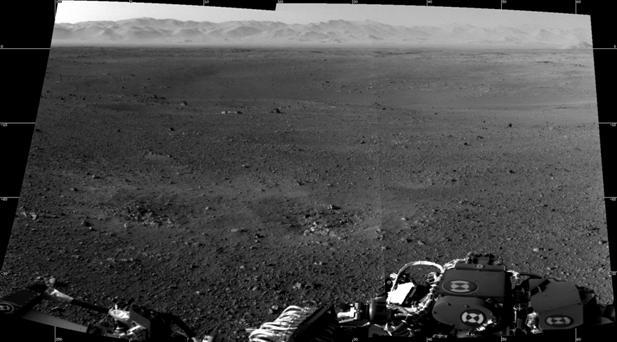
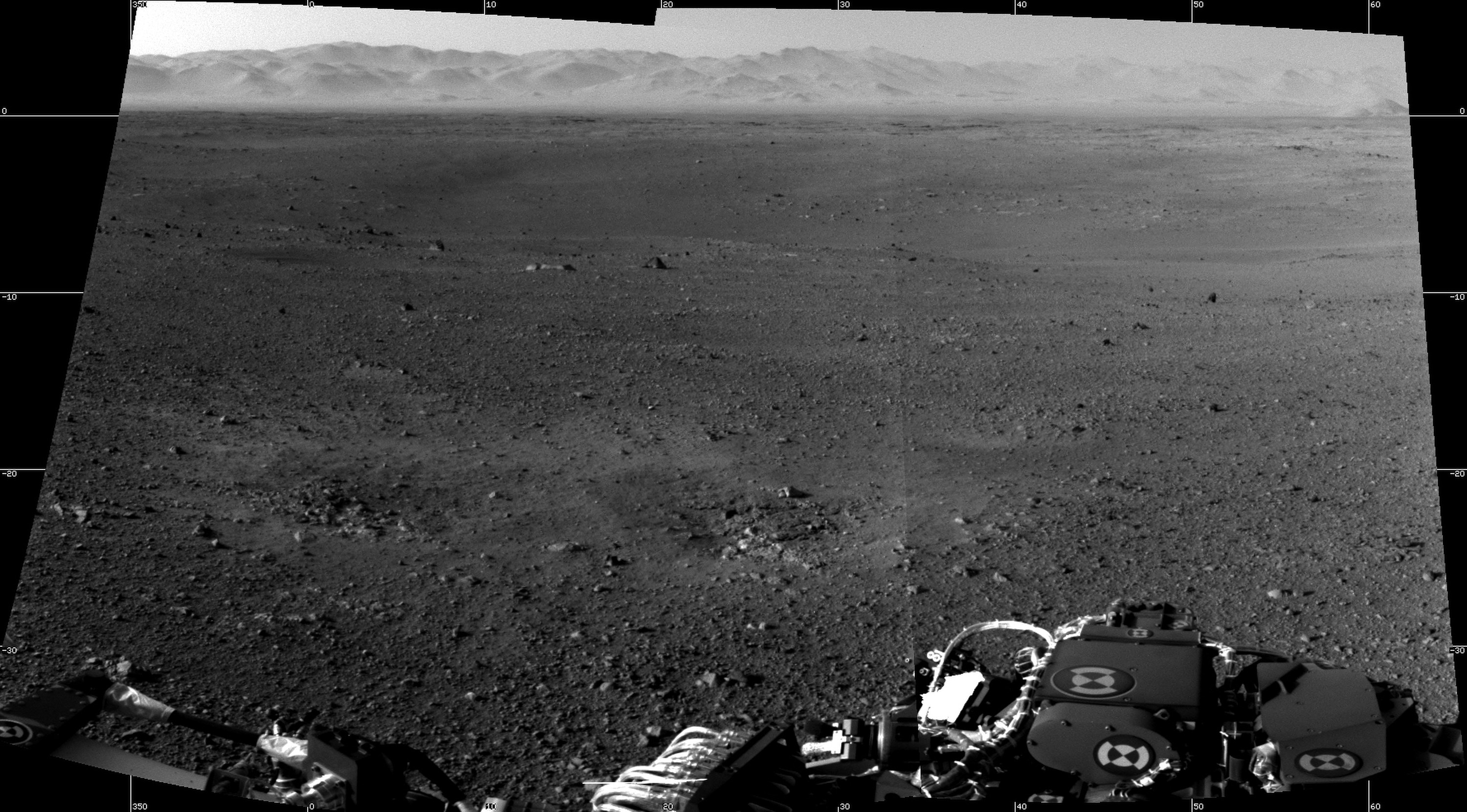
 This image released on Wednesday Aug. 8, 2012 by NASA, shows a mosaic of the first two full-resolution images of the Martian surface from the Navigation cameras on NASA’s Curiosity rover. The rim of Gale Crater can be seen in the distance beyond the pebbly ground. The foreground shows two distinct zones of excavation likely carved out by blasts from the rover’s descent stage thrusters.
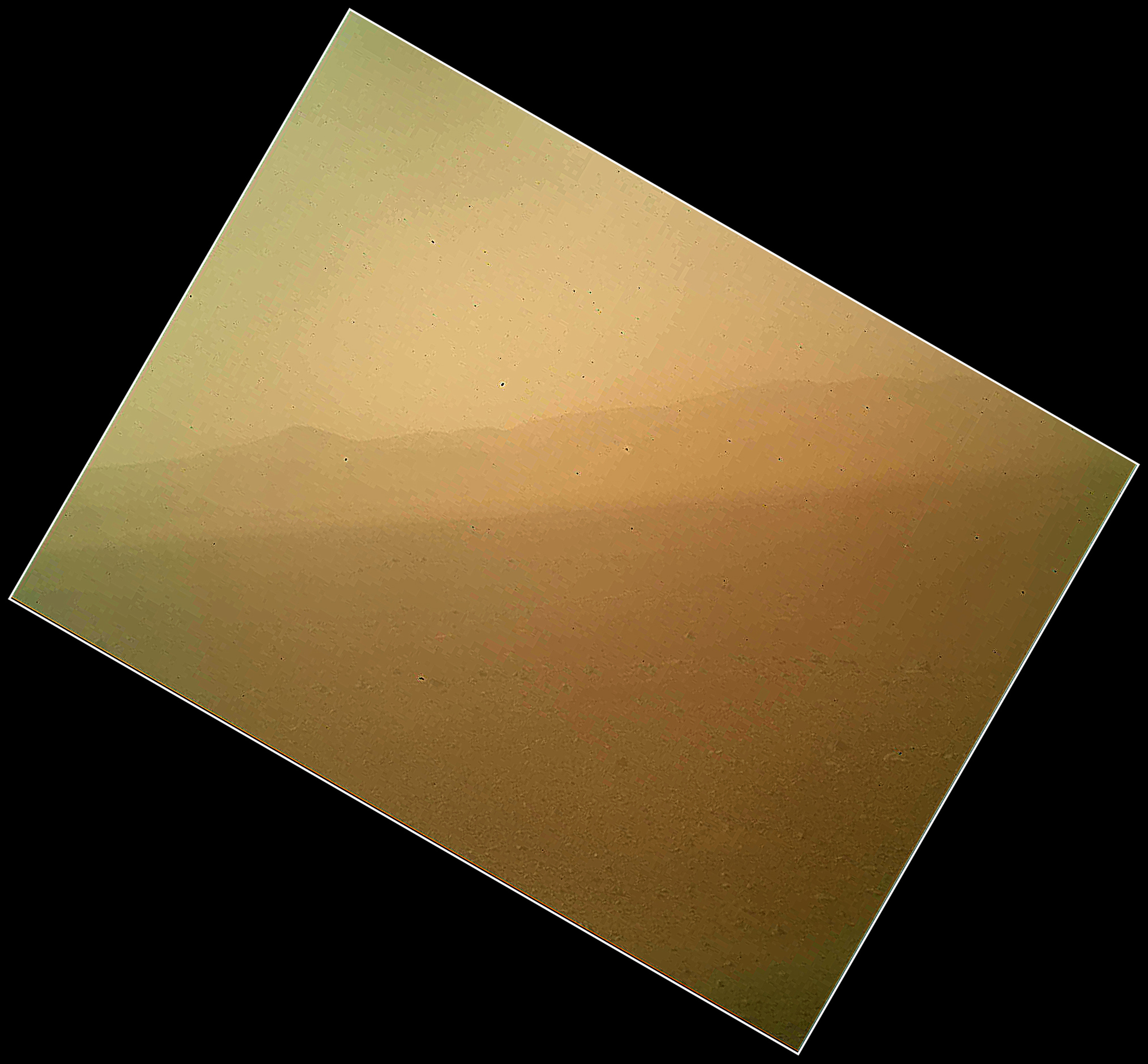 This image released on Tuesday Aug. 7,2012 by NASA shows the first color view of the north wall and rim of Gale Crater where NASA’s rover Curiosity landed Sunday night. The picture was taken by the rover’s camera at the end of its stowed robotic arm and appears fuzzy because of dust on the camera’s cover.
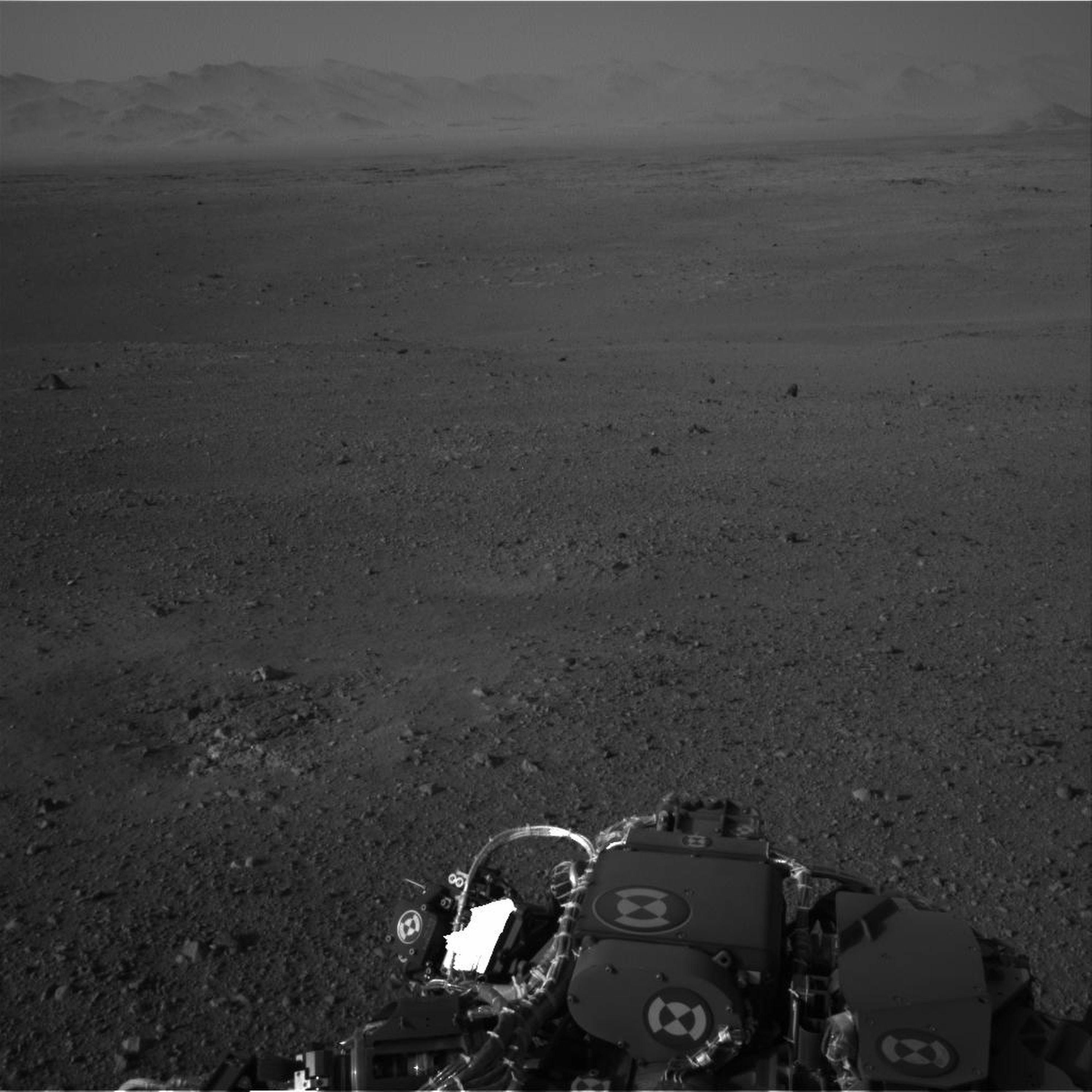 This image released by NASA on Wednesday Aug. 8, 2012 taken by cameras aboard the Curiosity rover shows the Martian horizon. It’s one of dozens of images that will be made into a panorama. Curiosity landed on August 5, 2012 on a two-year mission to study whether its landing site ever could have supported microbial life.
PASADENA, Calif. – The ancient Martian crater where the Curiosity rover landed looks strikingly similar to the Mojave Desert in California with its looming mountains and hanging haze, scientists said Wednesday.
“The first impression that you get is how Earth-like this seems looking at that landscape,” said chief scientist John Grotzinger of the California Institute of Technology.
Overnight, the car-size rover poked its head out for the first time since settling in Gale Crater, peered around and returned a flood of black-and-white pictures that will be stitched into a panorama.
It provided the best view so far of its destination since touching down Sunday night after nailing an intricate choreography. During the last few seconds, a rocket-powered spacecraft hovered as cables lowered Curiosity to the ground.
In the latest photos, Curiosity looked out toward the northern horizon. Nearby were scour marks in the surface blasted by thrusters, which kicked up a swirl of dust. There were concerns that Curiosity got dusty, but scientists said that was not the case.