
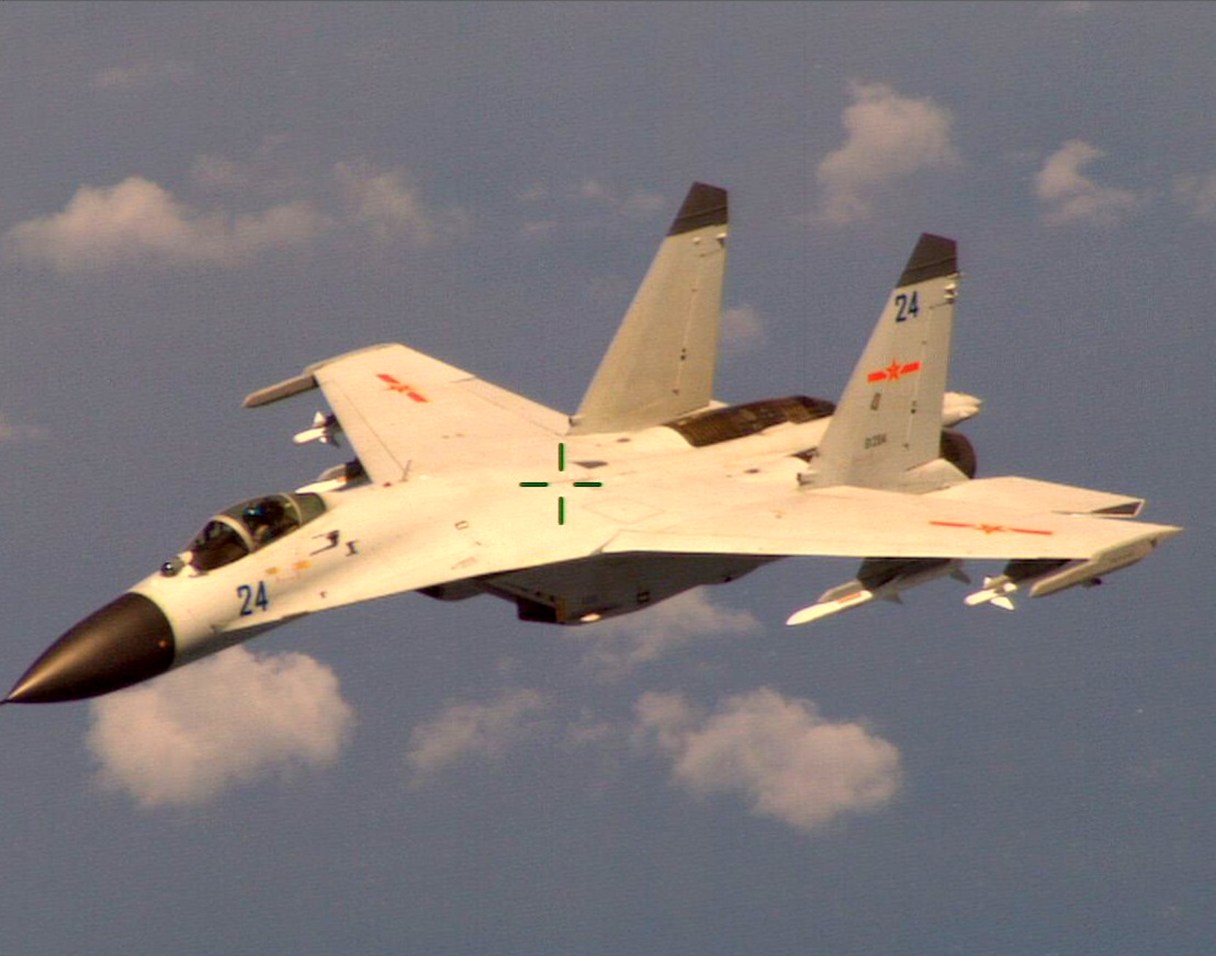
BEIJING (AP) – China’s Defense Ministry rejected U.S. accusations that a Chinese fighter jet’s intercept of a U.S. Navy surveillance aircraft off the southern Chinese coast was dangerous, and blamed Washington for mounting large-scale and frequent close-in reconnaissance operations.
Ministry spokesman Yang Yujun said the Chinese pilot conducted operations that were “professional and the Chinese jet kept a safe distance from the U.S. planes.”
He called the U.S. accusations “groundless” in a statement issued Saturday night, and said that China was conducting “routine identification and verification” flights.
Pentagon press secretary Rear Adm. John Kirby gave a different account Friday of the Aug. 19 encounter about 135 miles (220 kilometers) east of China’s Hainan Island. He said the Chinese jet made several close passes by the Navy P-8 Poseidon plane, coming within 30 feet (9 meters) of it at one point.
Kirby said that included the Chinese jet doing a “barrel roll” maneuver over the top of the Poseidon – a modified Boeing 737 – and passing across the nose of the Navy plane apparently to show that it was armed. Kirby said the Chinese jet’s maneuvering posed a risk to the safety of the U.S. air crew and was “inconsistent with customary international law.”