
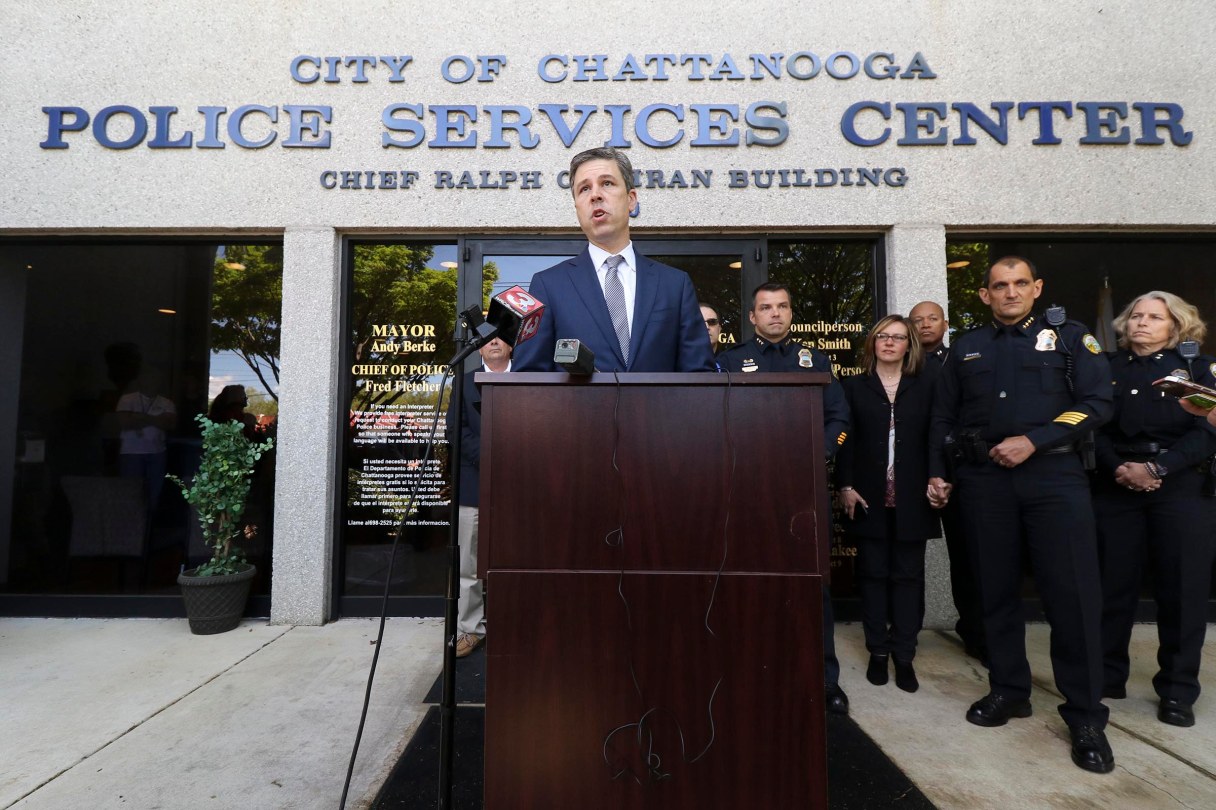
Chattanooga is preparing to pump more money into its underfunded pension plan for fire and police officers to comply with a new state mandate for cities to bring their yearly contributions to retirement plans up to recommended levels by 2020.
Chattanooga Mayor Andy Berke, who will unveil his recommended city budget for fiscal year 2017-2018 today, said the Chattanooga Fire and Police Pension Fund will require additional city contributions this year to shore up the plan and to offset a reduction in the projected earnings from the fund to bring it more in line with actual market conditions. The additional pension costs, combined with higher health care expenses for city employees and state cutbacks in grocery sales tax and Hall income tax collections from city taxpayers, are likely to push the city to boost property tax bills for most property owners in the city.
“There will be a significant budget impact from the fire and police pension fund,” Berke said last week after meeting with seniors about a property tax freeze for elderly homeowners with modest incomes. “We have some costs, including the fire and police pension fund, that are creating some budget challenges.”
In the most recent assessment of Chattanooga’s retirement plan for its fire and police officers as of January 2016, actuaries calculated that the fire and police pension was $150.6 million short of the money needed to meet all of its future funding obligations. The pension fund had less than 62.1 percent of what actuaries recommended at the start of calendar 2016 and that shortfall is expected to widen this year as the city changes its earnings assumptions for the plan and reduces the projected rate of return on the investments in the fund from 7.75 percent a year down to 7.5 percent per year.
By the numbers
$12.8 million: City’s 2016 contribution to Chattanooga Fire and Police Pension Fund851: Number of active participants pension plan covers769: Number of retired participants in pension plan32.93: percent Share of police and fire payroll city contributes to pension fund$214.6 million: 2016 market value of pension plan$150.6 million: Unfunded liability in pension plan in 2016, before reduced return assumption adopted this year7.5 percent: Projected rate of investment return this year, down from previous assumed rate of 7.75 percentSource: The Segal Group actuarial valuation of City of Chattanooga’s Fire and Police Pension Fund, Jan. 1, 2016
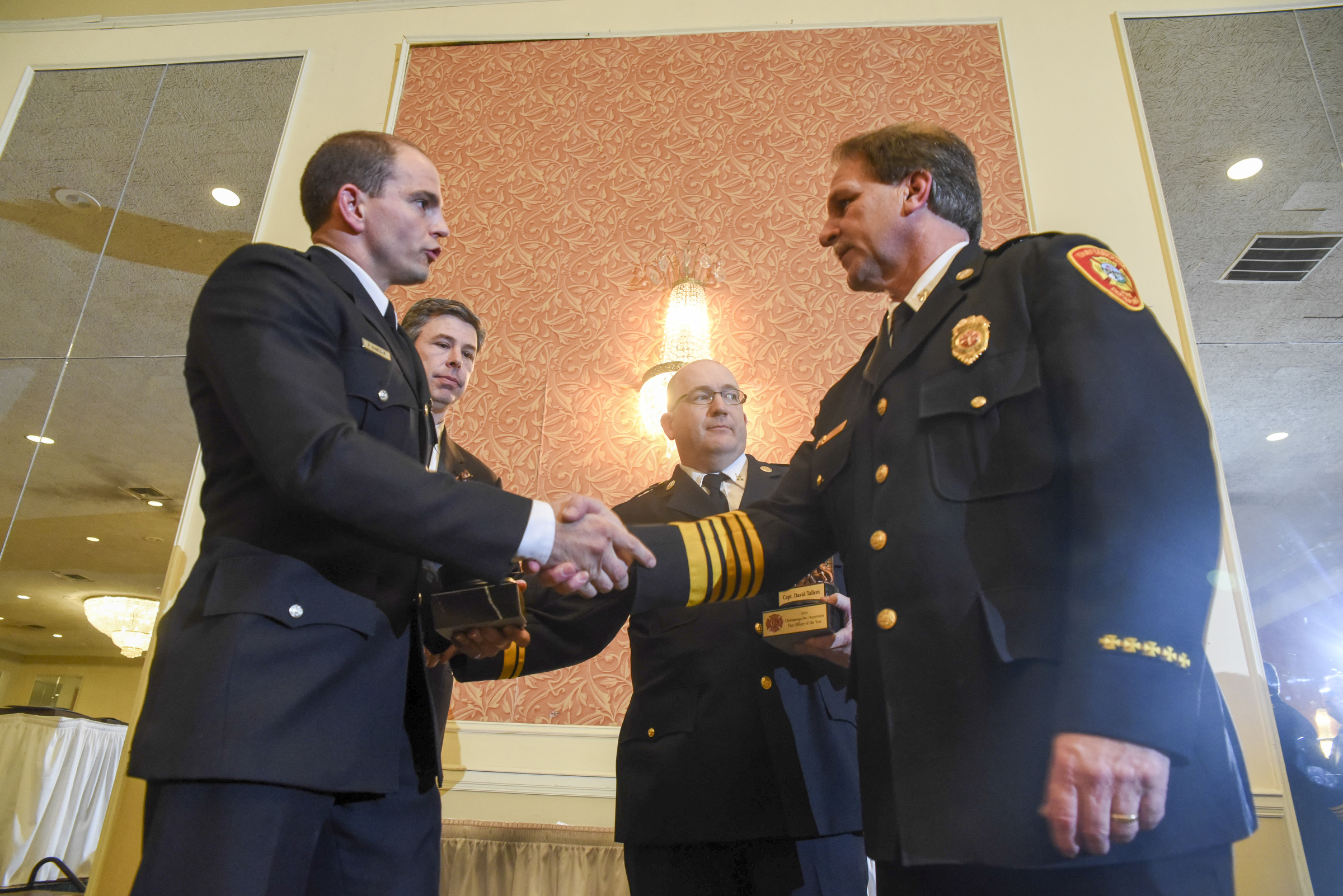 Fire Chief Chris Adams, right, congratulates Firefighter of the Year Preston Binegar, left, as Mayor Andy Berk stands near, second from left. Chattanooga Fire Department Fire Officer of the Year Captain David Tallent, stands center right beside Chief Adams at the annual awards dinner Monday night at the Chattanooga Choo Choo.
“We’re gradually bringing that down by a quarter percent a year to bring it to a more realistic level,” said Katrina Abbott, fund administrator for the fire and police pension.
In 2014, Berke convinced fire and police officers to accept changes in cost-of-living and length-of-service standards in the pension plan to help cut $227 million in city expenses over the next 24 years. The city successfully defended the changes against a court challenge from disgruntled retirees who claimed the changes were illegal. But Berke said those changes were still not sufficient to ensure the pension fund is fully funded.
“I don’t think we ever thought that would solve the problem,” the mayor said. “We thought it would make an impact on the problem, which it has. There’s just still more to go.”
The pension changes and other expenses may require property taxes to go up in the city next year, or at least offset some or all of the rate rollback resulting from the Hamilton County property reappraisals this year.
The average property in the city of Chattanooga rose 10.9 percent in value since the last reappraisal so the current tax rate of $2.30.9 per $100 of assessed value would be rolled back to $2.05.7 per $100 per assessed if the city decided it didn’t need to raise property taxes. But the city is expected to make at least some increase in property taxes to offset higher benefit costs for employees and less revenue from state and local tax changes that could cut or stabilize taxes on groceries, investments and senior citizen homes.
“We’re going to have to make a significant contribution to our fire and police fund because our investment returns are not as great as we anticipated and are not likely to meet the investment target level we had set in the current market,” said Chip Henderson, chairman of the budget committee of the Chattanooga City Council. “This is an obligation as a city we have and I feel like we are obligated to do for our fire and police officers.”
Berke said the city needs to adequately fund the pension plan “to make sure we have a healthy retirement plan and a motivated fire and police force.
“These men and women risk their lives for us and we want to make sure that we treat them properly,” Berke said.
The city contributed $12.8 million, or 32.9 percent of its fire and police payroll, to the pension plan last year. That share is expected to increase this year, Abbott said.
Police and fire officers do not qualify for social security benefits from their work with the city, although many receive such benefits through other jobs during their career.
Contact Dave Flessner at dflessner@timesfreepress.com or at 757-6340.