
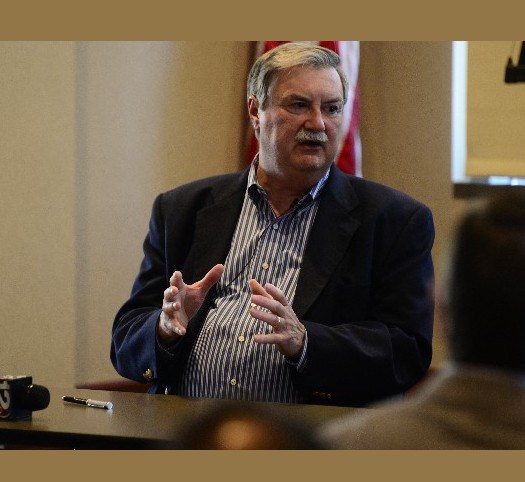
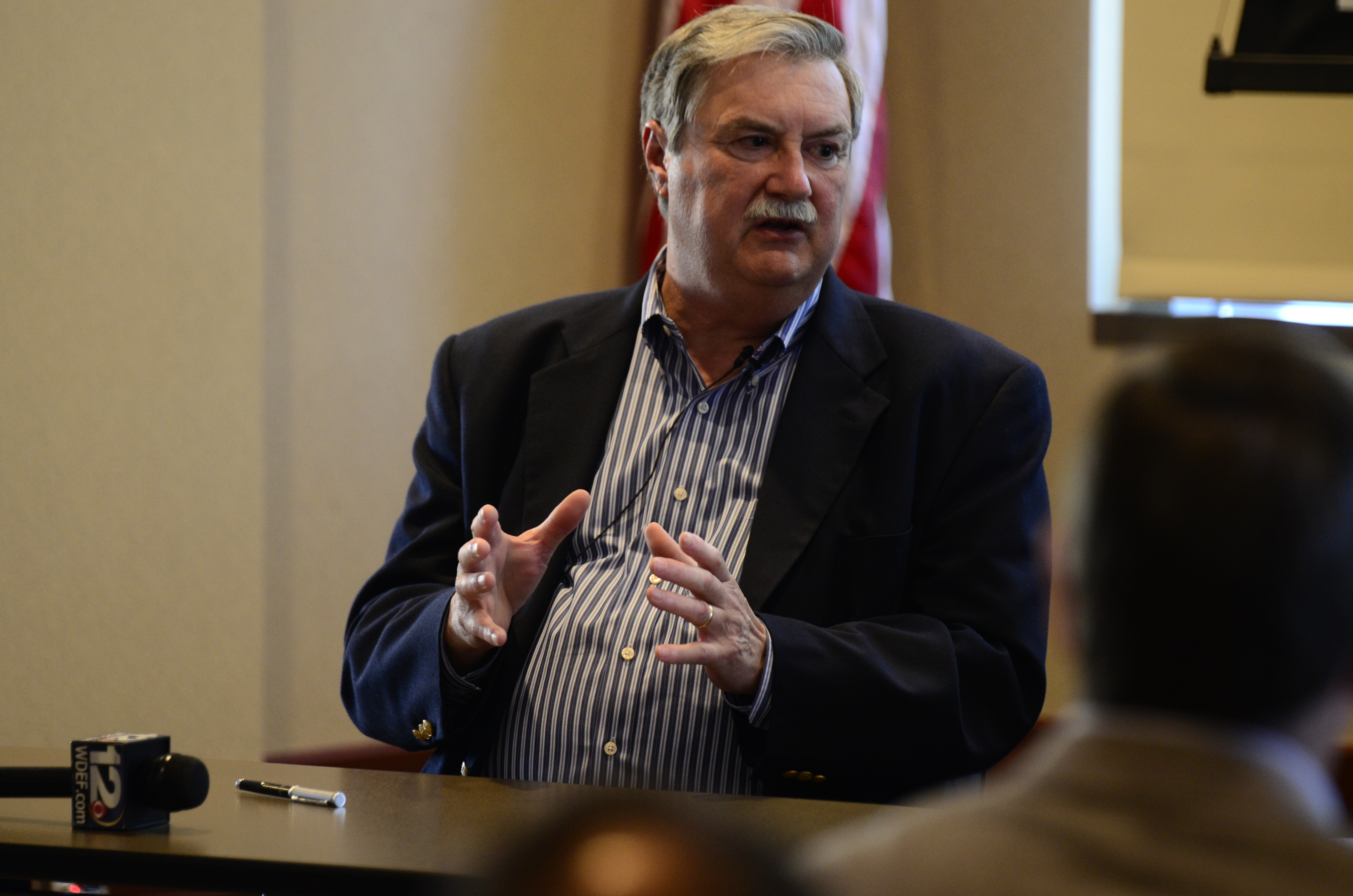
 EPB Chief Executive Harold DePriest led the $220 million effort to build a fiber optic network in Chattanooga.
Gig City connectionsIn the past couple of years, delegations from a variety of cities and institutions have visited Chattanooga and EPB to study how high-speed broadband has been implemented and its impact:• Harvard Business School• Pensacola, Fla.• Lakeland, Fla.• Albertville, Ala.• Holland, Mich.• Blacksburg, Va.• Champaign, Ill.• Bristol, Va.• West Valley, Utah• Tallahassee, Fla.• Burlington, Vt.• Fairburn, Ga.• Midland, Tex.• Cleveland, Tenn.• Phoenix, Ariz.• Cleveland, Ohio• Tennessee Fiber Optic Communities• Lakesite• Dalton, Ga.• Owensboro KY Municipal UtilitiesForeign delegations• United Kingdom• Embassy of Ireland• Japan• New Zealand (twice)• Danish Energy Association• Nippon Telegraph & Telephone (NTT), from Japan (twice)• Taiwan journalist from TVBS News
In a growing number of cities, high-speed Internet is seen as another essential utility, like water, sewers, roads or electricity.
If cable and phone companies don’t provide faster web service, more municipalities say they want to do it themselves as municipal electric utilities have done in Chattanooga, Tullahoma, Tenn., and Dalton, Ga.
“Broadband service is rapidly becoming a vital asset for a community and, just like turnpikes or airports, it may be that a broadband initiative is the kind of public-private partnership that we may need,” Aldona Valicenti, chief information officer for the city of Lexington, Ky., said during a recent visit to Chattanooga. “We’re very much looking at that.”
As a model, many cities from around the globe are looking at Chattanooga and the first citywide gigabit-per-second broadband service developed in the western hemisphere, built by the city-owned EPB. Delegations from more than two dozen cities across North America, Europe and Asia have come to the self-proclaimed “Gig City” over the past couple of years to see the power of high-speed broadband.