
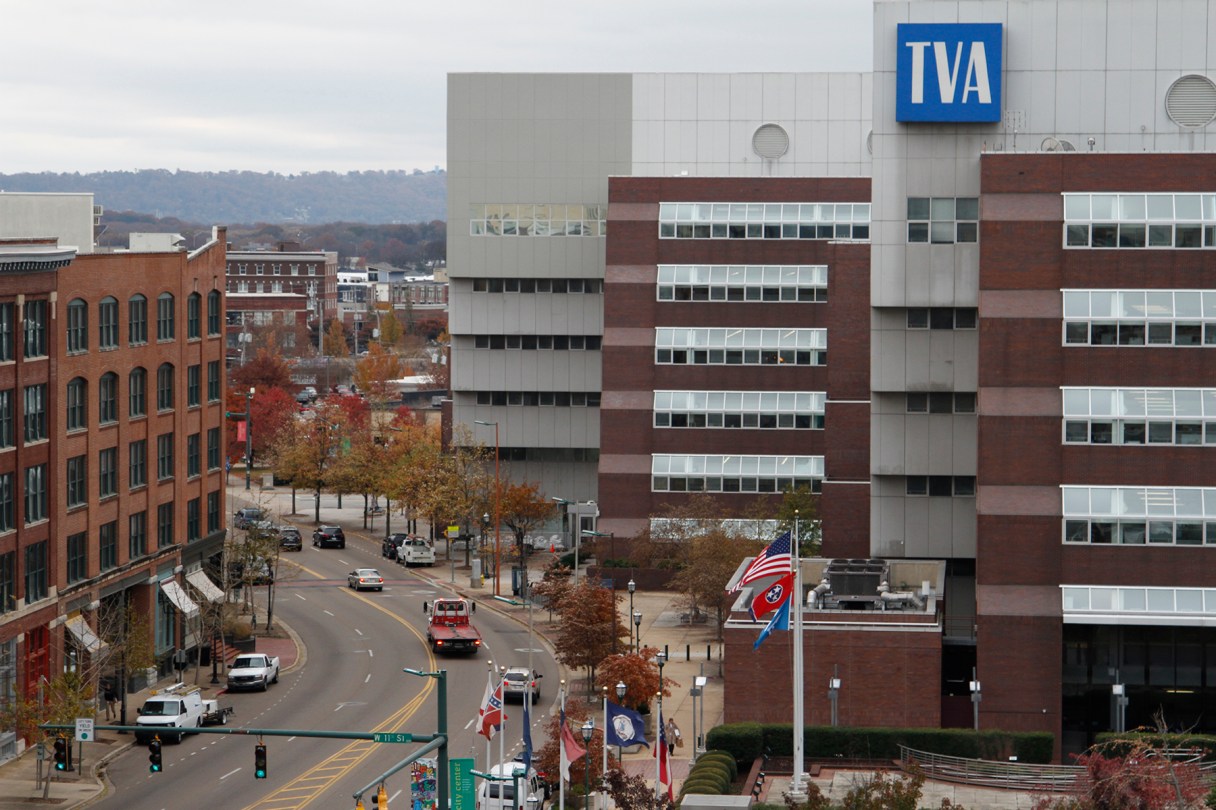

We think it’s time TVA gave out bonuses – to its ratepayers.
The Tennessee Valley Authority announced Thursday it is giving most of its employees record bonuses averaging more than $14,000 apiece next week because the agency met or exceeded most of its performance targets for fiscal 2018.
But TVA has magnanimously explained throughout the last year how it has done its best to keep its increases for ratepayers below the rate of inflation.
We’ll grant the utility has been managed well, cut its operating expenses, trimmed its number of employees, sliced its carbon emissions in half since 2005 and brought in new business.
It has done so, according to a TVA official, by meeting stretch goals.
We wonder if the agency ought to rethink how its sets its goals, though. After all, it awarded bonuses of $11,400 for fiscal 2014, $10,367 for fiscal 2015, $9,532 for fiscal 2016 and $10,970 for fiscal 2017. It makes one think just doing your base job at the agency is a pretty low bar.
Last year, the bonuses were referred to by officials as winning performance pay. This year, they’ve also been termed “at-risk pay for our employees to incentivize employees to meet and exceed goals in key areas.”
In truth, we don’t begrudge TVA giving its employees bonuses. Every employer must figure out how to reward employees, and this is the way TVA handles it. Unfortunately for TVA, being a quasi-government agency, it must compensate its employees in the public sunlight.
Unquestionably, the agency had a very good year. Its outages and accidents for fiscal 2018 were at a record low, its level of new business investment hit a record high, it increased its net income 63 percent over 2017 to $1.1 billion (second highest in its history) and reduced its debt to the lowest point since the early 1990s.
But we’d like to think the record $144.5 million in bonuses could have been reduced slightly to give residential ratepayers a break.
TVA likes to say that its residential electricity rates are in the lowest quarter of America’s 100 biggest electric utilities, though once they were in the lowest 10 percent. However, critics say people pay bills, not rates, and those don’t wind up so low.
Tennesseans pay a higher share of their income in their power bills than residents in most other states, according to the U.S. Energy Information Administration.
And a study by Synapse Energy Economics Inc. found TVA’s average rates for industrial and direct-served customers dropped 20 percent from 2011 to 2016 while residential rates rose an average 5 percent.
Last month, the utility increased its base rate for the sixth time in six years, while its fixed rate portion of residential electricity bills has jumped an average of 50 percent since 2011.
TVA, though, says ratepayers are getting more for their money since its fuel costs have declined. So they maintain that even with annual increases ratepayers are forking over about what they have, or slightly more than they have, for the better part of a decade.
The utility, six years ago, according to Times Free Press archives, adopted a 10-year plan that would raise base rates 1.5 to 2 percent per year to help reduce debt and better position it in the market.
Critics now say, with the success it has seen, it might be time to rethink that 10-year plan.
So, whether it comes ending the annual base pay jumps or reducing the bonuses, we’d like to see TVA reward its ratepayers like it does its employees.
Its employees, after all, are scheduled to get an average 3 percent pay increase for fiscal 2019, while its CEO is scheduled to get a bump in annual salary and at-risk performance pay of 6 percent.
TVA’s current chief, Bill Johnson, already the highest paid federal employee in the U.S., is retiring early next year when the utility selects a replacement for him. His total compensation for 2018 is $8.1 million, 22 percent higher than a year ago.
Utility officials say they must be competitive in their salaries and other pay to attract the best talent in order to get the best results. Now we’d like to see a little of that competitiveness – in lowering total bills – passed on to ratepayers.