
Tuesday, November 10, 2026Nov 10

Hamid Gul, a Pakistan spy master tied to militants, dies

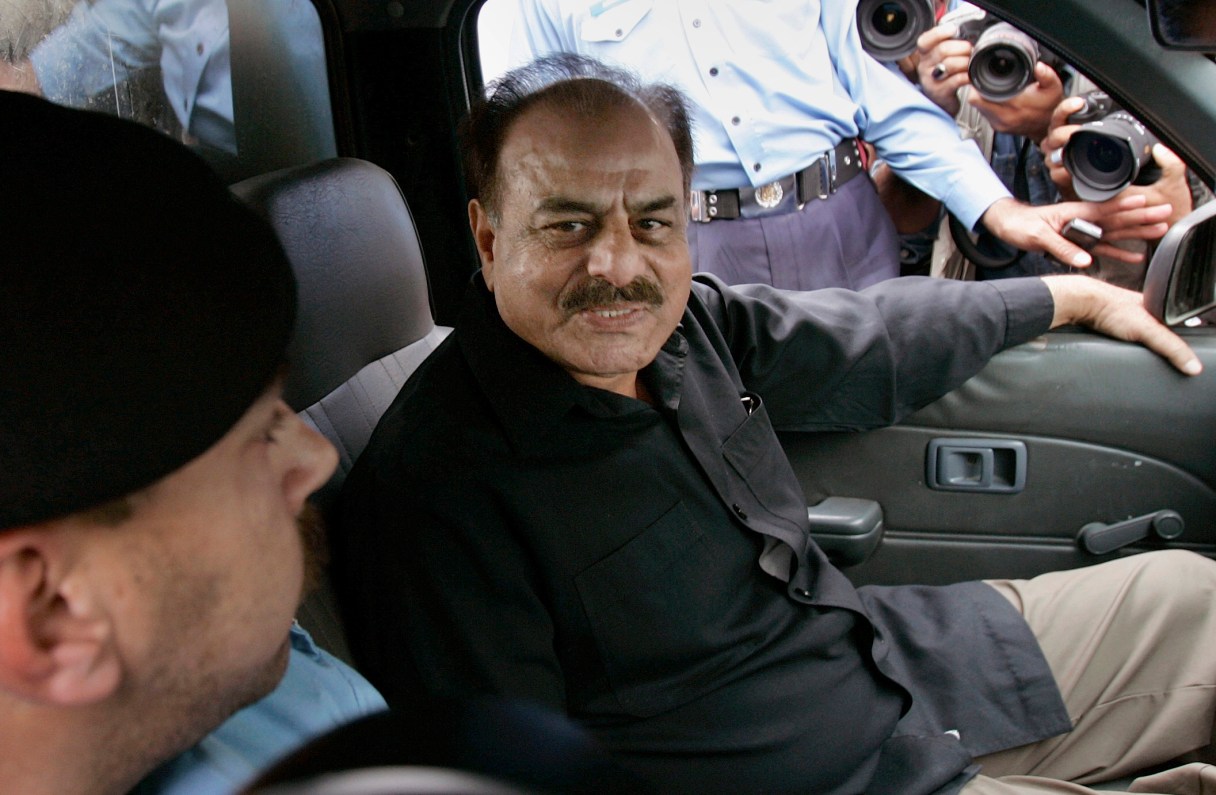
FILE - In this Nov. 4, 2007 file photo, former chief of Pakistan Inter Services Intelligence (ISI)  Hameed Gul sits in a police vehicle in Islamabad, Pakistan. Family members say on Sunday, Aug. 16, 2015, Hameed Gul, the former head of Pakistan's Inter-Services Intelligence spy agency during the end of the Soviet occupation of Afghanistan and who supported Islamic militants, has died of a brain hemorrhage. He was 79. (AP Photo/B.K. Bangash, File)
FILE - In this Nov. 4, 2007 file photo, former chief of Pakistan Inter Services Intelligence (ISI) Hameed Gul sits in a police vehicle in Islamabad, Pakistan. Family members say on Sunday, Aug. 16, 2015, Hameed Gul, the former head of Pakistan's Inter-Services Intelligence spy agency during the end of the Soviet occupation of Afghanistan and who supported Islamic militants, has died of a brain hemorrhage. He was 79. (AP Photo/B.K. Bangash, File) FILE - In this Nov. 4, 2007 file photo, former chief of Pakistan Inter Services Intelligence (ISI) Hameed Gul sits in a police vehicle in Islamabad, Pakistan. Family members say on Sunday, Aug. 16, 2015, Hameed Gul, the former head of Pakistan's Inter-Services Intelligence spy agency during the end of the Soviet occupation of Afghanistan and who supported Islamic militants, has died of a brain hemorrhage. He was 79. (AP Photo/B.K. Bangash, File)

ISLAMABAD (AP) – Family members say Hamid Gul, the former head of Pakistan’s Inter-Services Intelligence spy agency during the end of the Soviet occupation of Afghanistan and who supported Islamic militants, has died of a brain hemorrhage. He was 79.

His daughter, Uzma Gul, told The Associated Press on Sunday that her father died late Saturday night at the hill resort of Murree near the capital, Islamabad.

Born in 1936, Gul served in the army and fought in two wars against India. He always advocated that nuclear-armed Pakistan should confront its atomic-armed neighbor India.

As ISI chief from 1987 to 1989, he helped the CIA funnel weapons and money to jihadis fighting Soviet troops in Afghanistan. He later broke with the U.S. and loudly supported Islamic militants, including al-Qaida leader Osama bin Laden.