
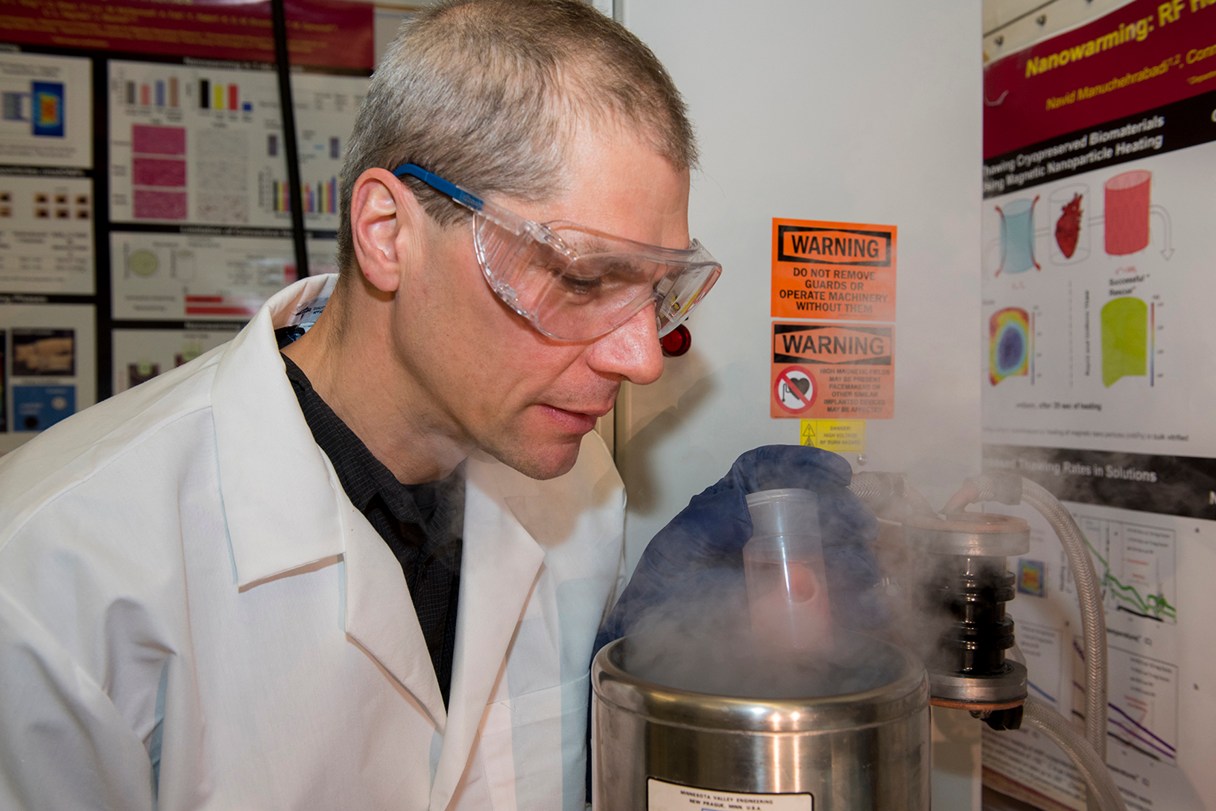
WASHINGTON (AP) – Deep-freezing donated organs might one day help improve the transplant supply but scientists must first figure out how to thaw the delicate tissue without it cracking. Now researchers are taking a first step toward that goal, using nanotechnology to create super heaters for preserved tissue.
University of Minnesota researchers call their approach “nanowarming,” and they reported Wednesday that it safely and rapidly thawed larger amounts of animal tissue than today’s tools can.
The trick: Bathe pieces of tissue in magnetic nanoparticles and then beam radiofrequency energy to activate them. The nanoparticles act like microscopic heaters, evenly warming the tissue surrounding them, concluded the research published in Science Translational Medicine.
Years of additional research are needed before attempting to thaw human organs.
“We are cautiously optimistic that we’re going to be able to get into a kidney or maybe a heart. But we are not, in any way, declaring victory here,” said University of Minnesota mechanical engineering professor John Bischof, who led the research team.