
Wednesday, November 11, 2026Nov 11

Records reveal divide on Ferguson police tactics

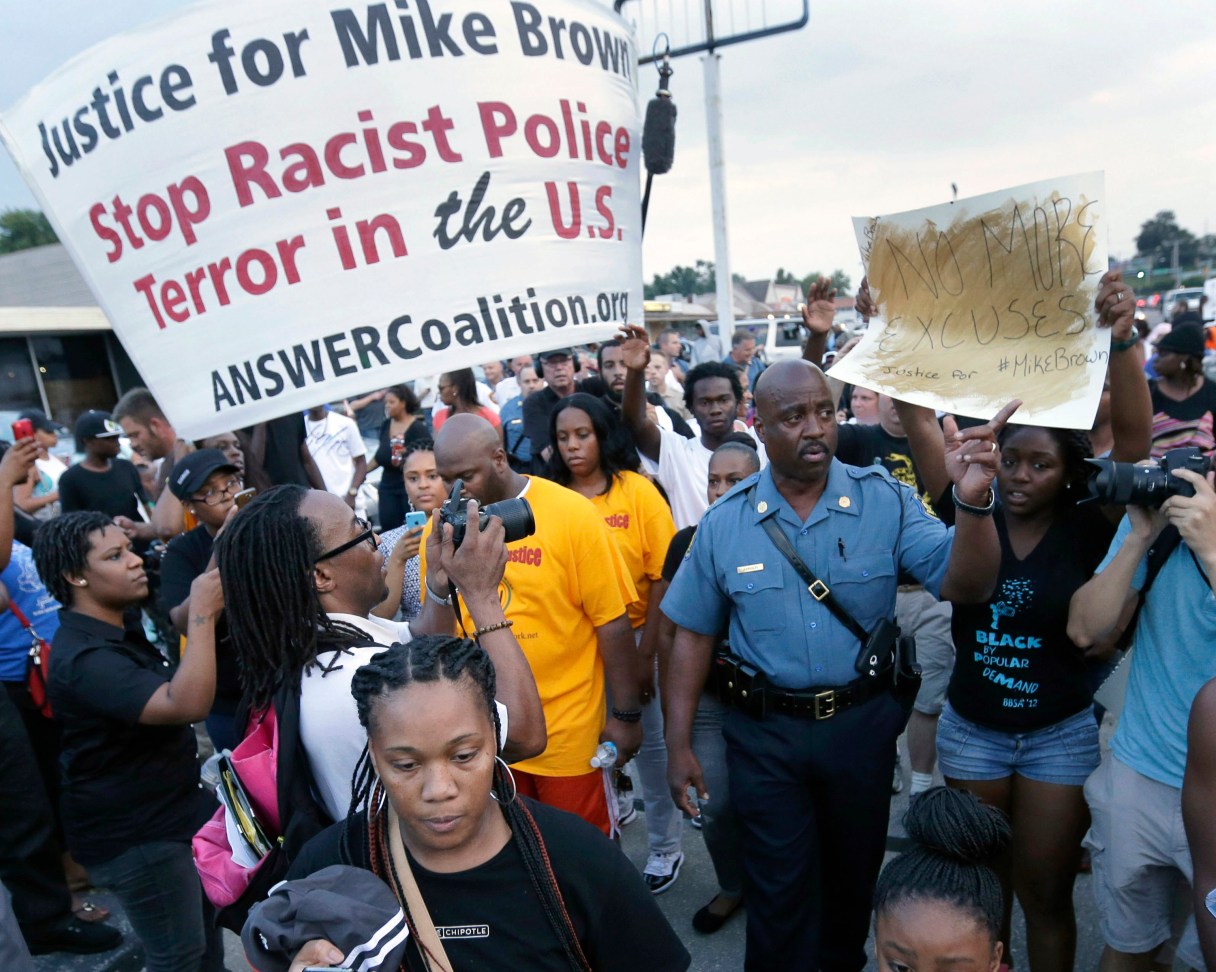
FILE - In this Aug, 16, 2014 file photo Missouri Highway Patrol Capt. Ron Johnson, center right, walks among people protesting the police shooting death of Michael Brown in Ferguson, Mo. Emails sent to top public-safety officials both criticizing and praising Johnson for appearing to sympathize with protesters illustrate one of the challenges that authorities could face after a grand jury decides whether to charge the police officer who killed Brown _ how to walk a fine line between providing public empathy and security. (AP Photo/Charlie Riedel, File)
FILE - In this Aug, 16, 2014 file photo Missouri Highway Patrol Capt. Ron Johnson, center right, walks among people protesting the police shooting death of Michael Brown in Ferguson, Mo. Emails sent to top public-safety officials both criticizing and praising Johnson for appearing to sympathize with protesters illustrate one of the challenges that authorities could face after a grand jury decides whether to charge the police officer who killed Brown _ how to walk a fine line between providing public empathy and security. (AP Photo/Charlie Riedel, File) FILE - In this Aug, 16, 2014 file photo Missouri Highway Patrol Capt. Ron Johnson, center right, walks among people protesting the police shooting death of Michael Brown in Ferguson, Mo. Emails sent to top public-safety officials both criticizing and praising Johnson for appearing to sympathize with protesters illustrate one of the challenges that authorities could face after a grand jury decides whether to charge the police officer who killed Brown _ how to walk a fine line between providing public empathy and security. (AP Photo/Charlie Riedel, File)

JEFFERSON CITY, Mo. (AP) – Newly released emails, sent to and from Missouri’s top public-safety officials, show that the state police captain placed in charge of security in Ferguson after Michael Brown’s death was both vilified and praised for attempting to replace authorities’ militarized approach with one more sympathetic to protesters.

The emails, obtained by The Associated Press through an open-records request, also show that police tried to find a way to protect members of the clergy who were in the protest crowds, and that some officers objected to an order to take their meal breaks in public.

The messages offer a small window into the inner workings of Missouri law-enforcement agencies as they tried to quell the tensions that arose following the fatal shooting of the black 18-year-old by white police officer Darren Wilson. The records also illustrate one of the many challenges authorities could face if new protests develop – how to walk a fine line between providing public empathy and security.

There is no specific date for a grand jury decision to be announced on whether to charge Wilson. But anticipation has been mounting because St. Louis County Prosecutor Bob McCulloch has said previously that he expects a decision by mid-to-late November.

As early as Labor Day weekend, police were already discussing the need to develop a well-coordinated plan for a potential surge in protests when the grand jury decision is announced.