
Thursday, November 12, 2026Nov 12

Panel backs aspirin for heart health in only certain adults

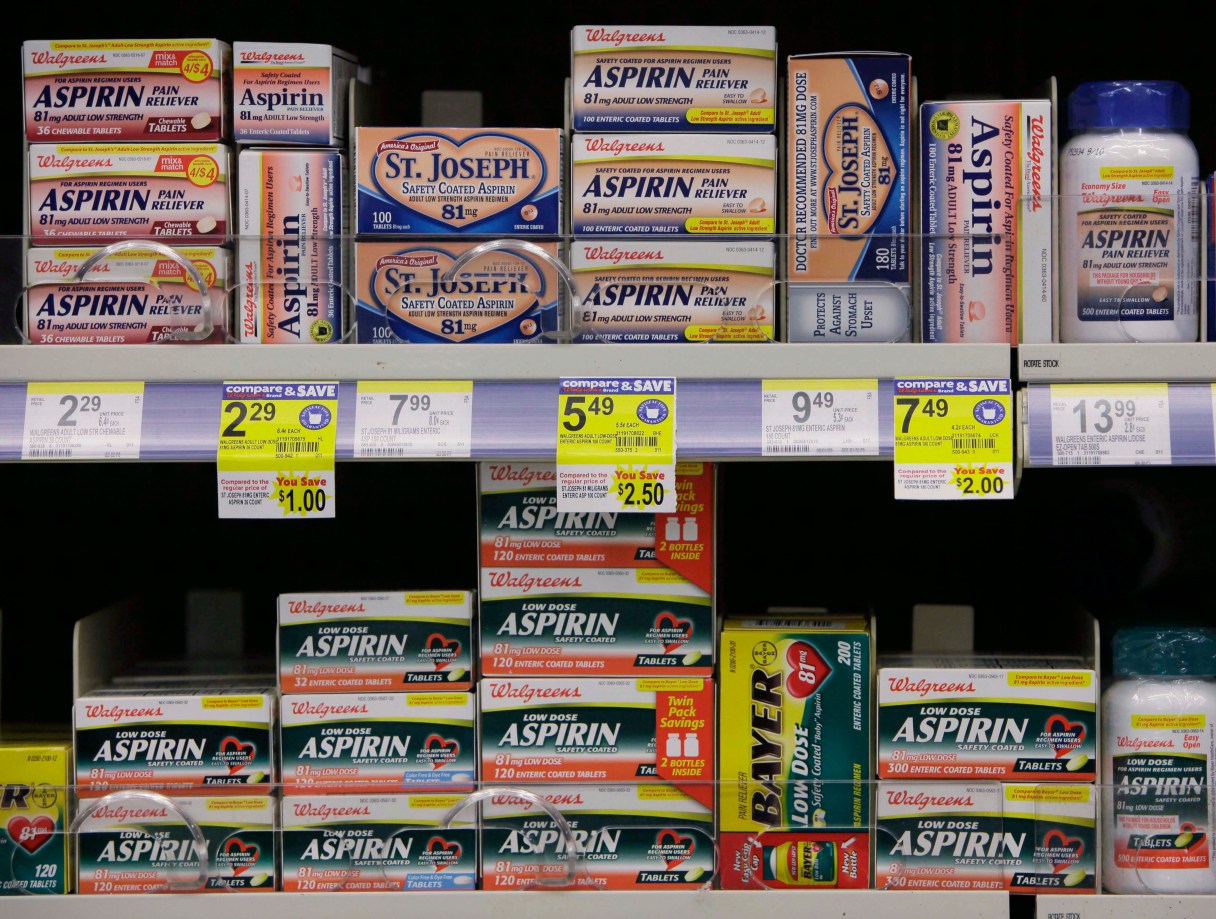
FILE - This Tuesday, Aug. 11, 2009 file photo shows packages of aspirin on the shelves of a drugstore in Chicago. In results published in the Journal of the American Medical Association on Tuesday, March 17, 2015, aspirin users were less likely than nonusers to get colon or rectal cancer if they had genetic traits found in about 90 percent of the participants. Cancer patients were less likely to have the beneficial traits, and less likely to be frequent aspirin users. (AP Photo/M. Spencer Green)
FILE - This Tuesday, Aug. 11, 2009 file photo shows packages of aspirin on the shelves of a drugstore in Chicago. In results published in the Journal of the American Medical Association on Tuesday, March 17, 2015, aspirin users were less likely than nonusers to get colon or rectal cancer if they had genetic traits found in about 90 percent of the participants. Cancer patients were less likely to have the beneficial traits, and less likely to be frequent aspirin users. (AP Photo/M. Spencer Green) FILE - This Tuesday, Aug. 11, 2009 file photo shows packages of aspirin on the shelves of a drugstore in Chicago. In results published in the Journal of the American Medical Association on Tuesday, March 17, 2015, aspirin users were less likely than nonusers to get colon or rectal cancer if they had genetic traits found in about 90 percent of the participants. Cancer patients were less likely to have the beneficial traits, and less likely to be frequent aspirin users. (AP Photo/M. Spencer Green)

WASHINGTON — A government task force says a daily low-dose aspirin could help certain people in their 50s and 60s prevent a first heart attack or stroke – and they might get some protection against colon cancer at the same time.

The U.S. Preventive Services Task Force issued draft guidelines Monday recommending aspirin only if people meet a strict list of criteria – including a high risk of heart disease and a low risk of bleeding side effects.

The guidelines said the recommendation is strongest for 50-somethings, but that doctors should decide aspirin therapy on a case-by-case basis for people in their 60s, who can expect a smaller benefit.

Potential candidates should have at least a 10 percent risk of a heart attack or stroke over the next decade, have a life expectancy of at least 10 years and be willing to take daily aspirin that long, and not have other health conditions that cause bleeding, the guidelines said. That’s because prolonged aspirin use can trigger serious bleeding, in the gastrointestinal tract or brain.

Aspirin therapy has long been recommended for heart attack survivors, but who should try it for what’s called primary prevention – protection of a first heart attack or stroke – is less clear. And while studies suggest years of daily aspirin use may lower the risk of colon cancer, no major health organizations recommend taking it solely for that reason.