
Wednesday, November 11, 2026Nov 11

Supreme Court could cut health subsidies

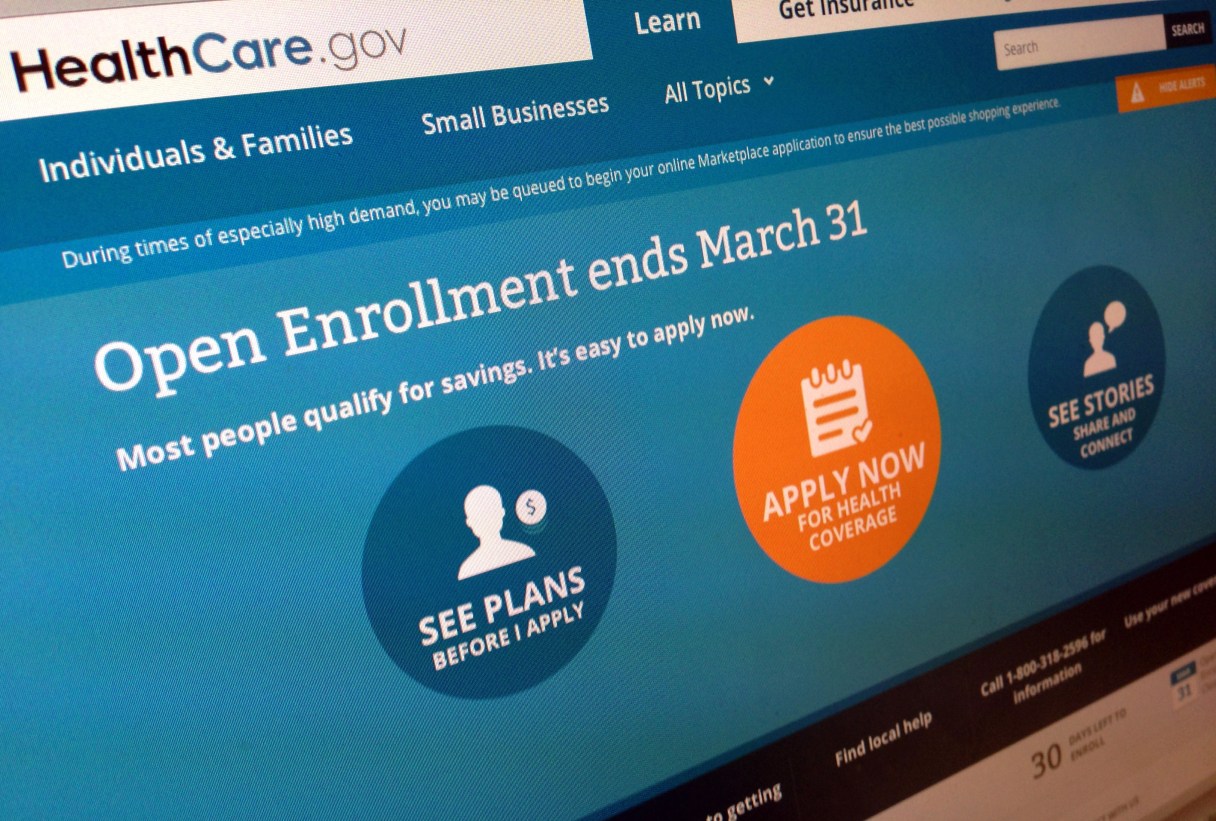
FILE - This March 1, 2014 file photo shows part of the website for HealthCare.gov, seen in Washington. President Barack Obama’s health care law has become a tale of two Americas. States that fully embraced the law’s coverage expansion are experiencing a significant drop in the share of their residents who remain uninsured, according to an extensive new poll released Tuesday. States whose leaders still object to “Obamacare” are seeing much less change. The Gallup-Healthways Well-Being Index, cumulatively based on tens of thousands of interviews, found a drop of 4 percentage points in the share of uninsured residents for states that adopted the law’s Medicaid expansion and either built or helped run their own online insurance markets. (AP Photo/Jon Elswick, File)
FILE - This March 1, 2014 file photo shows part of the website for HealthCare.gov, seen in Washington. President Barack Obama’s health care law has become a tale of two Americas. States that fully embraced the law’s coverage expansion are experiencing a significant drop in the share of their residents who remain uninsured, according to an extensive new poll released Tuesday. States whose leaders still object to “Obamacare” are seeing much less change. The Gallup-Healthways Well-Being Index, cumulatively based on tens of thousands of interviews, found a drop of 4 percentage points in the share of uninsured residents for states that adopted the law’s Medicaid expansion and either built or helped run their own online insurance markets. (AP Photo/Jon Elswick, File) FILE - This March 1, 2014 file photo shows part of the website for HealthCare.gov, seen in Washington. President Barack Obama’s health care law has become a tale of two Americas. States that fully embraced the law’s coverage expansion are experiencing a significant drop in the share of their residents who remain uninsured, according to an extensive new poll released Tuesday. States whose leaders still object to “Obamacare” are seeing much less change. The Gallup-Healthways Well-Being Index, cumulatively based on tens of thousands of interviews, found a drop of 4 percentage points in the share of uninsured residents for states that adopted the law’s Medicaid expansion and either built or helped run their own online insurance markets. (AP Photo/Jon Elswick, File)

If the Supreme Court strikes down the legality of subsidies used to help persons who bought health plans through the new federal exchange networks under Obamacare later this month, 21,000 residents in U.S. Rep. Tom Graves North Georgia congressional district and 16,000 residents of Rep. Chuck Fleischmann’s congressional district will lose their health care coverage, according to a FamiliesUSA.com study released Tuesday.

The Supreme Court, in the King v. Burwell case, will soon decide whether Tennessee, Georgia and 32 other states that didn’t set up their own state exchanges can still qualify for subsidies for individuals who sign up for the new plans offered through the Affordable Care Act.

“Without those tax credits, most of the people affected would be unable to buy insurance and would become uninsured,” Families USA said in the new report.

Critics of ObamaCare contend the law was not written to allow federal subsidies for states without health exchange plans and that striking down those requirements could help lead Congress to write a better health plan.