
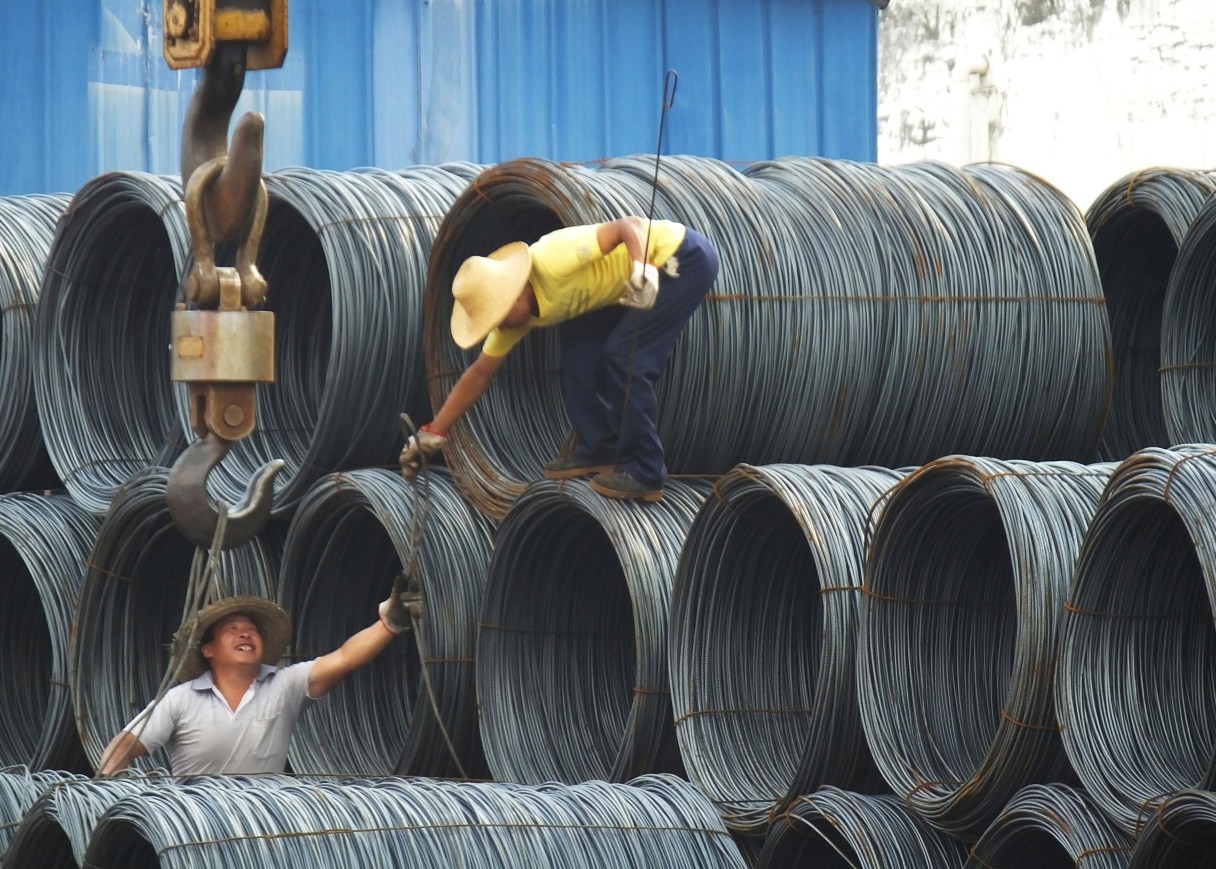
BEIJING (AP) – After threatening to retaliate if President Donald Trump raised trade barriers, Chinese leaders need to decide whether his hikes in steel and aluminum tariffs justify starting a fight that might disrupt access to one of China’s biggest markets.
Beijing had no immediate reaction Friday to Trump’s plan for tariffs of 25 percent on steel and 10 percent on aluminum. Asian stock markets fell amid talk of a “trade war.”
Chinese leaders need to weigh the need to back up threats with action against the risk of disrupting U.S. market access for smartphones and other exports that matter more to the economy than metals.
“China will definitely respond. It doesn’t want to be seen as weak. But it will be relatively restrained,” said economist Louis Kuijs of Oxford Economics. “They don’t want to be seen as a party that is wrecking the international trading system.”
Beijing has accused Trump of undermining global trade regulation by taking action over steel, technology policy and other disputes under U.S. law instead of through the World Trade Organization.