
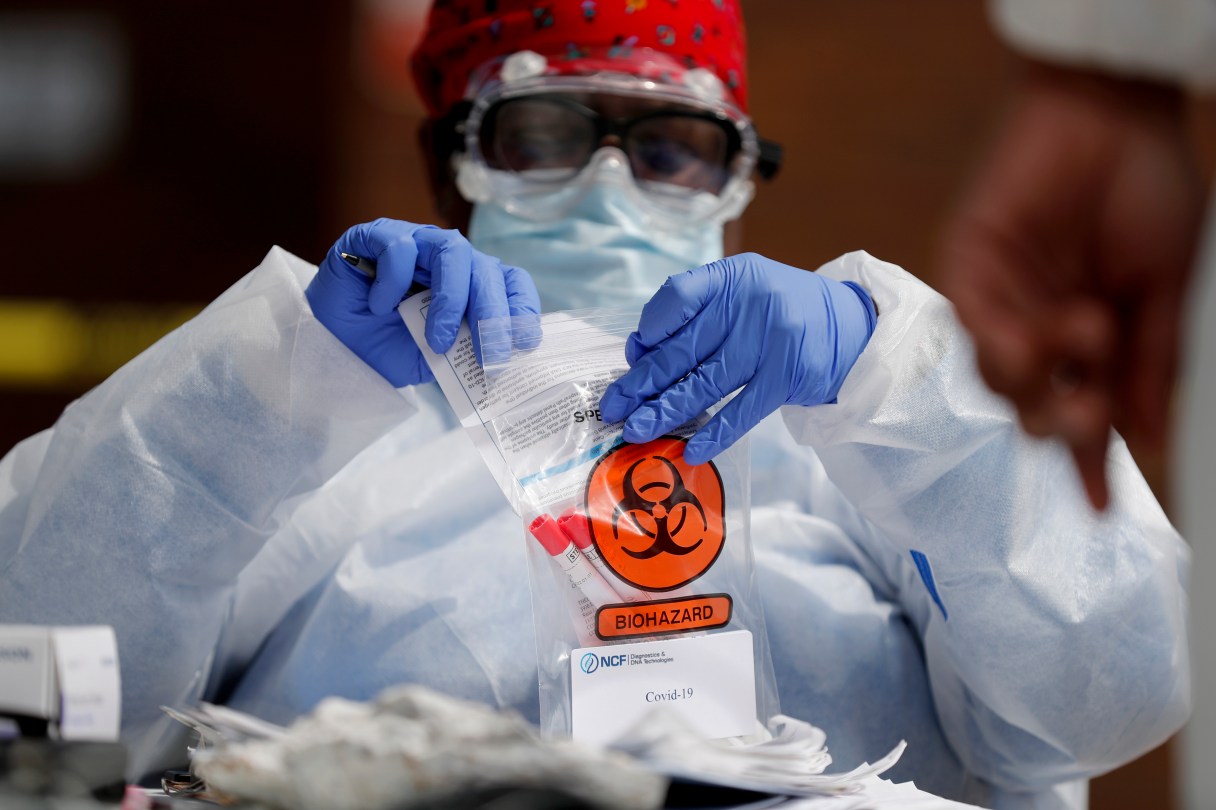
Tennessee’s COVID-19 cases climbed above 7,000 last week – without the benefit of the results of all of the 11,000 drive-through tests taken in the state last weekend.
Yet on Monday evening, Republican Tennessee Gov. Bill Lee announced he will allow his stay-at-home coronavirus pandemic order to expire on April 30, with the “vast majority” of businesses in 89 counties allowed to reopen on May 1.
Doesn’t that seem a bit reckless? To make a reopening decision apparently without the benefit of the state’s widest yet round of testing? What’s more, doesn’t it seem reckless to make this reopening decision knowing that tornadoes ravaged the southeastern portion of the state on Easter night – tossing hundreds of people out of their homes to clean up and help neighbors in conditions not conducive to social distancing?
Lee’s coronavirus plan specifically excluded six of the state’s largest counties, including Hamilton, which have their own health departments as they plan their own “reopen strategies.”
Hamilton County Mayor Jim Coppinger said Tuesday that Hamilton County also will reopen on May 1 – ravaged as it is by a tornado and slow as it was to get testing going. Our county lagged behind the rest of state, and we were unable to open any kind of widespread testing until recent days.
Chattanooga Mayor Andy Berke says Chattanooga businesses will remain closed for now, with no reopening date set. In fact, the Chattanooga City Council on Tuesday was set to take a first vote on an ordinance that would impose a $50 fine on anyone caught violating the city’s shelter-in-place order.
COVID-19 doesn’t respect city, county or state lines, and Georgia’s reckless Republican Gov. Brian Kemp plans to reopen his state even sooner – the end of this week.
Confirmed coronavirus cases in Georgia have topped 19,800. But, hey, not to worry: On Friday you can hop three miles south of here and get a haircut or tattoo in Rossville. Kemp is allowing those businesses and gyms to reopen this week if they follow social distancing guidelines and screen their employees for signs of fever and respiratory illness. We don’t know about you, but we’ve never seen a hair stylist or tattoo artist with six-foot arms. And there’s no protection in looking for “signs of illness.” COVID-19 can spread even before a person has symptoms.
If you have whiplash, you’re not alone.
Tennessee Sen. Lamar Alexander, a great respecter of our state and national economic engines, thinks this is no time to get weak-kneed about aggressively testing for this virus. He’s so adamant about it that’s he using language President Donald Trump (and his Republican governor toadies) can understand: Reality TV.
Alexander and Missouri Republican Sen. Roy Blunt are calling for a “Shark Tank” kind of competition for “utilizing the capacities of government itself, in coordination with the private sector – to pull out all the stops and create new technologies” designed to produce tens of millions of diagnostic tests by August.
“There is no safe path forward to combat the novel coronavirus without adequate testing,” Alexander wrote Monday in a Washington Post opinion piece. “To contain COVID-19 and persuade Americans to leave their homes and return to work and school, the United States will need tens of millions of diagnostic tests. Deborah Birx, the coordinator of the coronavirus task force, says there are now 1 million tests available weekly; by mid-June, there will be 2 million to 2 1/2 million available.”
That’s not enough, the senators say. There are 328.2 million people in the United States. And ideally some of us should be tested more than once – since a test this week may not show the virus we caught last week in the aftermath of tornado recovery, for instance. Actually, the number of tests Birx is talking about would not even be enough to test all of Tennessee’s 6.8 million residents.
Alexander and Blunt say drastically upping the test production is “key” to reopening the nation, as well as schools in August and September.
Alexander and Blunt aren’t just random Republicans who like to stay on Trump’s good side. Alexander, who is retiring at the end of this year, is chairman of the Senate Health, Education, Labor and Pensions Committee. Blunt is chairman of the Senate’s health appropriations subcommittee.
The stay-at-home and social-distancing orders, or the lifting of them, are strictly the purview of governors. And Trump – with his recent, vicious “LIBERATE” states comments and egging on of the Typhoid Mary protesters to demand reopening – has put immense pressure not only on Democrats, but also on fellow Republicans like Lee and Kemp. And Coppinger, though he denies feeling that pressure.
Republican Tennessee lawmakers such as Robin Smith, a former nurse, was armed Tuesday by state health officials with a handout of graphs that show a slowing of virus hospitalizations in the days since Lee in mid-April extended his stay-at-home order. It does not, however, show much more than the slightest hint of slowing new cases.
Smith was heartened by the fall-off of hospitalizations, but was lukewarm on all-out reopening.
“I don’t think the argument works anymore that we can’t have health, and an economy, and freedom,” she said. “I think if we open up wide open it’s a huge mistake.”
We agree. And we hope the governors and mayors hold fast to their talk of still-to-be-unveiled “guidelines” on exactly how the reopening will occur.