
CLEVELAND, Tenn. – Three of Bradley County’s least-known links to its history are in need of some TLC.
Two of them, the sculpture “Cherokee Chieftain” in Johnston Park and the springhouse at Fletcher Park, are almost hidden by foliage and are deteriorating, local experts say.
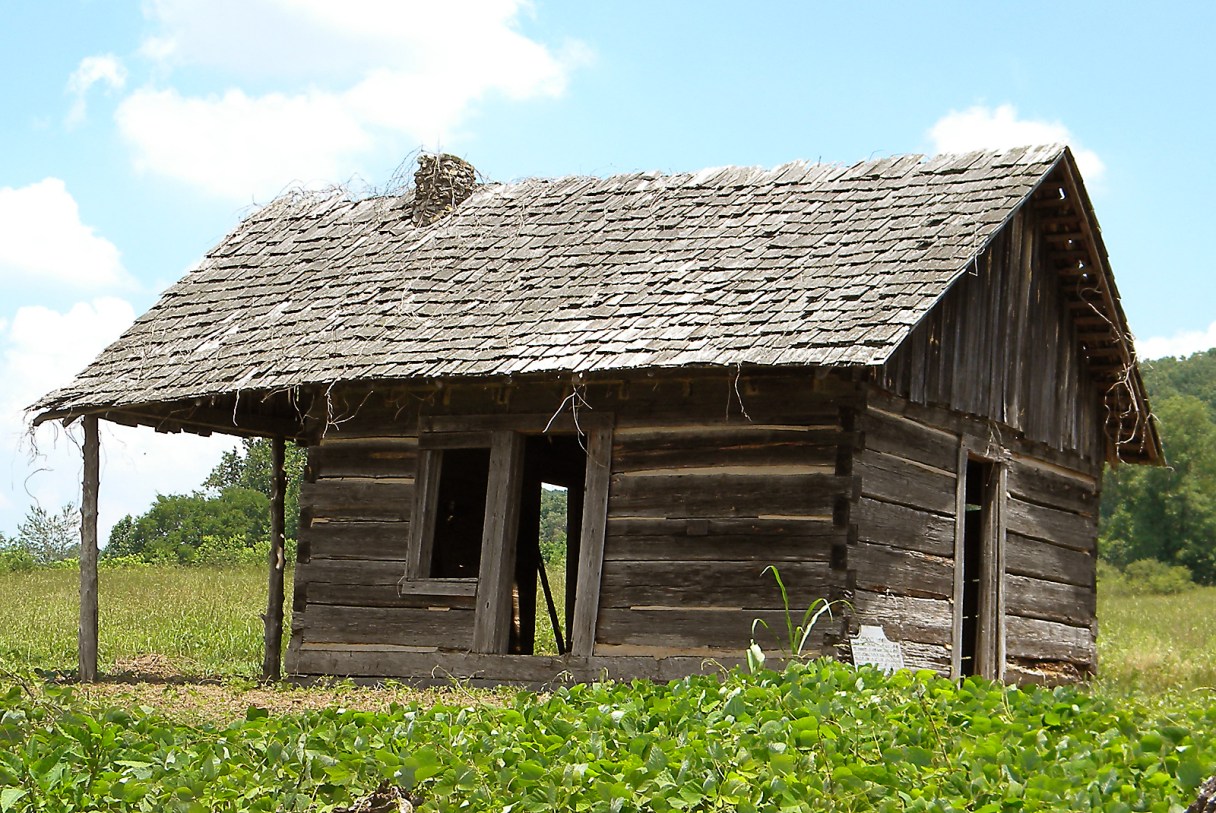
The third, an 1820s-era log cabin moved from Hamilton to Bradley County on property that was once owned by Cherokee Chief John Ross, is getting some county and volunteer attention.
The problem is finding money during financially hard times. The county committed $5,000 to saving the cabin. The city is hoping for private help for the other two historical monuments.
The two-story brick springhouse may date to the middle of the 19th century, according to newspaper archives. The Fletcher family donated the land, a former farm and plant nursery, for a city park years ago.
“I know there is no money now, but we hope there might be some donations to help shore it up until restoration work could be done later,” said City Councilman David May.
According to a Bradley County bicentennial history book, Andrew J. Fletcher Sr. was Tennessee’s secretary of state after the Civil War before buying a farm here. Andrew Fletcher Jr. came here as a child and held county public offices as an adult.
An architect’s estimate concludes that restoring the springhouse would cost about $32,000. Adding an access walk and sitting area, something discussed by the Fletcher Park Committee, would add another $29,000, according to the estimate.
“The Cherokee Chieftain” sculpture sits in the middle of Johnston Park in downtown Cleveland, almost hidden by shrubs and trees that have grown around it in the 24 years since the carving was moved from the History Branch of the Cleveland-Bradley County Public Library to the park.
Melissa Woody, vice president of the local Convention and Visitors Bureau, asked the City Council to consider moving the chieftain to the Museum Center at Five Points.
Lisa Simpson Lutts, museum center executive director, agreed that the museum display, although outdoors, would provide better protection.
Hungarian refugee Peter Toth carved the sculpture from an oak tree in the mid-1970s. It is part of his “Trail of the Whispering Giants” series, which includes at least one sculpture of American Indians in each state.
Occasionally visitors stop by the Chamber or the Museum Center who are following the “Trail of the Whispering Giants” across the country.
Cleveland Public Works Director Tommy Myers said he is discussing the project with a local expert who has helped other communities relocate Toth sculptures. The carving also will be inspected, he said, to see what wood preservation or pest control treatments may be needed.
For the 1820s log cabin, the Ocoee Region Builders Association is volunteering to stabilize and restore the building, located in the Flint Springs area.
The county money, along with donated building supplies and volunteer work, will help restore the cabin.
Continue reading by following these links to related stories: