
Thursday, November 12, 2026Nov 12

Business Bulletin: How to prevent holiday packages from being stolen at your home

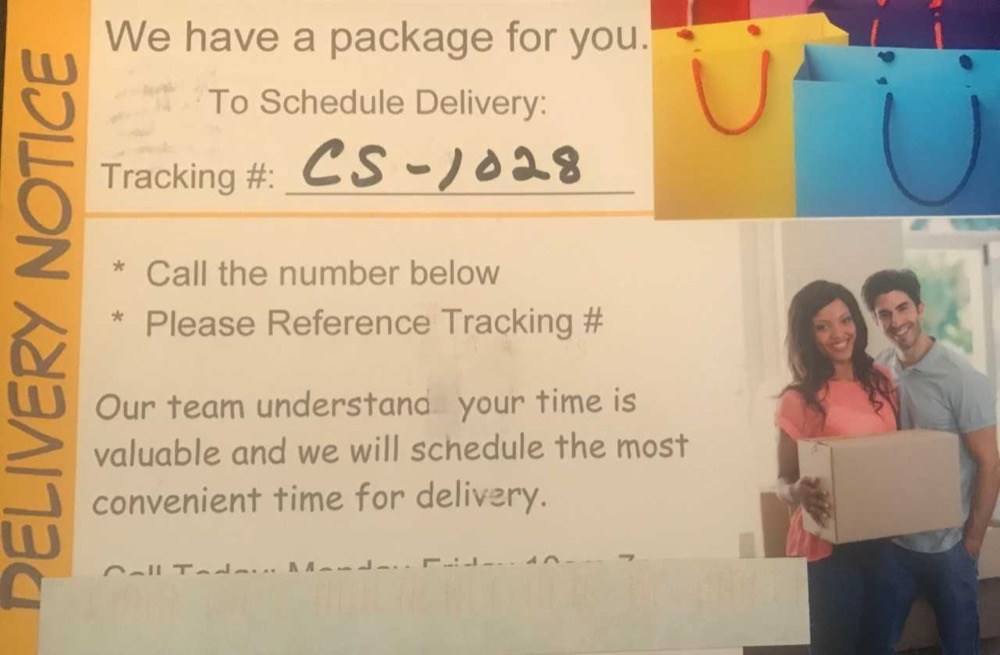
The back of a fraudulent "delivery notice" postage card scam is seen in this photo. The scam cards claim the recipient has a package that is being held and provides a phone number to call in order to schedule delivery. Once the recipient calls the number, the scammer will try to gain personal identification and financial information, claiming it is needed to "verify the correct package recipient." / Photo provided by the Bradley County Sheriff's Office
The back of a fraudulent "delivery notice" postage card scam is seen in this photo. The scam cards claim the recipient has a package that is being held and provides a phone number to call in order to schedule delivery. Once the recipient calls the number, the scammer will try to gain personal identification and financial information, claiming it is needed to "verify the correct package recipient." / Photo provided by the Bradley County Sheriff's Office The back of a fraudulent "delivery notice" postage card scam is seen in this photo. The scam cards claim the recipient has a package that is being held and provides a phone number to call in order to schedule delivery. Once the recipient calls the number, the scammer will try to gain personal identification and financial information, claiming it is needed to "verify the correct package recipient." / Photo provided by the Bradley County Sheriff's Office

Q. I see stories about packages being stolen at homes. Is this a local issue and what advice may BBB offer?

A. For holiday shopping, most consumers love the convenience of making purchases online and having them shipped straight to their doorstep. But with millions of packages delivered each year, con artists and thieves have developed many ways to steal from shoppers. Fortunately, there are also many ways to protect you from their shady tactics.

Popular Delivery Scams

Delivery scams and theft are particularly prevalent at the holidays, when more packages are being shipped. Scammers are hoping shoppers are busy or distracted and will act without thinking.

The first scams to look out for are phishing emails that pose as official notices from delivery companies. These either contain a “tracking link” or a message that the shipper is having difficulty delivering a package to you. Clicking the link either takes you to a form that asks for personally identifying information, or to a site that downloads malware onto your computer.