
Thursday, October 29, 2026Oct 29

This story is free to read.

Lew says no sense of financial crisis developing

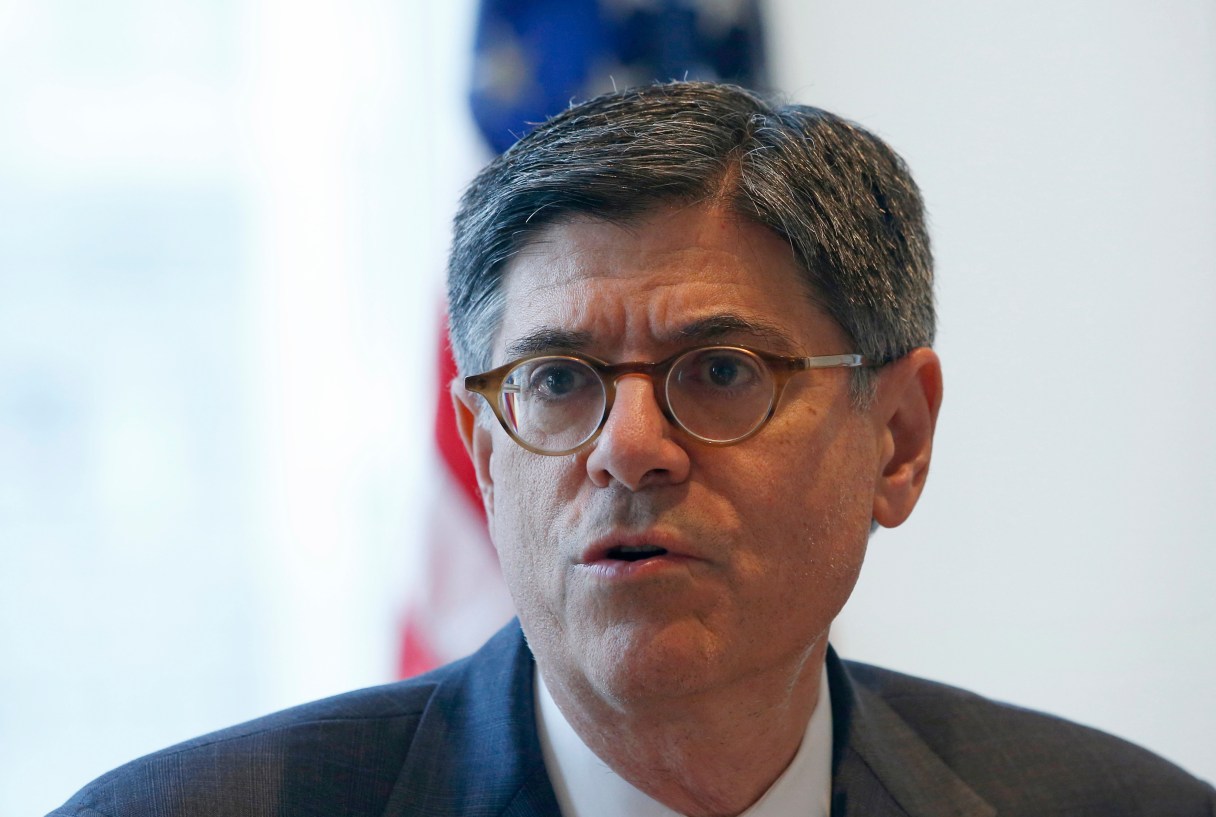
FILE - In this Friday, June 3, 2016, file photo, U.S. Treasury Secretary Jacob Lew answers a reporter's question during a roundtable meeting with reporters in Seoul, South Korea. Lew said Monday, June 27, during a CNBC interview, that the decision of British voters to leave the European Union is "an additional headwind" for the U.S. and global economies but "there is no sense of a financial crisis developing." (AP Photo/Lee Jin-man, File)
FILE - In this Friday, June 3, 2016, file photo, U.S. Treasury Secretary Jacob Lew answers a reporter's question during a roundtable meeting with reporters in Seoul, South Korea. Lew said Monday, June 27, during a CNBC interview, that the decision of British voters to leave the European Union is "an additional headwind" for the U.S. and global economies but "there is no sense of a financial crisis developing." (AP Photo/Lee Jin-man, File) FILE - In this Friday, June 3, 2016, file photo, U.S. Treasury Secretary Jacob Lew answers a reporter's question during a roundtable meeting with reporters in Seoul, South Korea. Lew said Monday, June 27, during a CNBC interview, that the decision of British voters to leave the European Union is "an additional headwind" for the U.S. and global economies but "there is no sense of a financial crisis developing." (AP Photo/Lee Jin-man, File)

WASHINGTON (AP) – U.S. Treasury Secretary Jacob Lew says that the decision of British voters to leave the European Union is “an additional headwind” for the U.S. and global economies but “there is no sense of a financial crisis developing.”

In a CNBC interview Monday, Lew said, “I am not saying there will not be an impact on markets but it has been an orderly impact so far.”

Lew said it would be important for economic policymakers to signal that they are prepared to use the tools they have to promote economic growth and “not overreact to a volatile day here and there.”

Signaling concerns that countries might try to intervene in currency markets for trade advantages, Lew said, “We have made it clear that unilateral actions to intervene would be destabilizing.”

In a later appearance in Washington, Lew said that the Obama administration would work closely with officials in London and Brussels, the headquarters of the European Union, as well as with other major international partners to “ensure continued economic stability, security and prosperity in Europe and globally.”