
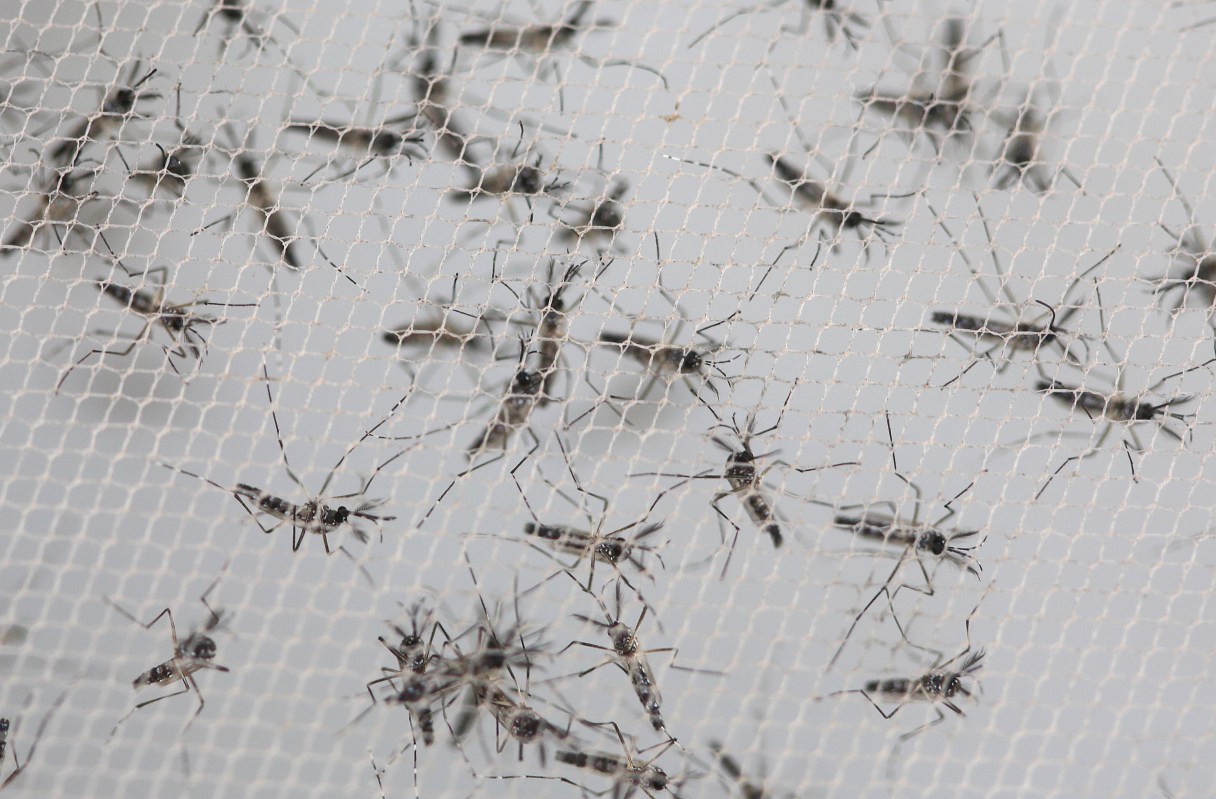
This will be the year of mosquito fear.
The White House warned this week that the threat of Zika virus in the United States is much wider than originally thought because the mosquites that can carry the virus are in 30 states – not just coastal areas.
And, yes, Tennessee is one of those states. Further, Tennessee and some 40 other states have already confirmed at least one travel-related case of Zika, according to the Centers for Disease Control.
But there is some good news. On Monday, the U.S. Food and Drug Administration released a preliminary “no significant impact” finding on a field trial in which genetically modified mosquitoes would be released in the Florida Keys. That finding means scientists believe the modification will not harm humans or the environment.
The trial aims to reduce populations of the mosquito that spreads Zika – as well as dengue and chikungunya – among humans. The trial is proposed by the British biotech firm Oxitec. The Florida Keys Mosquito Control District wants to test Oxitec’s mosquitoes in a small neighborhood north of Key West, according to The Associated Press.
The FDA still needs to review public comments before deciding whether to approve the trial. But the tentative approval could make it easier to explore similar trials in the Southeast or Puerto Rico, said Oxitec CEO Haydn Parry.
“Time is not on our side here, if you look at how Zika has been spreading in Brazil and other countries,” Parry said in a conference call with reporters. “The sooner we can start the trial, the sooner we show what we can do.”
When we think of genetically modified organisms, we usually think of corn or soybeans, and we’ve all heard or read of the concerns – even horror stories – surrounding what science has nicknamed GMOs.
For instance, with 94 percent of the soybeans and 72 percent of the corn grown commercially in the United States now genetically engineered to be “Roundup Ready” – or able to withstand herbicide – some animal studies are showing changes in internal cell structure, abnormal tumor growth and unexpected deaths with exposures to the herbicide or treated products. Further, some weeds meant to be killed are developing resistance, requiring more herbicide use.
But we don’t throw the baby out with the bath water, so research into genetic modification as a way to make our lives better continues. Now that research has spread to the mosquito.
The genetically modified aedes aegypti mosquitoes would produce offspring that are genetically programmed to die. Oxitec has altered two genes in the mosquito so that when modified males breed with wild females, the offspring inherit a lethal gene and die in the larval stage.
The state agency that controls mosquitoes in the Florida Keys is awaiting approval from the federal government for a trial release of Oxitec’s genetically modified mosquitoes to prevent a recurrence of a dengue fever outbreak like one that occurred there in 2009 and 2010 when 28 people were infected – the first such outbreak in Florida in 75 years.
Naturally, no one likes mosquitoes or dengue, and certainly not Zika, which is linked with birth defects and auto-immune illnesses. But people in the Keys are right to worry, and more than 155,000 people signed a petition opposing the trial of genetically engineered mosquitoes in a small area of 400 households near Key West.
Understandably, those who oppose the trial don’t want their communities used as guinea pigs.
Dr. Donald A. Yee, a Tennessee Aquarium-recommended mosquito expert with the University of Southern Mississippi, told the Times Free Press last year that the released male mosquitoes would essentially sterilize the next generation of mosquitoes by carrying what, in effect, is essentially a lethal gene.
Even if female genetically modified mosquitoes are accidentally released, it should cause no harm – either to the natural world or to humans if those modified females bite someone. When mosquitoes bite and suck our blood, they also spit into us, but that bite does not involve interactions without our own DNA. Our blood eventually is filtered by our livers and kidneys, so, in biological terms, there’s no way for her mosquito genes to end up in us, Yee said. This should be clear, since in past millenniums we’ve had no indication that mosquito genes mixed with ours each time we were bitten.
“The failure wouldn’t be ‘oh, no, we’ve created a monster,’ but would be [if the trial fails] ‘we’ve released a lot more mosquitoes into an environment.”’
A positive consequence is that we wouldn’t be using another pesticide like DDT. And speaking of unforeseen consequences, DDT and its environmental ripples created big ones.
Let’s hope scientists are right this time.