
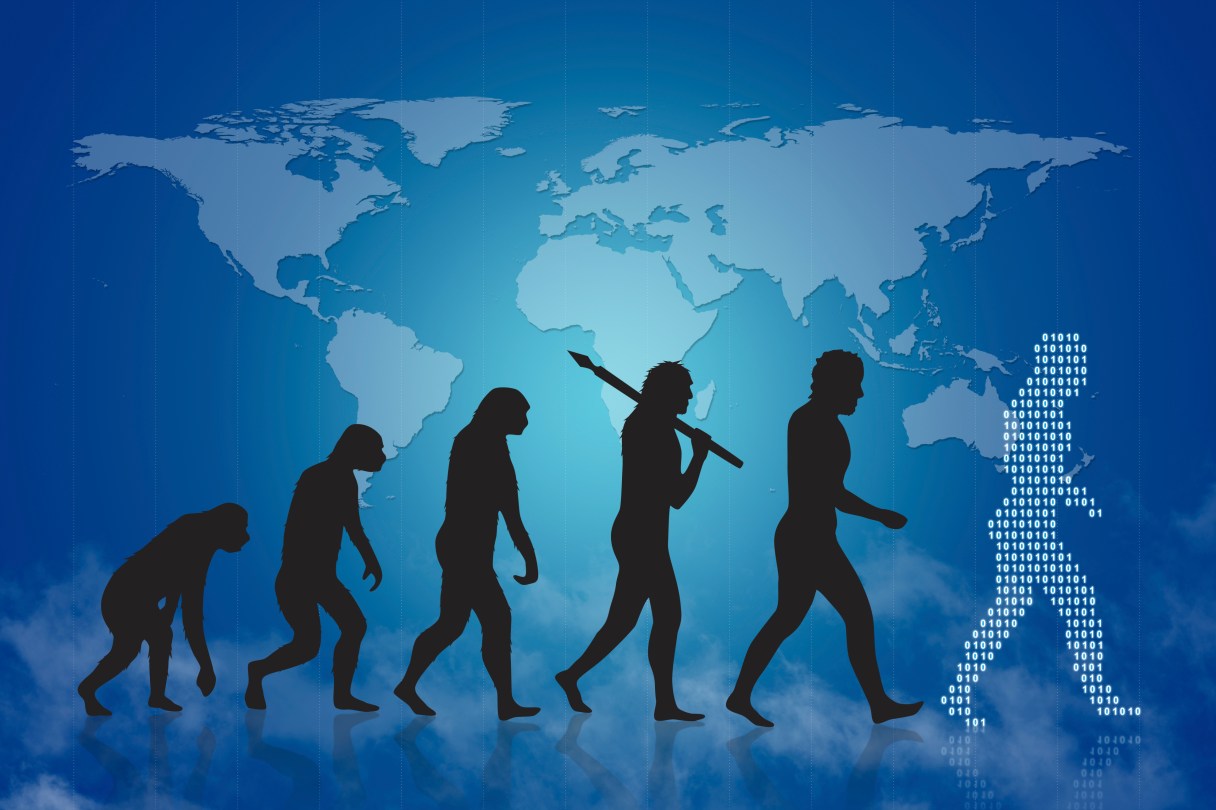
WASHINGTON – About 2 million years ago, a genetic mutation resulted in the human species – social, restless, but consigned to the middle of the food chain, breaking open the bones of carrion for marrow after the lions left. For most of the first 2 million years, we used the same stone tools. Individually, no doubt, we could be the life of the party. Collectively, we migrated across the Earth without leaving much art or history. Several species of humans – Homo erectus, Homo soloensis, Homo neanderthalensis and the rest – lived the relatively healthy, relatively happy hunter-gatherer lifestyle.
Then, perhaps 150,000 years ago, came Homo sapiens. They looked innocent at first, ambling on the East African savannah. But about 70,000 years ago, something shifted or snapped in their ample brains. They began a campaign of expansion that resulted in the extermination or absorption of every other human species (1 percent to 4 percent of the DNA of modern Europeans can be traced to our supplanted Neanderthal cousins). About 45,000 years ago, sapiens undertook the colonization of Australia, exterminating most of the large animals in the process. About 10,000 years ago, they invaded the Western Hemisphere, killing most of the large animals there as well. Sapiens arrived, with blood on their hands, at the top of the food chain.
Then, to cut a long story short, came coinage, empires, monotheism, cathedrals, global capitalism, Newton’s “Philosophiae Naturalis Principia Mathematica,” the moon landing and Taylor Swift.
It is one hell of a story. And it has seldom been told better than Yuval Noah Harari has done in “Sapiens: A Brief History of Humankind.” It is one of the best accounts by a Homo sapiens of the unlikely story of our violent, accomplished species.
There is no agreed description of what made humankind so suddenly creative and dominant. Some anthropologists talk of a “cognitive revolution” that allowed sapiens to accumulate knowledge so they could make changes in their behavior without waiting for those changes to be encoded in their DNA. A lizard might learn to fly through millions of years of environmental and genetic changes. Homo sapiens can take flight through collected and applied information.