
Tuesday, November 10, 2026Nov 10

Iraq routed IS from Ramadi at a high cost: A city destroyed

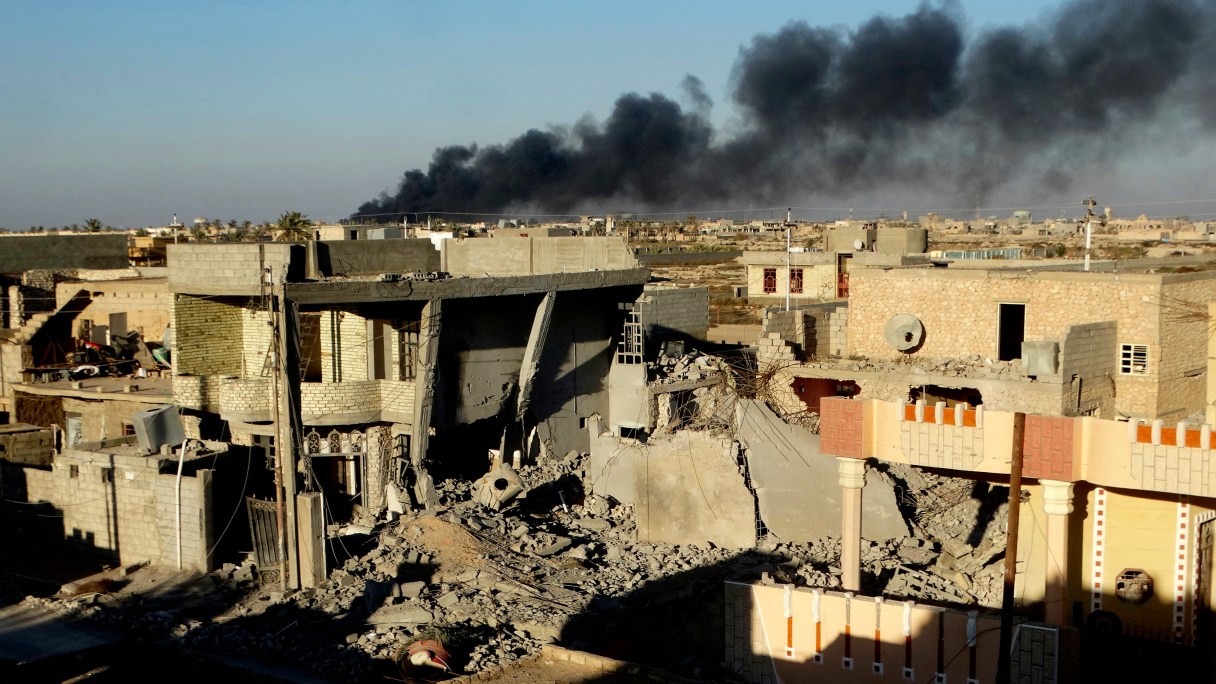
FILE - Smoke rises from Islamic State group positions after an airstrike by U.S.-led coalition warplanes in the Iraqi city of Ramadi in this Dec. 25, 2015 file photo during the Iraqi government offensive that drove the militants out of the city. Ramadi, the provincial capital of Iraq’s Sunni heartland, was declared “fully liberated” early this year. But the cost of victory may have been the city itself, with widespread destruction from strikes, artillery and the militants' scorched earth tactic of destroying buildings and infrastructure as they fled. (AP Photo, File)
FILE - Smoke rises from Islamic State group positions after an airstrike by U.S.-led coalition warplanes in the Iraqi city of Ramadi in this Dec. 25, 2015 file photo during the Iraqi government offensive that drove the militants out of the city. Ramadi, the provincial capital of Iraq’s Sunni heartland, was declared “fully liberated” early this year. But the cost of victory may have been the city itself, with widespread destruction from strikes, artillery and the militants' scorched earth tactic of destroying buildings and infrastructure as they fled. (AP Photo, File) FILE - Smoke rises from Islamic State group positions after an airstrike by U.S.-led coalition warplanes in the Iraqi city of Ramadi in this Dec. 25, 2015 file photo during the Iraqi government offensive that drove the militants out of the city. Ramadi, the provincial capital of Iraq’s Sunni heartland, was declared “fully liberated” early this year. But the cost of victory may have been the city itself, with widespread destruction from strikes, artillery and the militants' scorched earth tactic of destroying buildings and infrastructure as they fled. (AP Photo, File)

RAMADI, Iraq (AP) – This is what victory looks like in the Iraqi city of Ramadi: In the once thriving Haji Ziad Square, not a single structure still stands. Turning in every direction yields a picture of devastation.

A building that housed a pool hall and ice cream shops – reduced to rubble. A row of money changers and motorcycle repair garages – obliterated, a giant bomb crater in its place. The square’s Haji Ziad Restaurant, beloved for years by Ramadi residents for its grilled meats – flattened. The restaurant was so popular its owner built a larger, fancier branch across the street three years ago. That, too, is now a pile of concrete and twisted iron rods.

The destruction extends to nearly every part of Ramadi, once home to 1 million people and now virtually empty. A giant highway cloverleaf at the main entrance to the city is partially toppled. Apartment block after apartment block has been crushed. Along a residential street, the walls of homes have been shredded away, exposing furniture and bedding. Graffiti on the few homes still standing warn of explosives inside.

When Iraqi government forces backed by U.S.-led warplanes wrested this city from Islamic State militants after eight months of IS control, it was heralded as a major victory. But the cost of winning Ramadi has been the city itself.

The scope of the damage is beyond any of the other Iraqi cities recaptured so far from the jihadi group. Photographs provided to The Associated Press by satellite imagery and analytics company DigitalGlobe show more than 3,000 buildings and nearly 400 roads and bridges were damaged or destroyed between May 2015, when Ramadi fell to IS, and Jan. 22, after most of the fighting had ended. Over roughly the same period, nearly 800 civilians were killed in clashes, airstrikes and executions.