
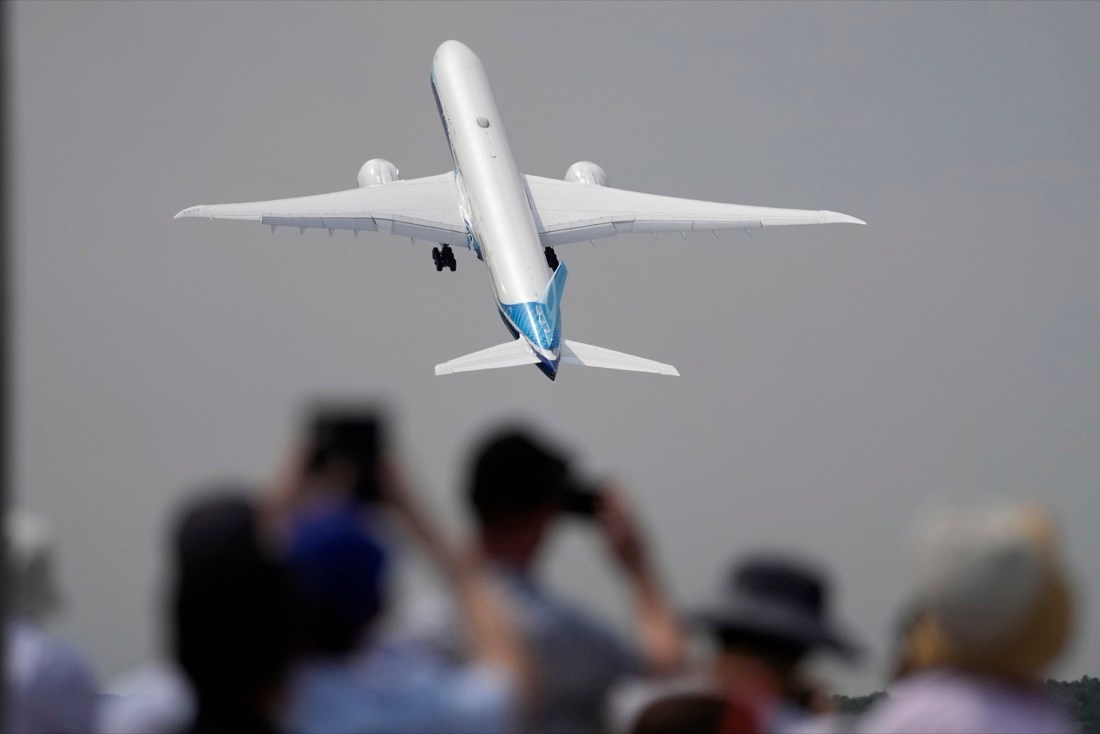
FARNBOROUGH, England (AP) – Airplanes are a minor contributor to global greenhouse-gas emissions, but their share is sure to grow as more people travel in coming years – and that has the aviation industry facing the prospect of tighter environmental regulations and higher costs.
The industry has embraced a goal of reaching net-zero greenhouse-gas emissions by 2050. Experts who track the issue are skeptical.
Until the COVID-19 pandemic caused travel to slump, airlines were on a steady course of burning more fuel, year after year. Today’s aircraft engines are the most efficient ever, but improvements in reducing fuel burn are agonizingly slow – about 1% a year on average.
At Monday’s opening of a huge aviation industry show near London, discussion about climate change replaced much of the usual buzz over big airplane orders.
The weather was fitting. The Farnborough International Airshow opened as U.K. authorities issued the first extreme heat warning in England’s history. Two nearby airports closed their runways, one reporting that heat caused the surface to buckle.