
Thursday, October 29, 2026Oct 29

This story is free to read.

Wounded Knee artifacts highlight slow pace of repatriations

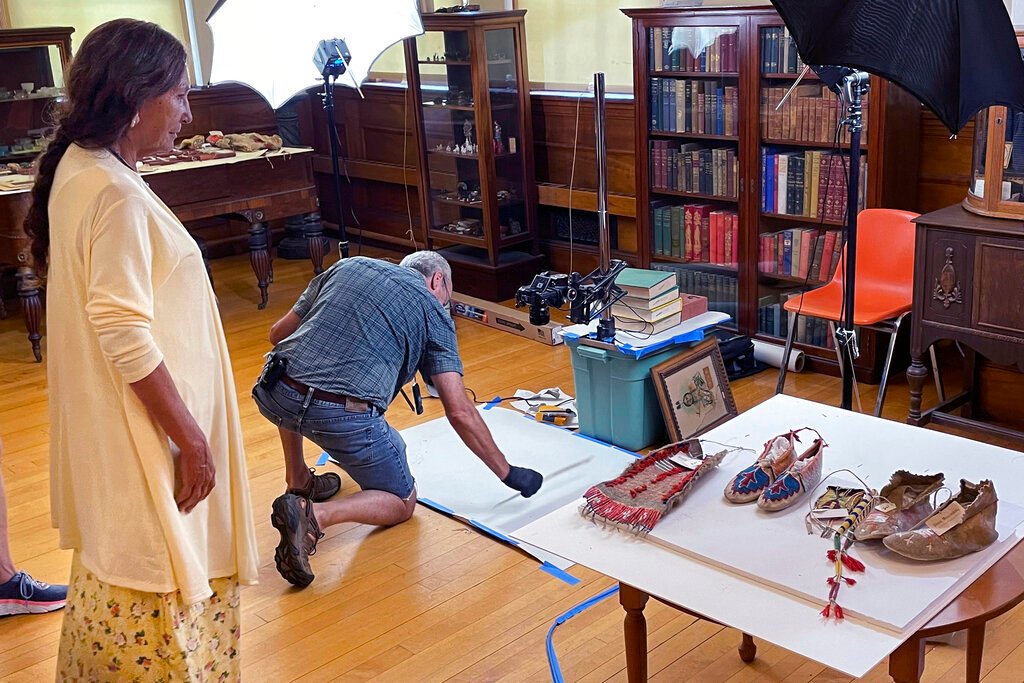
Leola One Feather, left, of the Oglala Sioux Tribe in South Dakota, observes as John Willis photographs Native American artifacts on July 19, 2022, at the Founders Museum in Barre, Massachusetts. The private museum, which is housed in the town library, is working to repatriate as many as 200 items believed to have been taken from Native Americans massacred by U.S. soldiers at Wounded Knee Creek in 1890. Willis is photographing the items for documentation, ahead of their expected return to the tribe. (AP Photo/Philip Marcelo)
Leola One Feather, left, of the Oglala Sioux Tribe in South Dakota, observes as John Willis photographs Native American artifacts on July 19, 2022, at the Founders Museum in Barre, Massachusetts. The private museum, which is housed in the town library, is working to repatriate as many as 200 items believed to have been taken from Native Americans massacred by U.S. soldiers at Wounded Knee Creek in 1890. Willis is photographing the items for documentation, ahead of their expected return to the tribe. (AP Photo/Philip Marcelo) Leola One Feather, left, of the Oglala Sioux Tribe in South Dakota, observes as John Willis photographs Native American artifacts on July 19, 2022, at the Founders Museum in Barre, Massachusetts. The private museum, which is housed in the town library, is working to repatriate as many as 200 items believed to have been taken from Native Americans massacred by U.S. soldiers at Wounded Knee Creek in 1890. Willis is photographing the items for documentation, ahead of their expected return to the tribe. (AP Photo/Philip Marcelo)

BARRE, Mass. (AP) – One by one, items purportedly taken from Native Americans massacred at Wounded Knee Creek emerged from the dark, cluttered display cases where they’ve sat for more than a century in a museum in rural Massachusetts.

Moccasins, necklaces, clothing, ceremonial pipes, tools and other objects were carefully laid out on white backgrounds as a photographer dutifully snapped pictures under bright studio lights.

It was a key step in returning scores of items displayed at the Founders Museum in Barre to tribes in South Dakota that have sought them since the 1990s.

“This is real personal,” said Leola One Feather, of the Oglala Sioux Tribe, as she observed the process as part of a two-person tribal delegation last week. “It may be sad for them to lose these items, but it’s even sadder for us because we’ve been looking for them for so long.”

Recent efforts to repatriate human remains and other culturally significant items such as those at the Founders Museum represent significant and solemn moments for tribes. But they also underscore the slow pace and the monumental task at hand.