
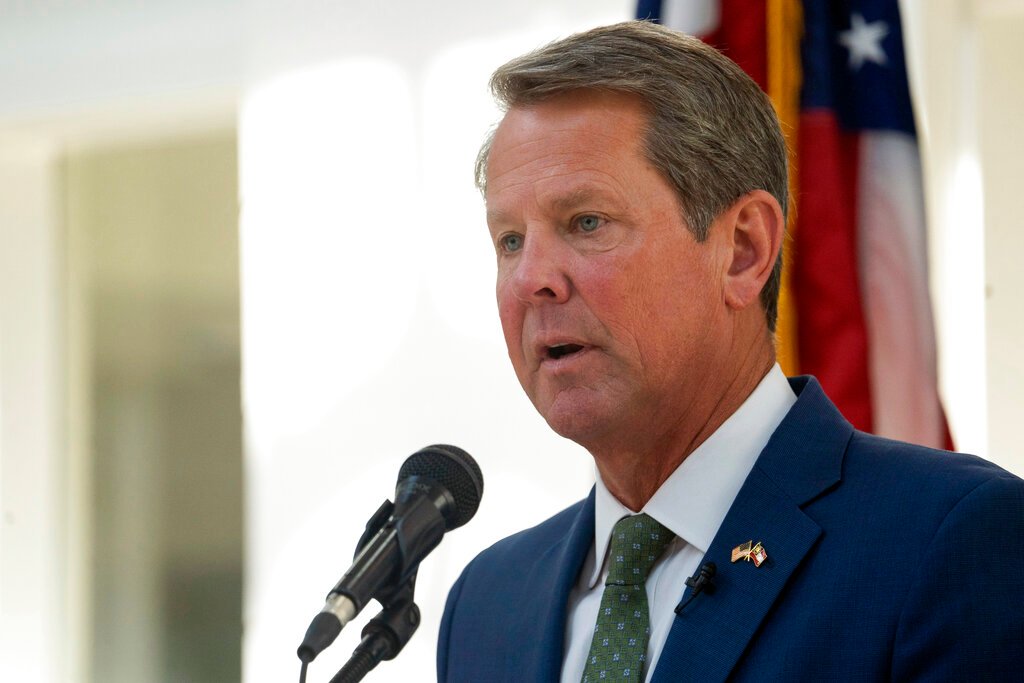
ATLANTA (AP) — When asked about his decision to rebuff Donald Trump and certify Joe Biden’s narrow victory in his state, Georgia Secretary of State Brad Raffensperger says he has no option but to defend his actions.
“We are all held accountable by the voters,” the Republican said as he seeks a second term, noting that he hears from voters who backed Trump’s effort to overturn the election and those aghast at the former president’s actions.
“I give them the facts,” Raffensperger said, because “Americans and Georgians are smart people.”
Yet other Georgia Republicans take a different tack. Burt Jones, the lieutenant governor nominee who signed on as a fake elector for Trump, defends his role in the defeated president’s scheme; the two men atop the Georgia ticket — Gov. Brian Kemp and Senate nominee Herschel Walker — don’t say much about the 2020 election or the man who lost it.
The varied approaches reflect perilous fault lines for Republicans as they weigh the former president’s influence against Democrats’ assertions that a Trump-dominated party threatens democracy. Trump’s serial lies that the election was stolen cast a pall nationwide. But nowhere is the dynamic trickier than Georgia, epicenter of Trump’s plan after he personally pressured Raffensperger to “find” more votes. Winning battleground-state elections amid the fallout means coaxing votes from Trump sympathizers and more moderate voters he’s alienated.