
Friday, October 30, 2026Oct 30

This story is free to read.

Some cities could be left behind on lead pipe replacements

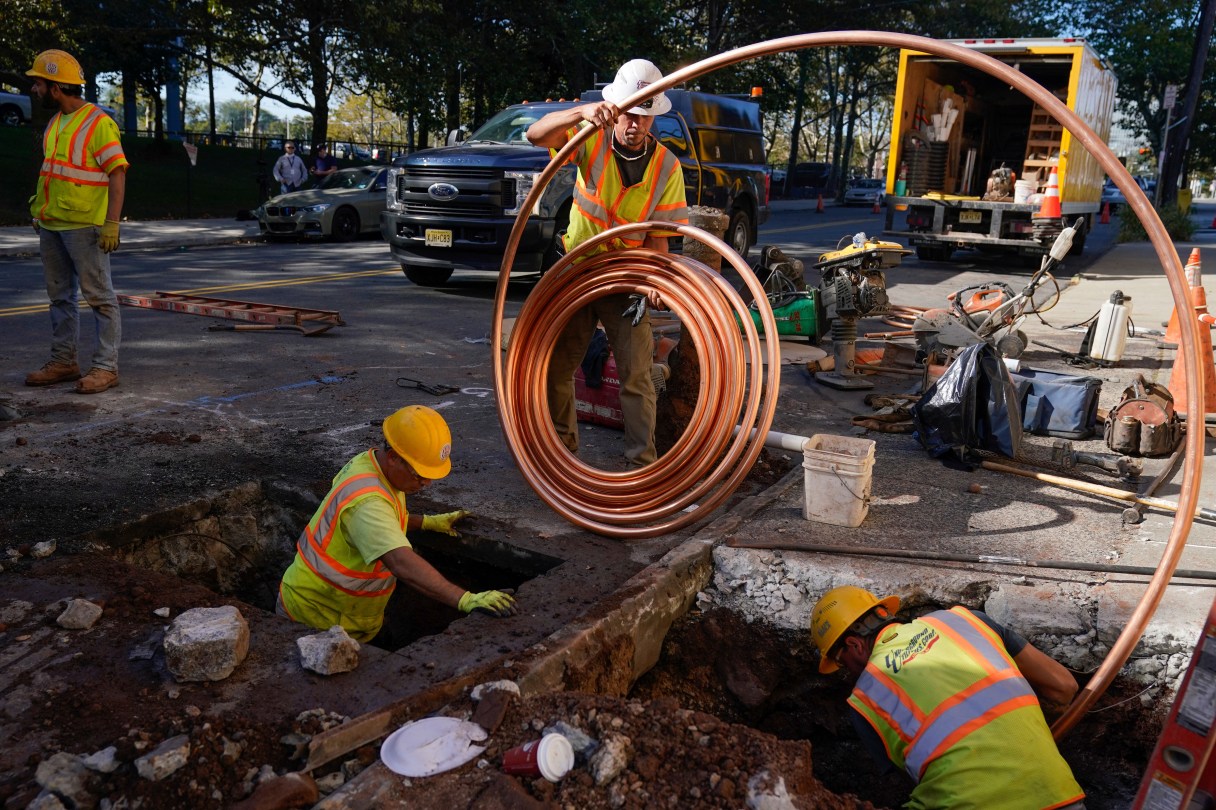
FILE - Workmen prepare to replace older water pipes with a new copper one in Newark, N.J., Thursday, Oct. 21, 2021. Lead pipes have caused harm for decades. In recent years, residents in Newark and Benton Harbor, Mich., were forced to use bottled water for basic needs like cooking and drinking, after tests revealed elevated levels of lead. (AP Photo/Seth Wenig, File)
FILE - Workmen prepare to replace older water pipes with a new copper one in Newark, N.J., Thursday, Oct. 21, 2021. Lead pipes have caused harm for decades. In recent years, residents in Newark and Benton Harbor, Mich., were forced to use bottled water for basic needs like cooking and drinking, after tests revealed elevated levels of lead. (AP Photo/Seth Wenig, File) FILE - Workmen prepare to replace older water pipes with a new copper one in Newark, N.J., Thursday, Oct. 21, 2021. Lead pipes have caused harm for decades. In recent years, residents in Newark and Benton Harbor, Mich., were forced to use bottled water for basic needs like cooking and drinking, after tests revealed elevated levels of lead. (AP Photo/Seth Wenig, File)

ST. LOUIS (AP) — In many cities, no one knows where the lead pipes lie underground. That’s important because lead pipes contaminate drinking water. After the lead crisis in Flint, officials in Michigan accelerated efforts to locate their pipes, a first step toward removal.

But other places are moving more slowly.

That means as billions of dollars in new federal funding becomes available to address the problem, some places are in a better position than others to quickly apply for funds and start digging.

Those that wait are at risk of being left behind.

“The issue right now is we want to reduce the time that vulnerable folks are living with lead exposure,” said Eric Schwartz, co-CEO of BlueConduit, which uses computer modeling to help communities predict where their lead pipes are.