
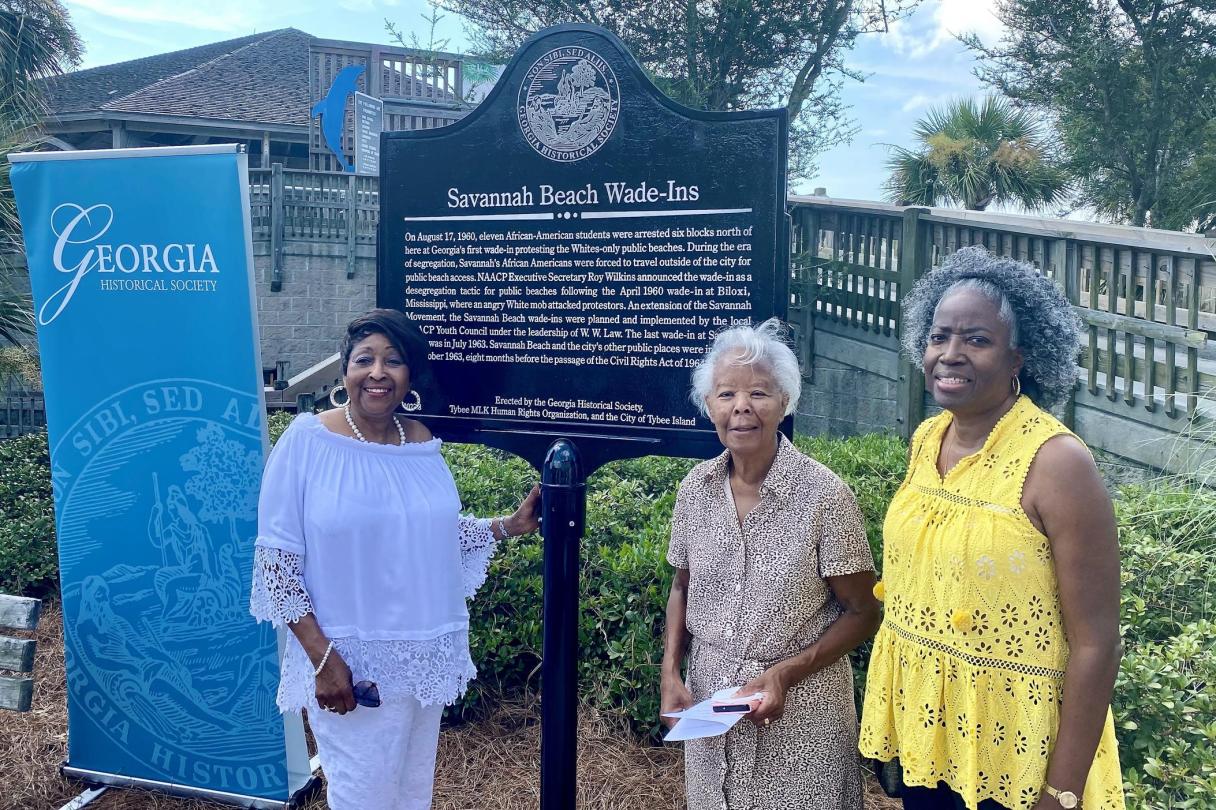
Beachgoers on coastal Georgia’s Tybee Island may notice something new. But it took years to get there — 62 years, to be exact.
“This is part of the civil rights trail,” said Georgia state Rep. Edna Jackson (D-Savannah), speaking in front of a large group of people assembled at the beach. “For we shall never forget what happened here on the seashores of Tybee Island.”
Today, Tybee is home to Georgia’s largest public beach, drawing in people from all walks of life. But back in the early 1960s, it was called Savannah Beach. And it wasn’t really a public beach: It was “whites only.”
That didn’t sit well with Jackson. So, she took a stand — or, rather, a swim.
“We did it because it was the right thing to do,” Jackson recalled, referring to what came to be known as the Savannah Beach wade-ins. From 1960 to 1963, hundreds of young African Americans braved the whites-only waters, in an act of resistance against segregationist Jim Crow laws.