
Wednesday, November 11, 2026Nov 11

Fish fossil catch from China includes oldest teeth ever

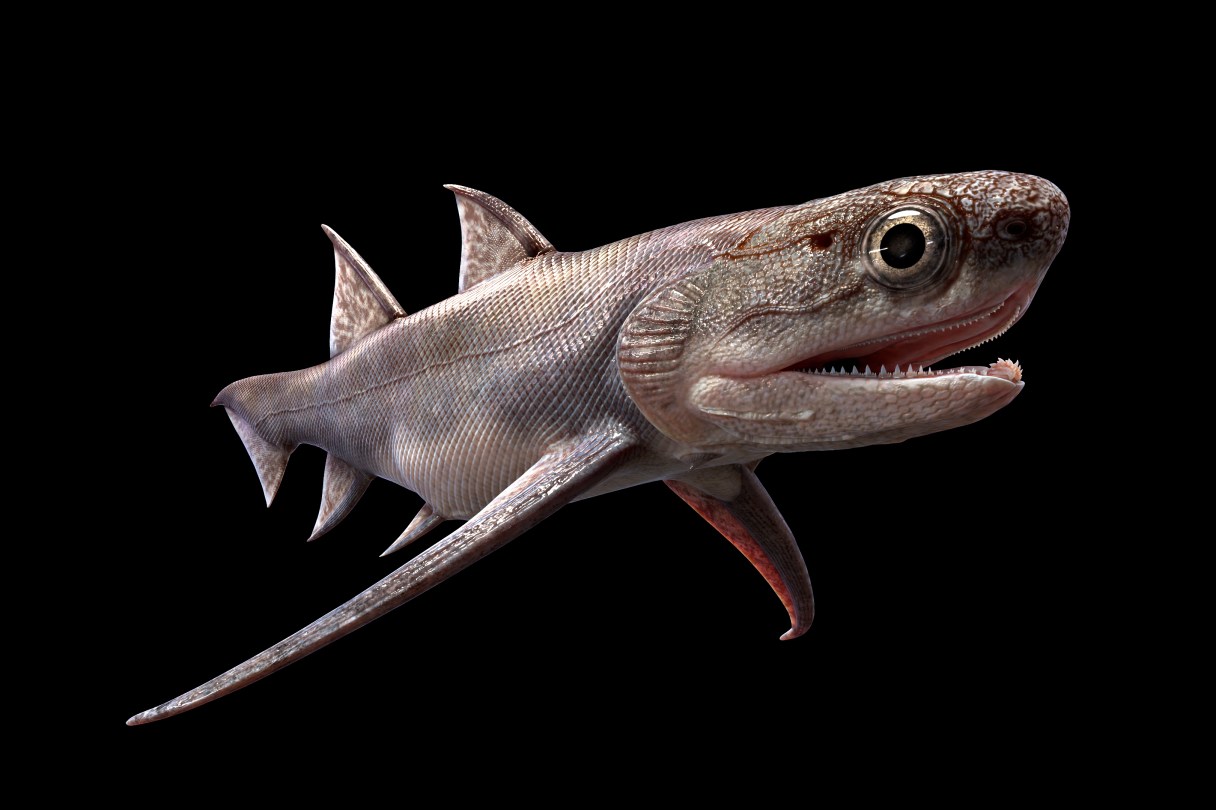
This illustration provided by Heming Zhang in September 2022 depicts Qianodus duplicis, one of the fossil fish, more than 400 million years old, which were found by researchers in southern China, announced in a series of studies published in the journal Nature on Wednesday, Sept. 28, 2022. The fossils date back to the Silurian period when scientists believe our backboned ancestors, who were still swimming around on a watery planet, may have started evolving teeth and jaws around this time. (Heming Zhang via AP)
This illustration provided by Heming Zhang in September 2022 depicts Qianodus duplicis, one of the fossil fish, more than 400 million years old, which were found by researchers in southern China, announced in a series of studies published in the journal Nature on Wednesday, Sept. 28, 2022. The fossils date back to the Silurian period when scientists believe our backboned ancestors, who were still swimming around on a watery planet, may have started evolving teeth and jaws around this time. (Heming Zhang via AP) This illustration provided by Heming Zhang in September 2022 depicts Qianodus duplicis, one of the fossil fish, more than 400 million years old, which were found by researchers in southern China, announced in a series of studies published in the journal Nature on Wednesday, Sept. 28, 2022. The fossils date back to the Silurian period when scientists believe our backboned ancestors, who were still swimming around on a watery planet, may have started evolving teeth and jaws around this time. (Heming Zhang via AP)

NEW YORK (AP) — A big catch of fish fossils in southern China includes the oldest teeth ever found — and may help scientists learn how our aquatic ancestors got their bite.

The finds offer new clues about a key period of evolution that’s been hard to flesh out because until now scientists haven’t found many fossils from that era. In a series of four studies, published Wednesday in the journal Nature, researchers detail some of their finds, from ancient teeth to never-before-seen species.

The fossils date back to the Silurian period, an important era for life on earth from 443 million years ago to 419 million years ago. Scientists believe our backboned ancestors, who were still swimming around on a watery planet, may have started evolving teeth and jaws around this time.

This let the fish hunt for prey instead of “grubbing around” as bottom feeders, filtering out food from the muck. It also sparked a series of other changes in their anatomy, including different kinds of fins, said Philip Donoghue, a University of Bristol paleontologist and an author on one of the studies.

“It’s just at this interface between the Old World and the New World,” Donoghue said.