
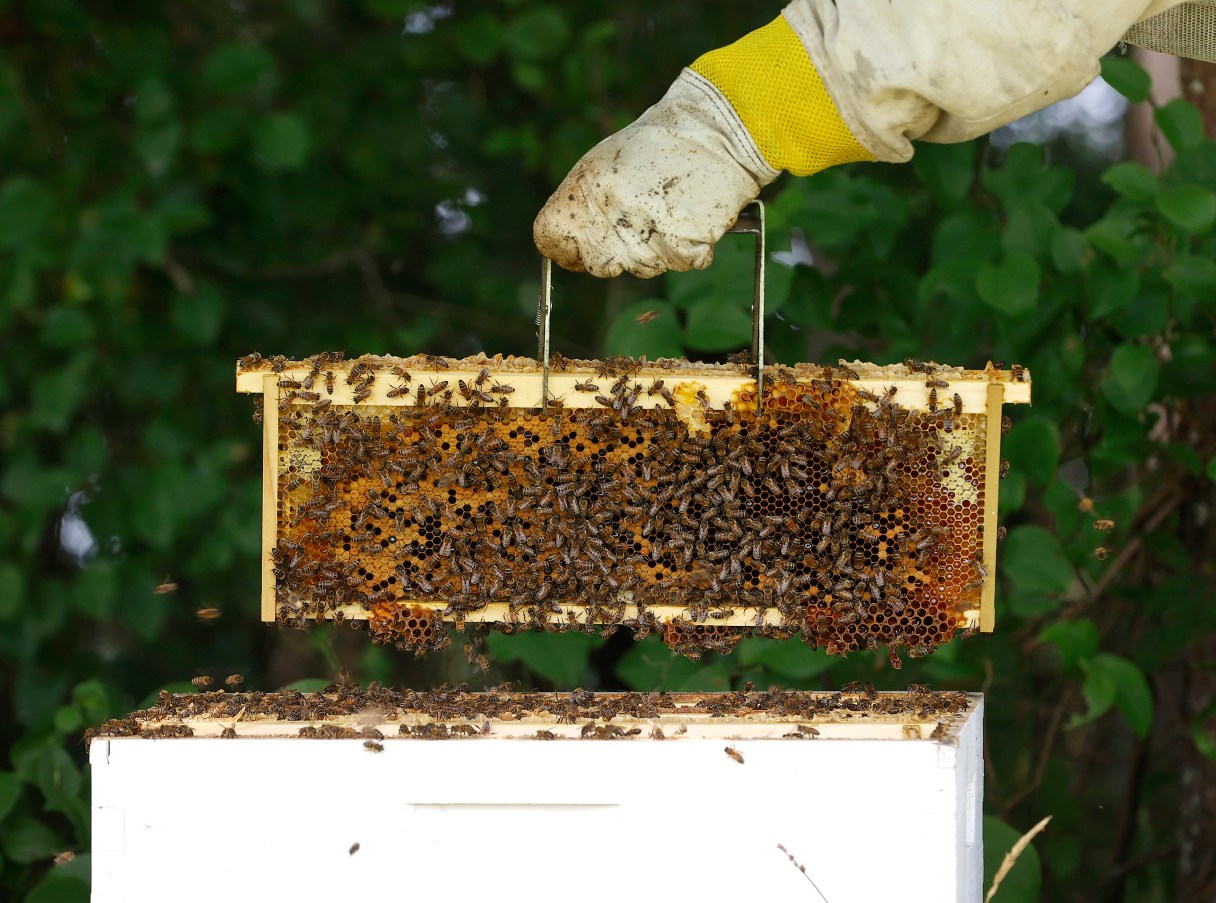
CHARLES CITY, Va. (AP) — At Promise Land Pastures, a working farm and outreach center in Charles City County, Reuben Smith is busy with the honey harvest.
He points to one of about a dozen containers lined up in a row. Most have hives inside filled with honey, and the Charles City farm is harvesting it.
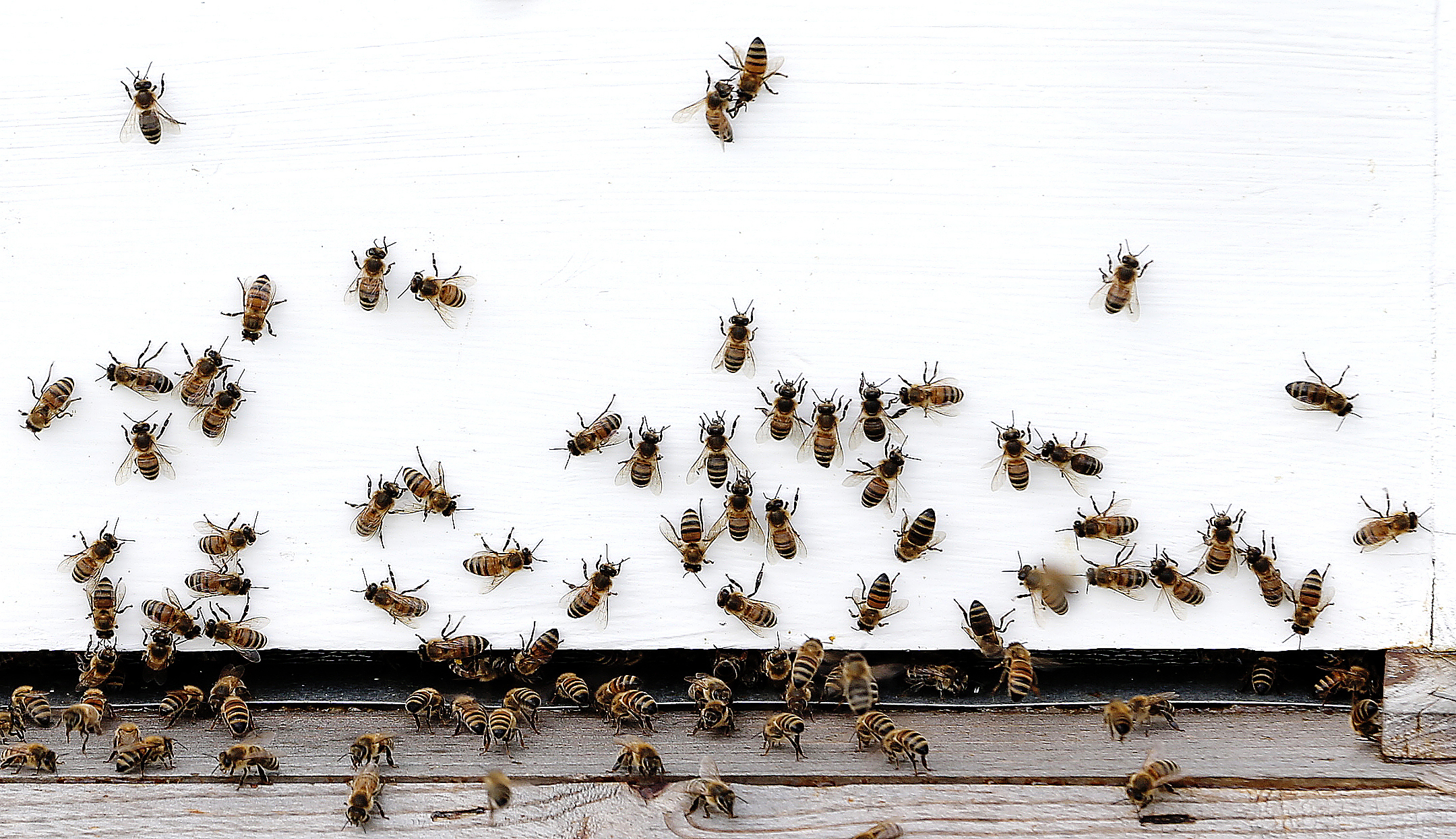
“There are probably about 60,000 bees in one of these boxes,” Smith said.
The bees on the farm were not always so prolific. In the beginning, bees were purchased, said Smith, executive director of the nonprofit organization. But then they found bees that swarmed in an old pecan tree on the property.
A swarm can consist of 30,000 to 60,000 bees. To capture the bees, they cut the limb holding the swarm and shook it until the bees dropped down into the hive box.
The queen bee is usually at the center of the swarm. If she is captured, an entrance excluder will prevent her from getting out of the hive box, because she is larger than the other bees.
Once she is inside the box, other bees will take up residence. The queen will then lay eggs to repopulate the colony. The colony consists of worker bees; drone bees, which mate with the queen; and nurse bees, which keep the hive clean and the brood safe.
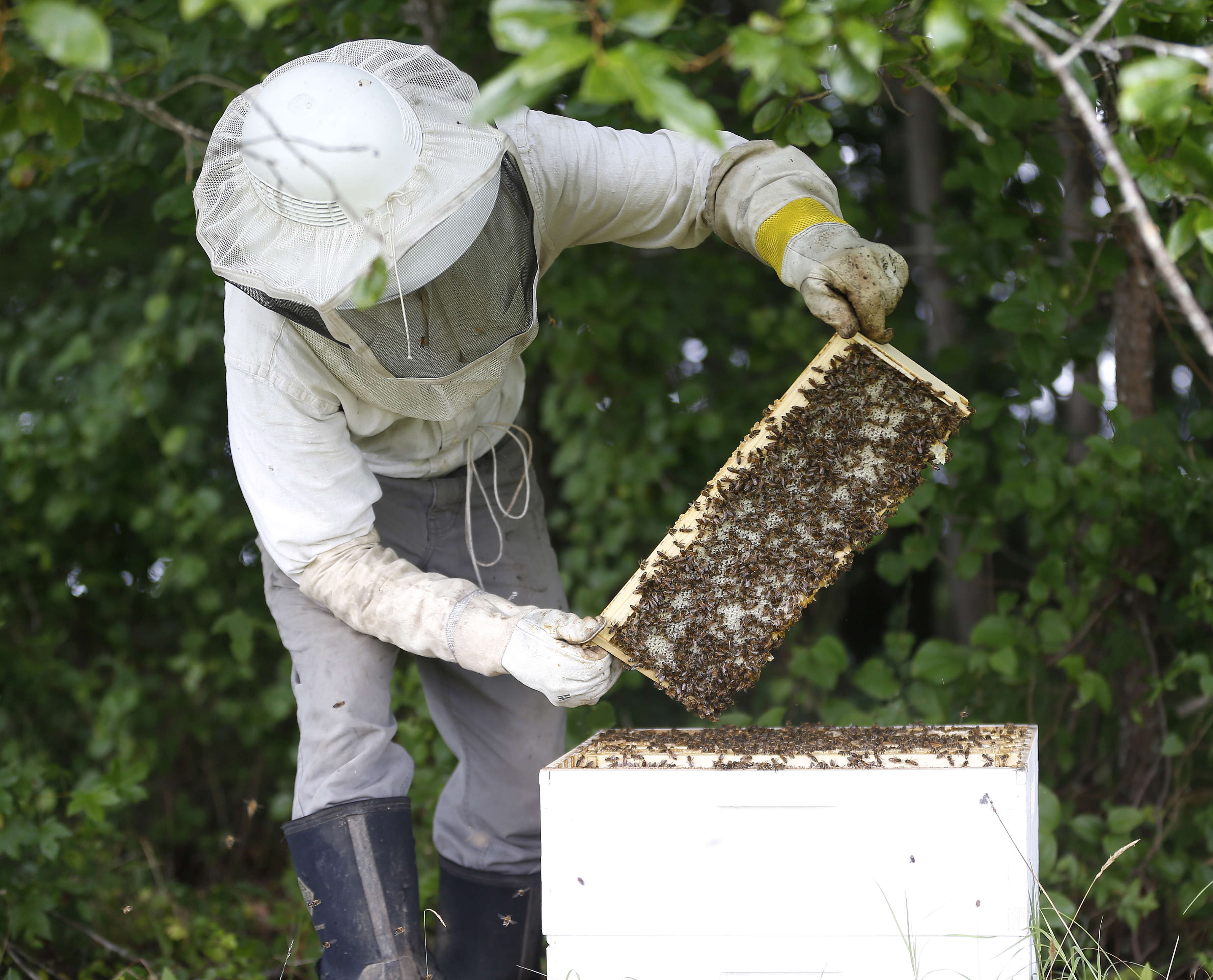
As the bees busily fly in and out of the boxes with some congregating at their entrances, Smith uses a smoker to calm them. He lifts the lid off the box and raises each frame to inspect the honeycombs.
Honey-laden frames are brought to the kitchen where volunteers from the Promise Land Storehouse, a food pantry, retrieve a portion of the honey. Some is always left for the bees to help them survive the winter months.
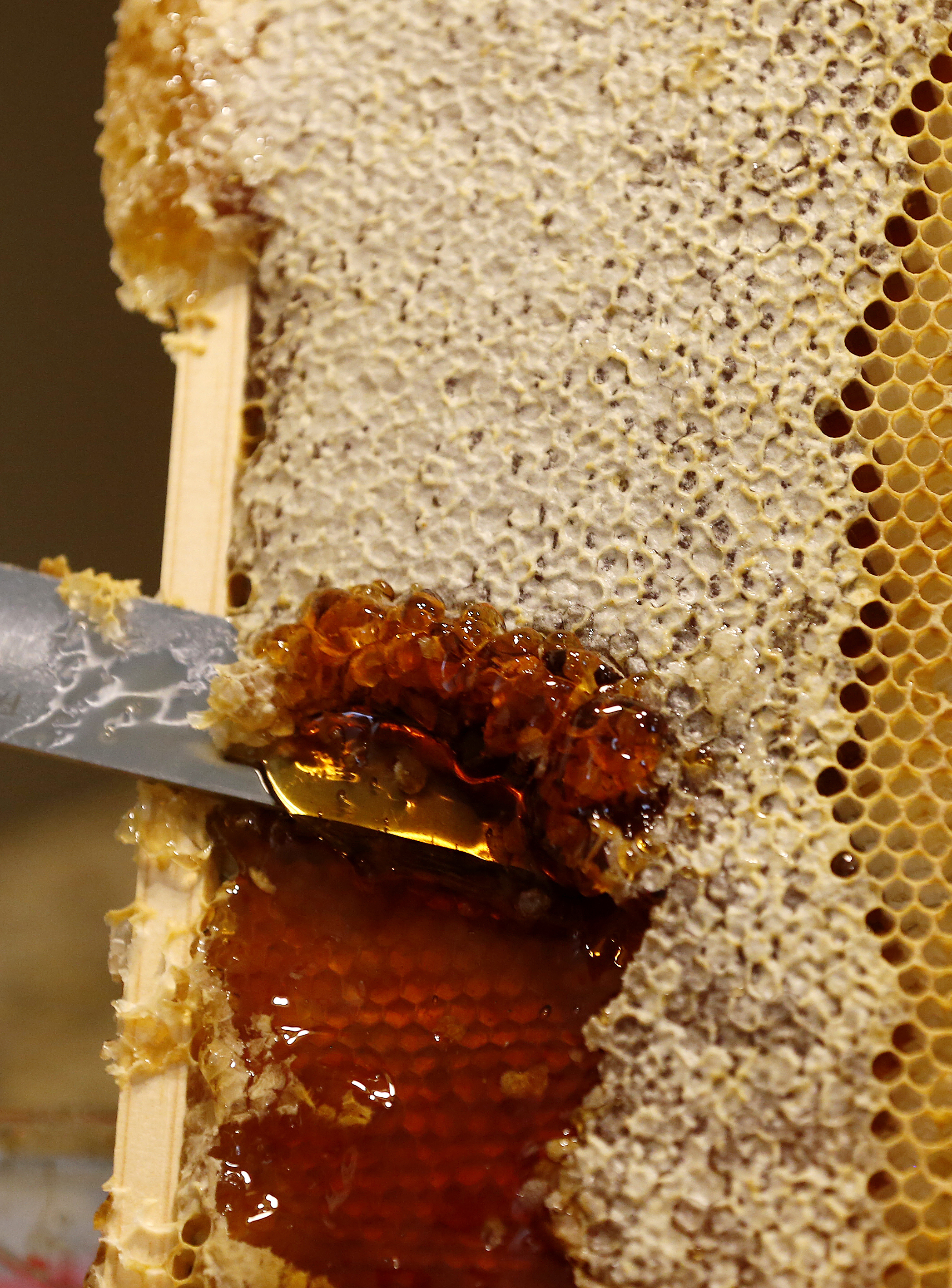
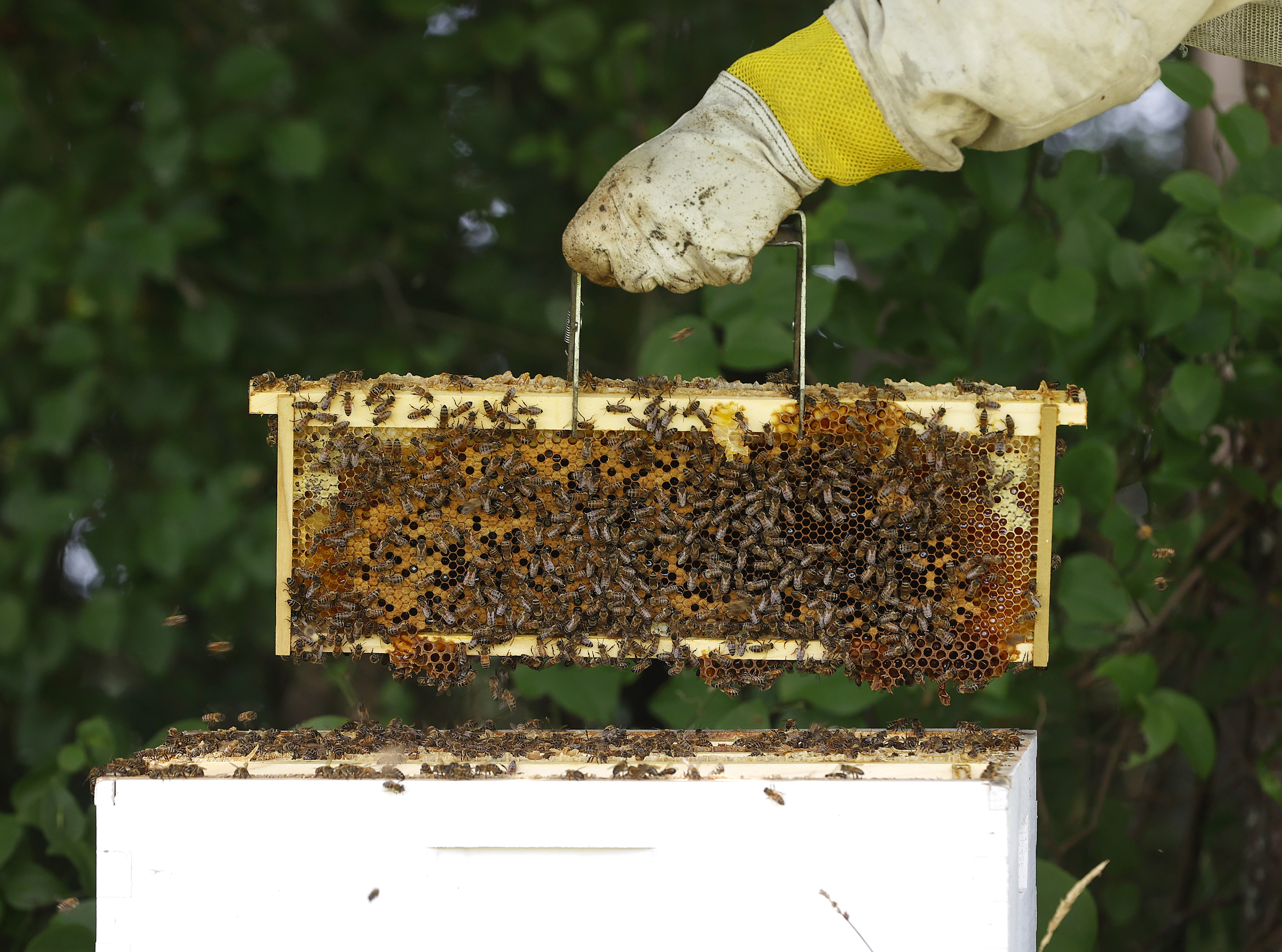
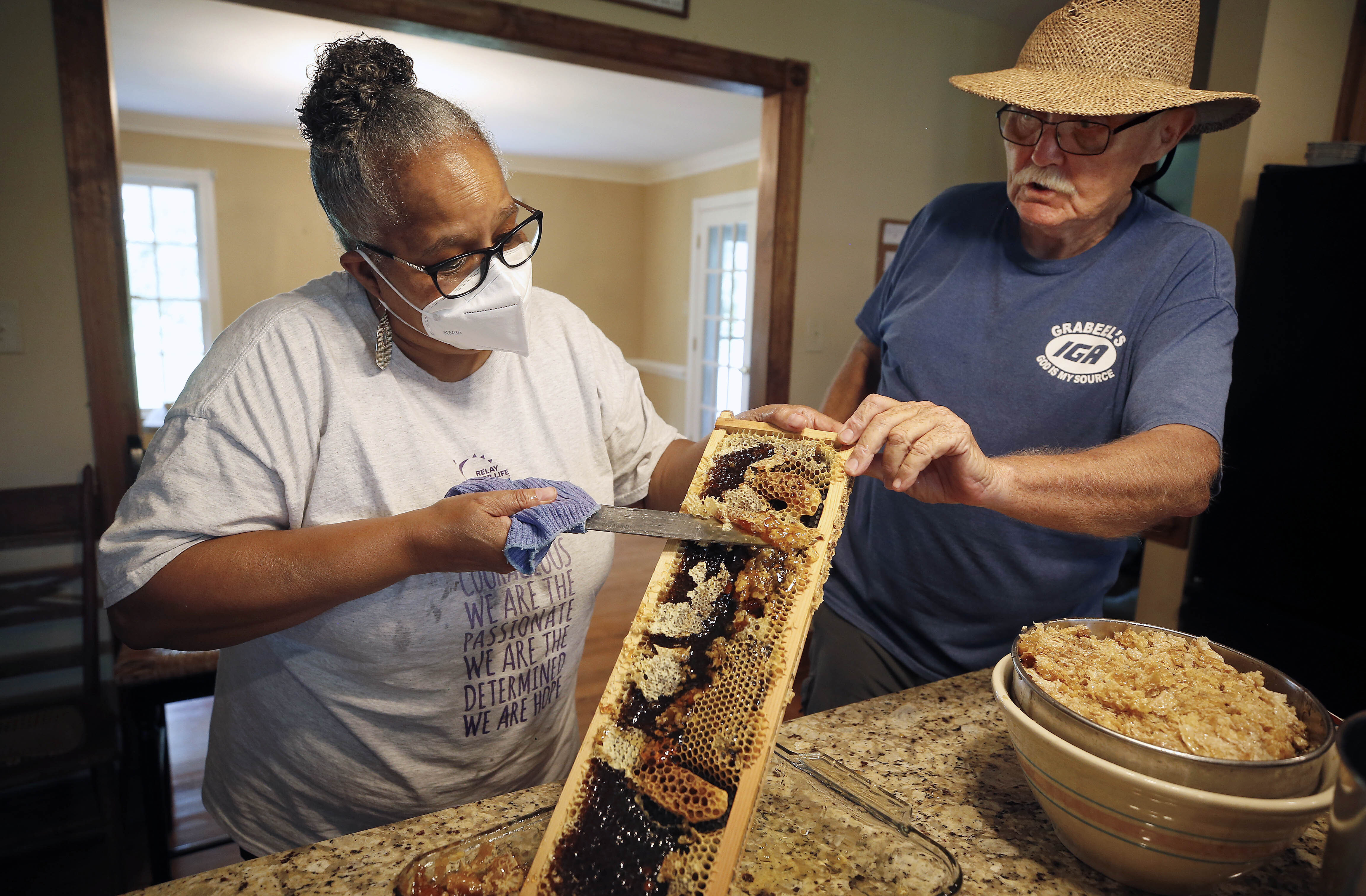
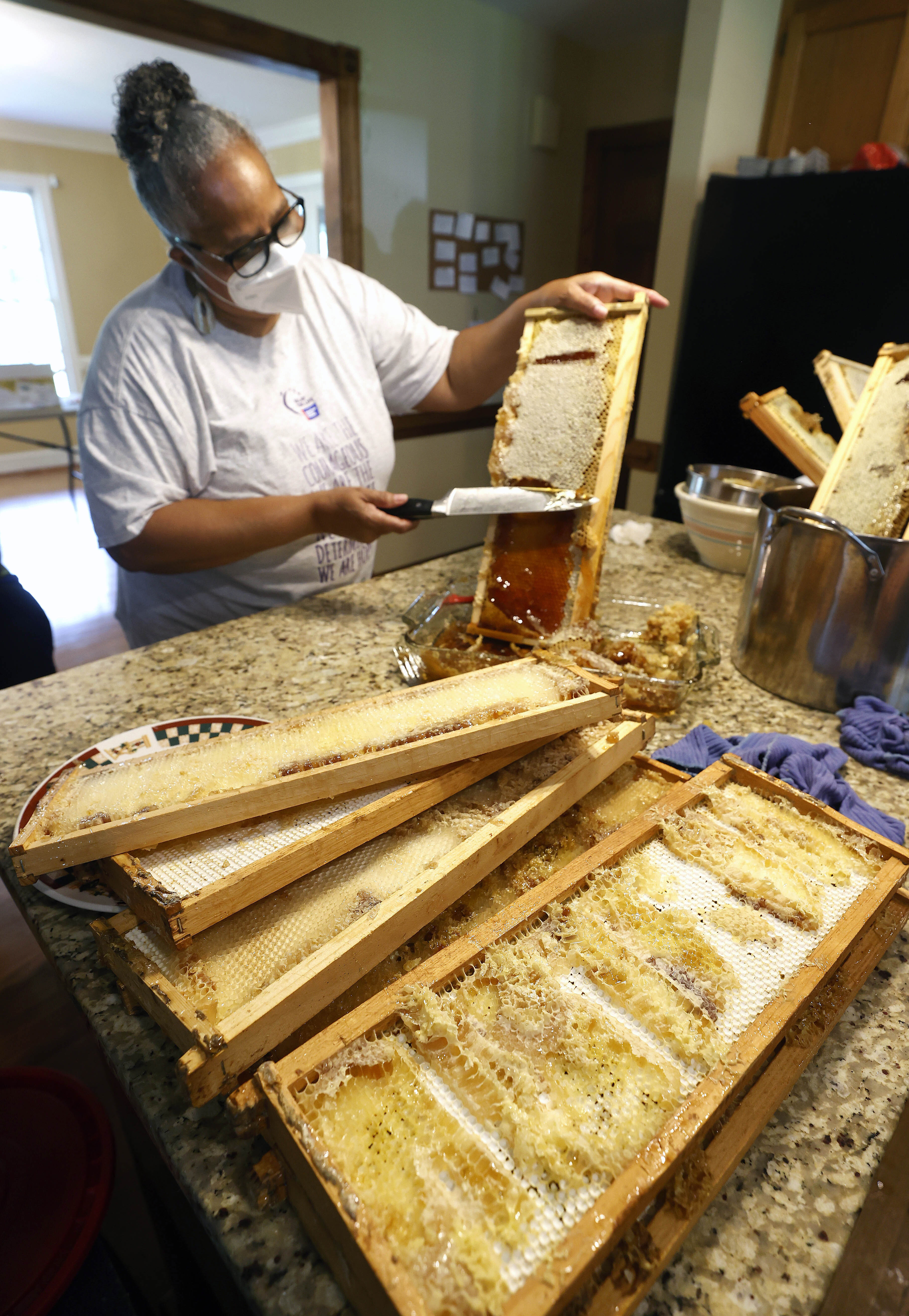
Alice Starke takes a heated knife from the stove and begins uncapping the honeycomb as Tom Bragg holds the frame for her. The wax taken off can be made into candles. Starke then collects the exposed honey into a dish.
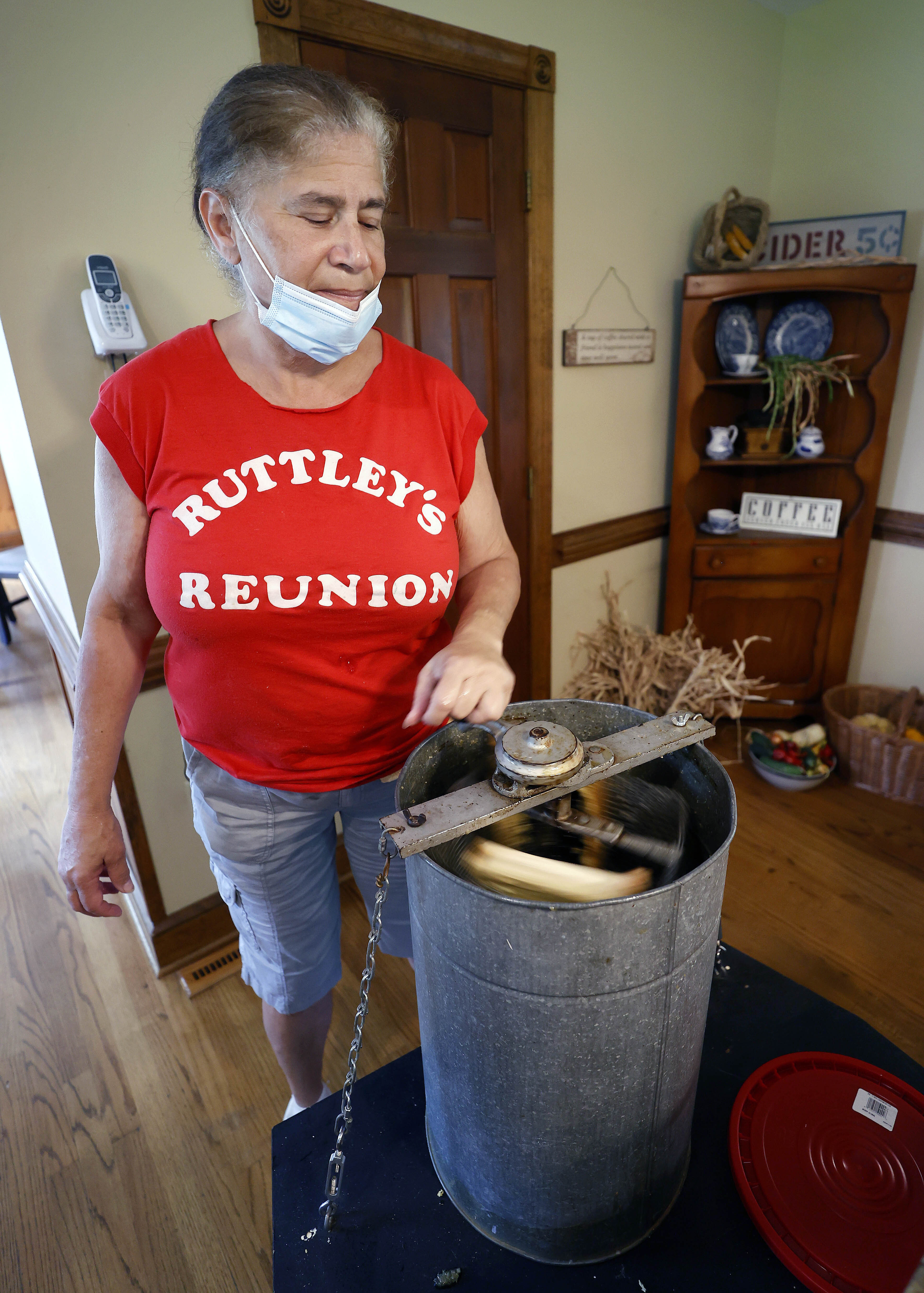
Since some honey remains on the frame, Veralyn Ruttley places two frames at a time into an extractor. As she turns its handle, honey is drawn out of the frames and drips into a bucket below.
The unfiltered, raw, non-pasteurized honey is then bottled for locals who can gain the most health benefits.
The bees are “collecting pollen and nectar from all manner of wildflowers, and clovers and blooming trees,” Smith said. “People that take the honey can actually have almost an immune-boosting response because of all that pollen — that local pollen.”
At the end of the harvest, 140 pounds of honey were extracted. Next year, Smith hopes to produce more of the native nectar after new hives become more established.
Beekeeping is but one of the experiences locals can have at Promise Land Pastures, which works to promote community agriculture and education.
Job training in trade skills, such as diesel mechanics, welding and arboriculture, is taught as well as organic gardening.
“The idea is that the farm is all sorts of experiences that can be a learning center for local youth as well as educating people that are interested in various activities,” Smith said. “The experiences that we are giving can help to ignite passions in young people that they might not even realize were there.”