
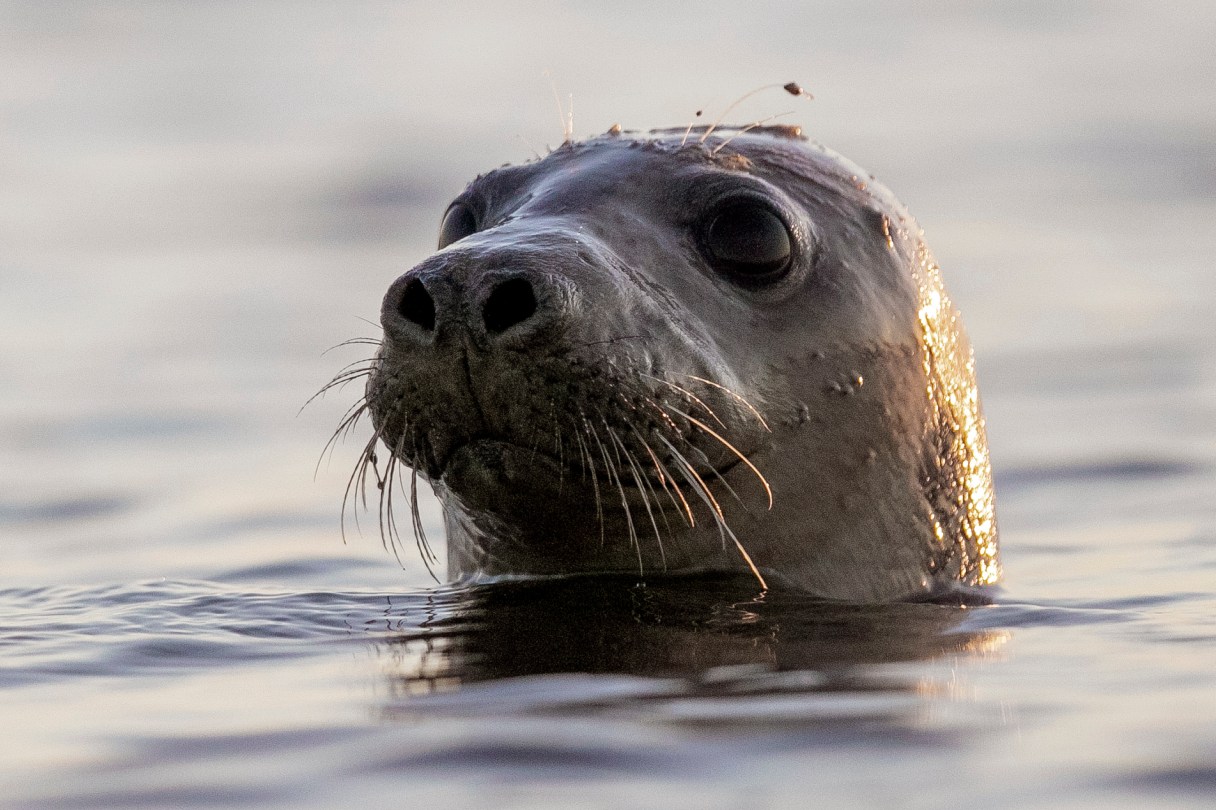
FREEPORT, Maine (AP) — Facial recognition technology is mostly associated with uses such as surveillance and the authentication of human faces, but scientists believe they’ve found a new use for it — saving seals.
A research team at Colgate University has developed SealNet, a database of seal faces created by taking pictures of dozens of harbor seals in Maine’s Casco Bay. The team found the tool’s accuracy in identifying the marine mammals is close to 100%, which is no small accomplishment in an ecosystem home to thousands of seals.
The researchers are working on expanding their database to make it available to other scientists, said Krista Ingram, a biology professor at Colgate and a team member. Broadening the database to include rare species such as the Mediterranean monk seal and Hawaiian monk seal could help inform conservation efforts to save those species, she said.
Cataloguing seal faces and using machine learning to identify them can also help scientists get a better idea of where in the ocean seals are located, Ingram said.
“Understanding their dispersal, understanding their patterns really helps inform any conservation efforts for the coast,” she said. “For mobile marine mammals that move around a lot and are hard to photograph in the water, we need to be able to identify individuals.”