
Last year was the driest year in the Tennessee Valley since 2016, but total precipitation in TVA’s seven-state region was still above average for the sixth consecutive year in 2022.
Despite a mild drought in October and part of November, heavy rains in February, July and December pushed the yearly rainfall nearly 8% above the average annual precipitation total of 51 inches in the Valley.
James Everett, senior manager of the TVA River Forecast Center in Knoxville, said rains across the Tennessee Valley in 2022 totaled 55 inches and extended an above-average run of higher precipitation dating back to 2017.
“We didn’t have any major flood events as we did in 2019 and 2020, but there were certainly a number of months where we saw above-average rainfall,” Everett said in a telephone interview.
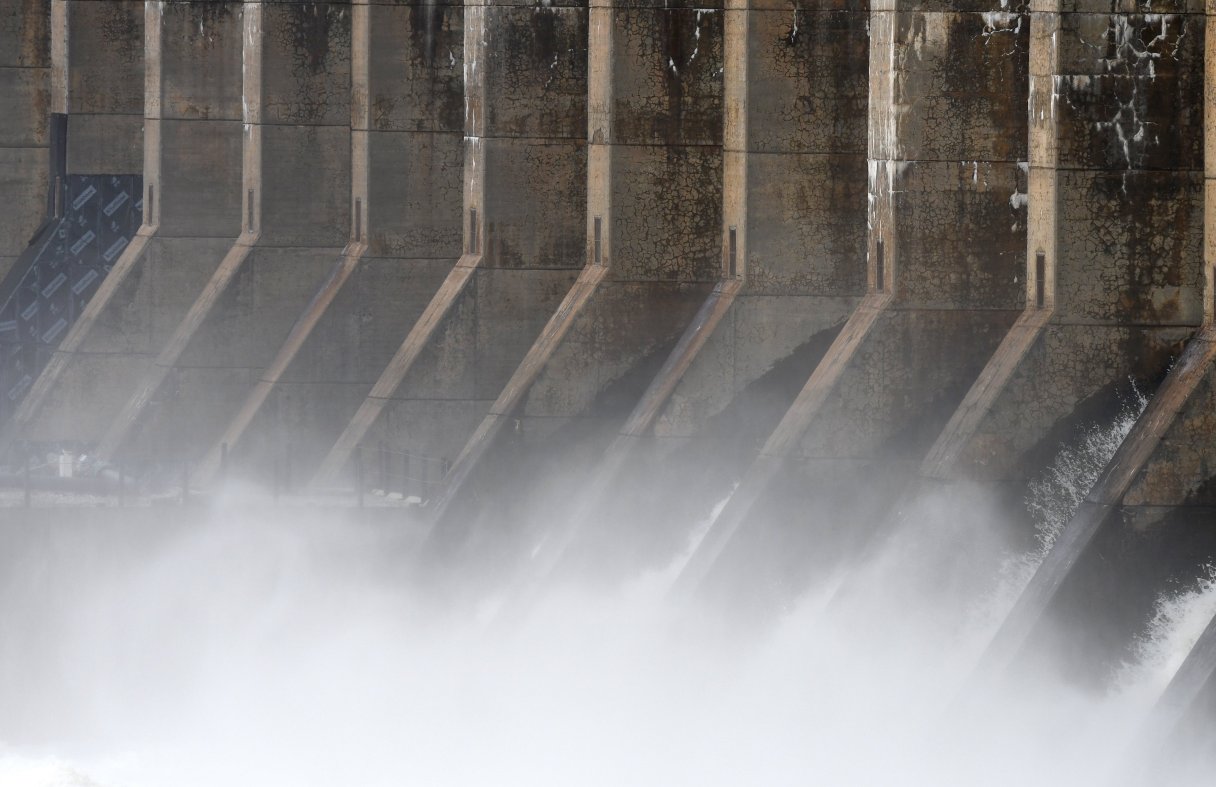
TVA helps manage the flow of the Tennessee River and its tributaries with its network of 49 dams, including 29 hydroelectric-generating dams. TVA’s hydro generation, which accounts for about 10% of all TVA electricity produced each year, was 2% above normal last year because of the above-average rainfall in the region.
TVA measures rainfall across the 41,000 square miles in TVA’s seven-state region. TVA lowers water levels in reservoirs during winter months to add more storage to handle traditionally heavier rains in the spring. The water in tributary reservoirs can rise and fall as much as 60 feet per year.
Everett said TVA is entering 2023 with about 2% more water in its upstream reservoirs than what is considered normal, primarily due to heavier-than-normal rains in December.
“But we’re very close to our normal lake levels for the winter, which is when we see more runoff during storms due to less vegetation on trees and forests,” Everett said.
TVA was created in 1933, in part, to help control flooding on the Tennessee River and its tributaries. TVA’s system of dams and reservoirs prevents an average of $260 million a year in flood damage along the Tennessee, Ohio and Mississippi rivers, according to TVA’s website.
In February 2019 when record-high rains fell across the Tennessee Valley, TVA used its dams and reservoirs to help avert nearly $1.6 billion of flood damage in Chattanooga, which is the drainage point in the Tennessee River basin for more than 20,000 square miles of East Tennessee, western Virginia, western North Carolina and North Georgia.
Prior to the creation of TVA, Chattanooga was nearly completely underwater during major floods in 1917 and in the worst flood ever in 1867.
Rainfall in the Tennessee Valley
The Tennessee Valley has averaged 51 inches of rainfall a year during the past 130 years that records have been kept for precipitation in the region. That’s about 70% more than the U.S. average of 30 inches of rain a year, but rainfall totals vary each year.
2013 — 64 inches
2014 — 53 inches
2015 — 59 inches
2016 — 43 inches
2017 — 56 inches
2018 — 67 inches
2019 — 66 inches
2020 — 70 inches
2021 — 61 inches
2022 — 55 inches
Source: Tennessee Valley Authority River Forecast Center
Contact Dave Flessner at dflessner@timesfreepress.com or 423-757-6340.