
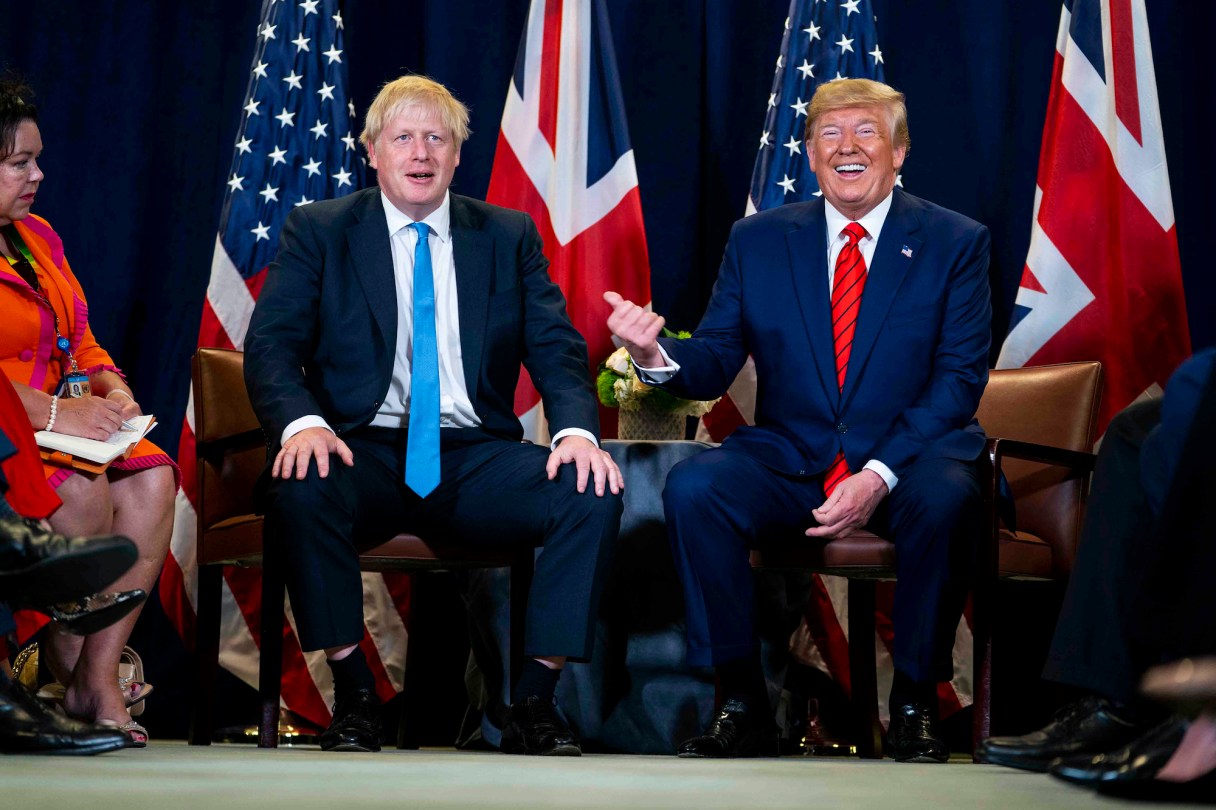
For the past few years, the U.S. and the U.K. have followed strikingly similar political trajectories. Against all odds, populist uprisings captured both countries’ conservative parties, secured power and embarked on projects of national transformation. These efforts went badly, and in due course support for the rebellions subsided.
Lately voters have been calling for a rethink. In both countries, this is proving harder than you’d suppose.
In 2016, Americans stunned the world — and in many respects themselves — by electing Donald Trump president. That was a few months after Brits somehow voted to leave the European Union. Then, just as Trump rose to power on his promise to “Make America Great Again,” Boris Johnson became prime minister largely by promising to “Get Brexit Done.” Neither plan has worked to voters’ satisfaction.
In 2020, after four years of making America great by setting people at each other’s throats, Trump lost to Joe Biden. In the recent midterm elections, Trump’s interventions crippled the Republican Party. The U.K., meanwhile, has gone from one calamity (Johnson) to the next (Liz Truss). Its economy is now setting records for poor performance, and support for the Tories’ historic project has collapsed.