
Tuesday, November 10, 2026Nov 10

Why China’s stand on Russia and Ukraine is raising concerns

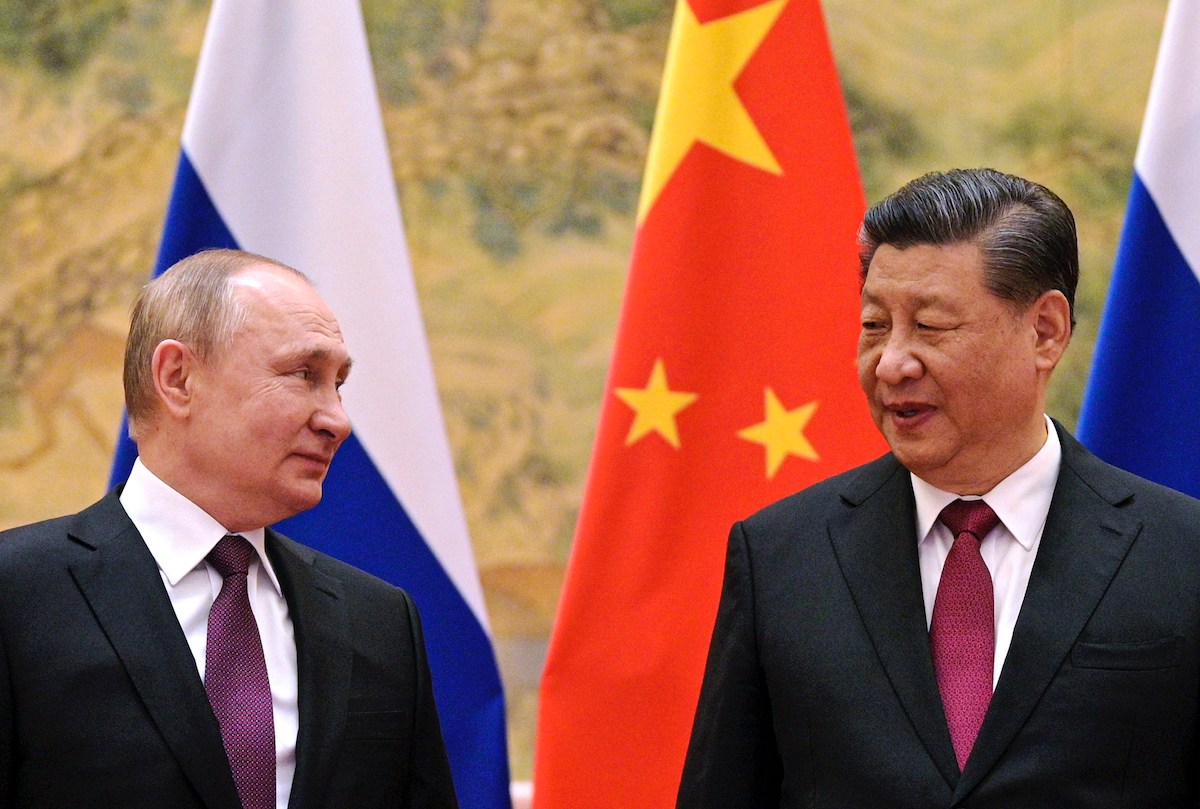
FILE - Chinese President Xi Jinping, right, and Russian President Vladimir Putin talk to each other during their meeting in Beijing, China on Feb. 4, 2022. Just weeks before the Feb. 24, 2022, invasion, Xi hosted Putin in Beijing for the opening of the Winter Olympics, at which time the sides issued a joint statement pledging their commitment to a "no limits" friendship. China has since ignored Western criticism and reaffirmed that pledge, underscoring how the two countries have aligned their foreign policies to oppose the liberal international world order led by the United States and its democratic allies. (Alexei Druzhinin, Sputnik, Kremlin Pool Photo via AP, File)
FILE - Chinese President Xi Jinping, right, and Russian President Vladimir Putin talk to each other during their meeting in Beijing, China on Feb. 4, 2022. Just weeks before the Feb. 24, 2022, invasion, Xi hosted Putin in Beijing for the opening of the Winter Olympics, at which time the sides issued a joint statement pledging their commitment to a "no limits" friendship. China has since ignored Western criticism and reaffirmed that pledge, underscoring how the two countries have aligned their foreign policies to oppose the liberal international world order led by the United States and its democratic allies. (Alexei Druzhinin, Sputnik, Kremlin Pool Photo via AP, File) FILE - Chinese President Xi Jinping, right, and Russian President Vladimir Putin talk to each other during their meeting in Beijing, China on Feb. 4, 2022. Just weeks before the Feb. 24, 2022, invasion, Xi hosted Putin in Beijing for the opening of the Winter Olympics, at which time the sides issued a joint statement pledging their commitment to a "no limits" friendship. China has since ignored Western criticism and reaffirmed that pledge, underscoring how the two countries have aligned their foreign policies to oppose the liberal international world order led by the United States and its democratic allies. (Alexei Druzhinin, Sputnik, Kremlin Pool Photo via AP, File)

BEIJING (AP) — Nearly one year after Russia invaded Ukraine, new questions are rising over China’s potential willingness to offer military aid to Moscow in the increasingly drawn-out conflict.

In an interview that aired Sunday, U.S. Secretary of State Antony Blinken said American intelligence suggests China is considering providing arms and ammunition to Russia, an involvement in the Kremlin’s war effort that he said would be a “serious problem.”

China has refused to criticize Russia for its actions or even to call it an invasion in deference to Moscow. At the same time, it insists that the sovereignty and territorial integrity of all nations must be upheld.

The question now is whether China is willing to convert that rhetorical backing into material support.

On Monday, Chinese Foreign Ministry spokesperson Wang Wenbin accused the United States of “fanning flames and stoking confrontations” by providing Ukraine with defensive weapons, and said Beijing would “never accept (U.S.) finger-pointing and even coercion and pressure on China-Russia relations.”