
Tuesday, November 10, 2026Nov 10

Itching to start spring garden cleanup? Not so fast!

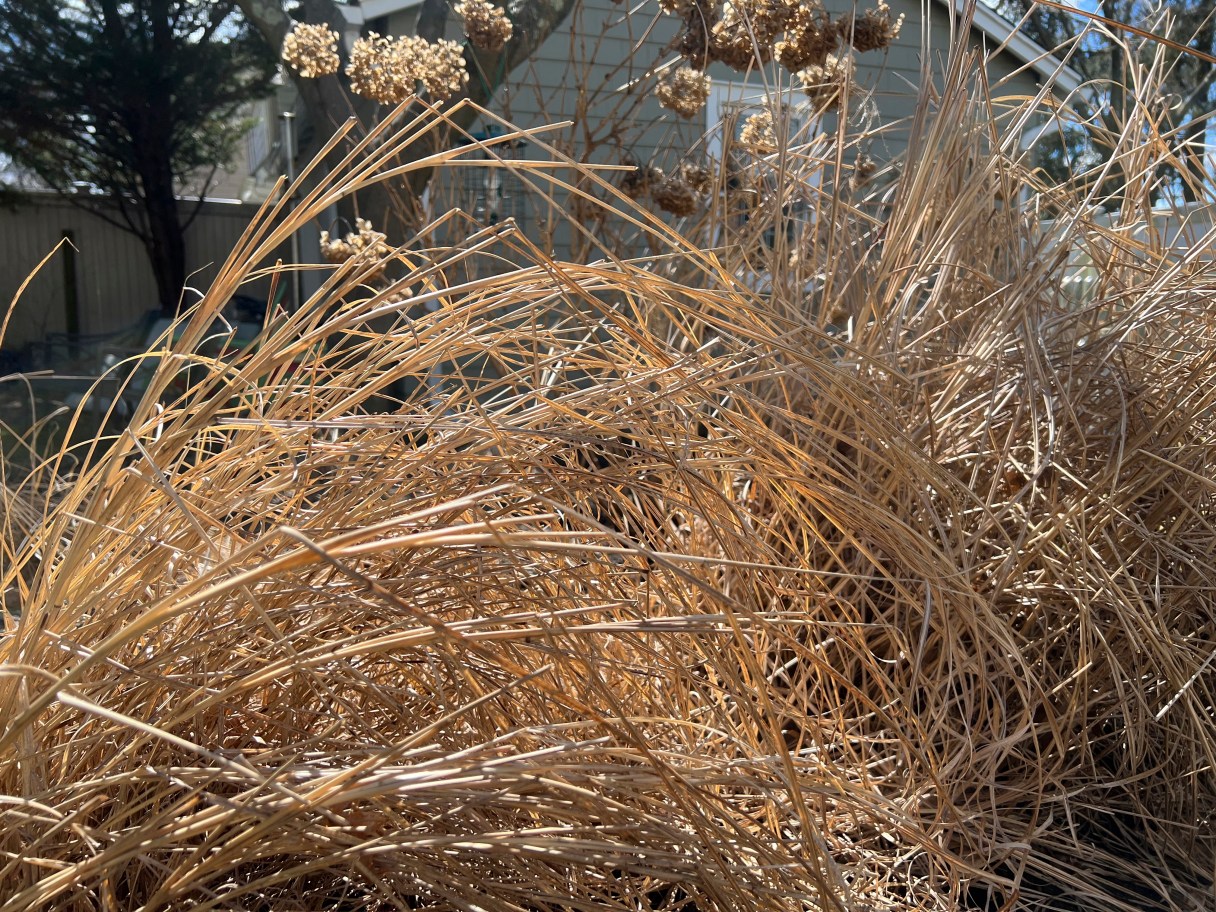
This March 15, 2023, photo provided by Jessica Damiano shows ornamental grasses left standing in her Long Island, N.Y. garden over winter. The dead foliage provides shelter for hibernating pollinators and other insects until they emerge from dormancy and resume their lifecycles in mid to late spring. (Jessica Damiano via AP)
This March 15, 2023, photo provided by Jessica Damiano shows ornamental grasses left standing in her Long Island, N.Y. garden over winter. The dead foliage provides shelter for hibernating pollinators and other insects until they emerge from dormancy and resume their lifecycles in mid to late spring. (Jessica Damiano via AP) This March 15, 2023, photo provided by Jessica Damiano shows ornamental grasses left standing in her Long Island, N.Y. garden over winter. The dead foliage provides shelter for hibernating pollinators and other insects until they emerge from dormancy and resume their lifecycles in mid to late spring. (Jessica Damiano via AP)


When the blare of the year’s first leaf blower awakened me one morning last week, I realized spring cleanup had commenced — no matter that March could still roar like a lion here in my Long Island, New York, neighborhood.

It stands to reason that professional landscapers cannot logistically clear all of their clients’ properties at the same time — the right time — so they start early. That’s good for them but bad for our gardens.

In mine, I forgo the fall cleanup, opting instead to allow leaf litter, ornamental grasses and spent perennials to remain standing to serve as shelter for pollinators and other insects over winter. Those insects are still hibernating, and removing the debris before they resume their life cycles would mean removing them from my garden.

That would result in less food for birds and fewer flowers and tomatoes for me.