
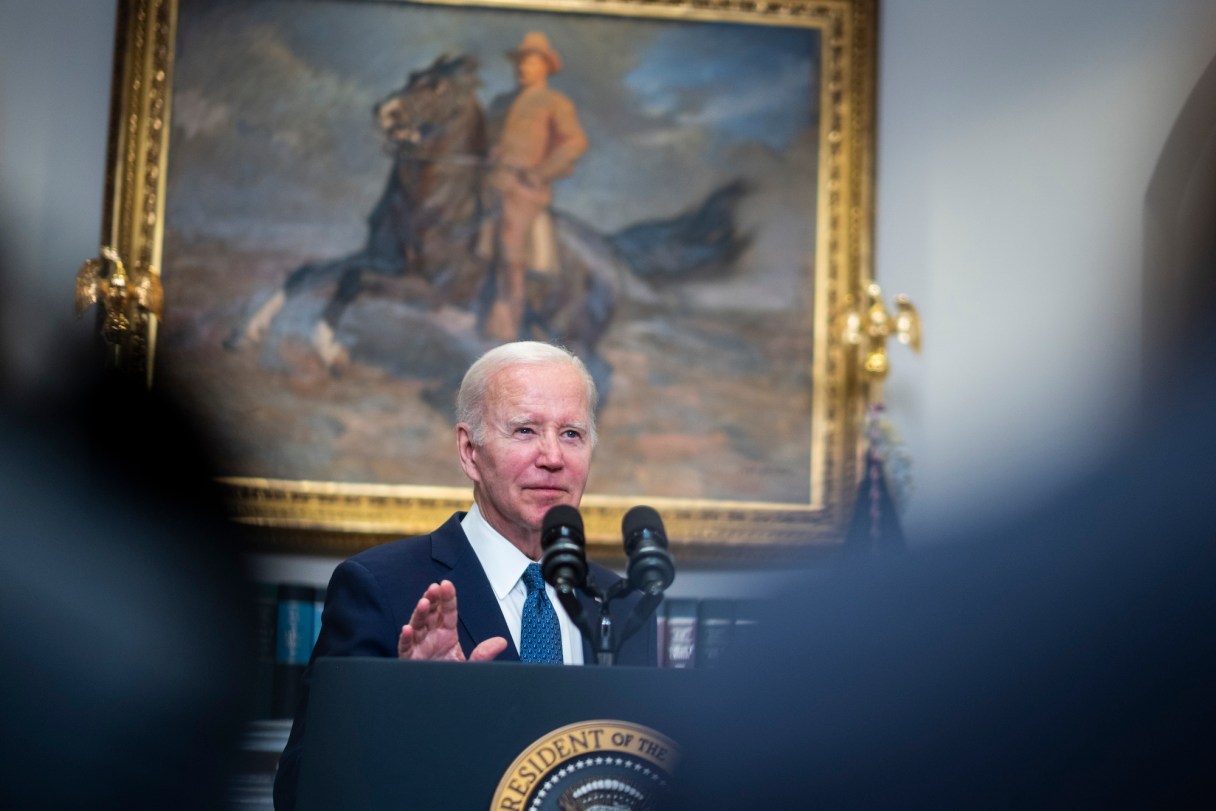
The compromise that Joe Biden and Kevin McCarthy struck this weekend to raise the debt ceiling should strengthen the political standing of both leaders, but especially that of McCarthy, whose aptitude and authority as House speaker have been very much in question since he was elected to the job early this year.
The most important outcome from the agreement — assuming Congress manages to pass the legislation — is that a devastating default will be avoided. There also will be policy changes, including a cap on government spending and new work requirements for some recipients of government assistance, whose effects will be significant.
But the political ramifications are meaningful. Most notably, McCarthy will have proved that he can bargain on behalf of his party. He will have demonstrated within the Republican conference that he is willing to take the brunt of criticisms, an important part of a party leader’s job in Congress. He already will be helped in the final vote on the compromise by having found the support last month to pass a Republican-only bill that kicked off the bargaining with Biden; every time party leaders prove that they can count votes and pass what they want, it makes it more likely that they will win future votes.
Not too many observers (and certainly not this columnist!) thought that McCarthy could navigate the dysfunctional House Republican conference. If he can get this deal through the House and survive, it will be fair to say that he is exceeding expectations.
As for Biden, he will benefit primarily from having avoided not just the consequences of a default, the threat of which is now safely pushed back until beyond the 2024 presidential election, but the possibility of a government shutdown. There will still be partisan squabbling in Congress, but the deal should dramatically reduce how much casual voters will notice.