
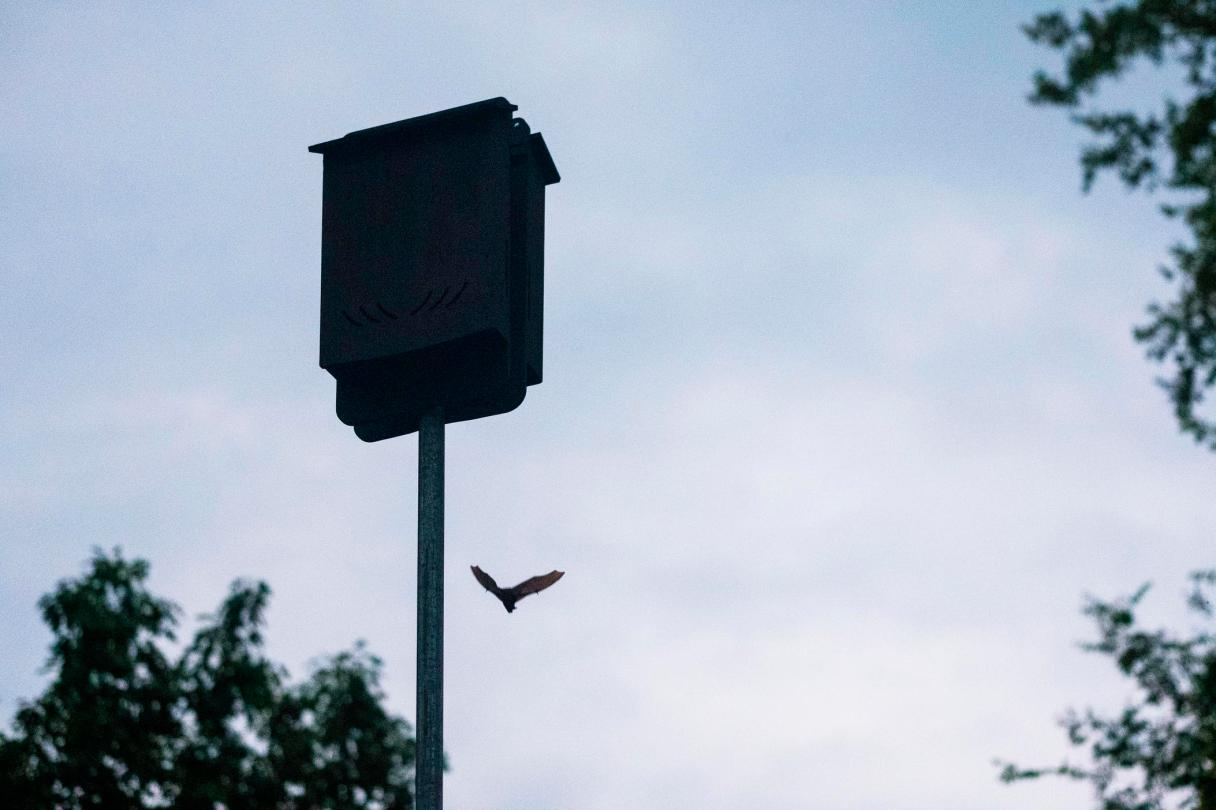
It was a little before nightfall when Georgia Department of Natural Resources biologist Trina Morris and a half dozen people gathered in Macon and stared at a box on a pole against an overcast sky.
“We definitely want to have a bright sky behind so we can watch them when they drop out,” Morris said.
“They” were bats, and it was the box — this colony’s version of a roost — out of which they were about to drop.
It’s been a tough couple of decades for North American bats.
Where they live in caves, a fungus has been laying waste to their colonies by the millions. A recent report said over half of the continent’s bat species are at severe risk of population loss.