
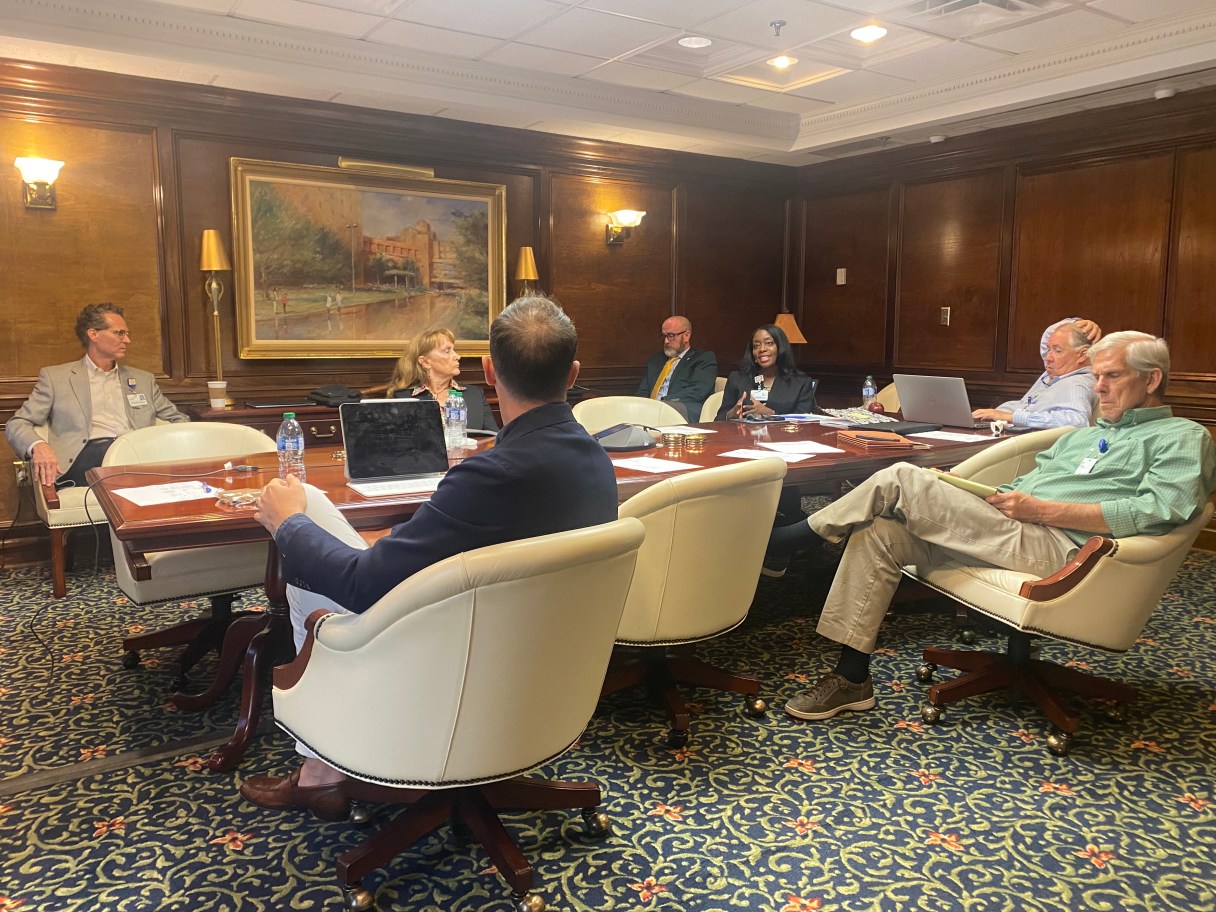
Though much of the responsibility over Erlanger Health now lies with a private board, oversight of Erlanger’s three community health centers and employee pension plan are among the duties that remain for board members of the Chattanooga-Hamilton County Hospital Authority, a government entity formerly known as Erlanger Health System.
Erlanger Community Health Centers CEO Angel Moore briefed trustees on the restructured hospital authority board, which is comprised of six members, on the history and importance of the clinics during the public board’s first meeting since the bulk of Erlanger’s business and operations transferred July 1 to a newly formed nonproft private entity.
The three clinics — on Dodson Avenue, Tennessee Avenue and Lyerly Street — have federally qualified health center designations, a model that emerged in 1965 as part of President Lyndon Johnson’s War on Poverty. The clinics are partially funded by the federal government and provide primary care services regardless of a patient’s ability to pay.
The idea behind the model is that by offering a broad range of primary care services under one roof in underserved areas, health care will become more accessible to vulnerable populations, the overall health of those communities will improve, and the burden on hospital emergency rooms will be lessened.
While the services aren’t free, patients pay on a sliding scale based on their income level and are connected to resources that can help them better afford their care.