
Monday, November 16, 2026Nov 16

New Georgia laws include ban on some procedures for transgender children

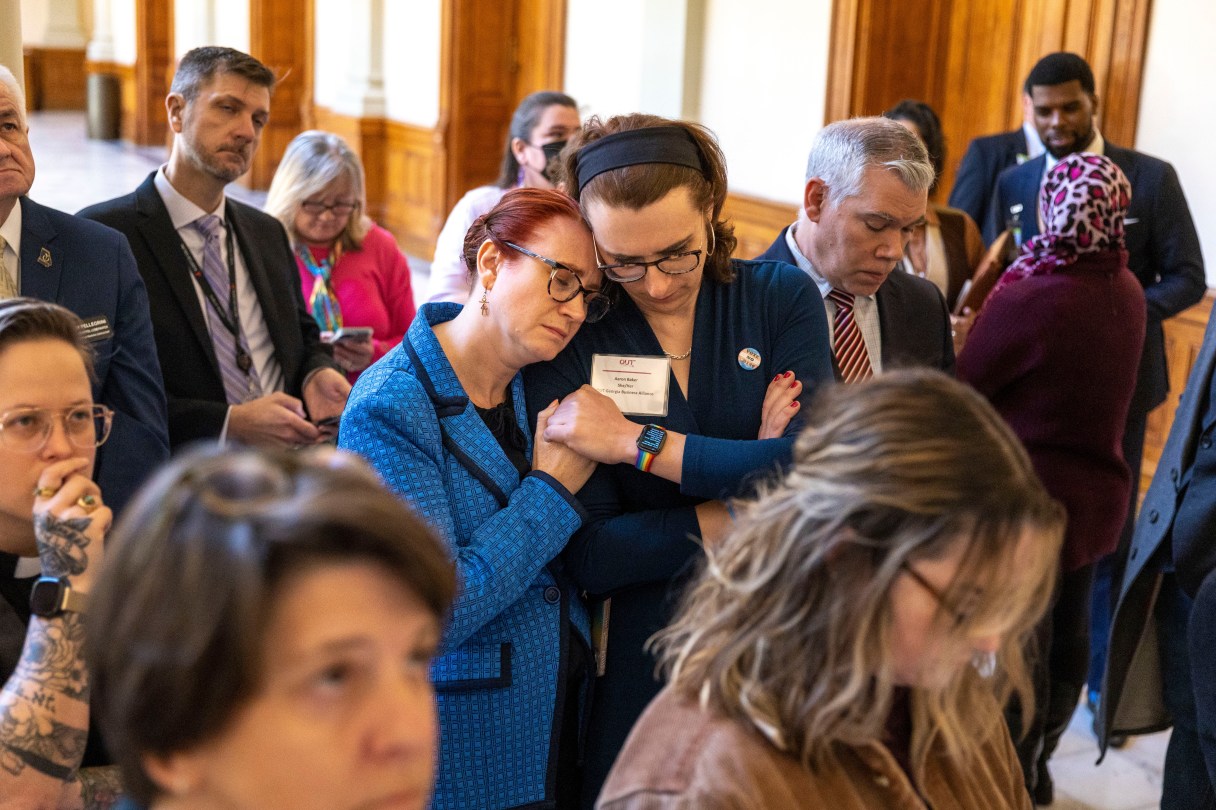
FILE - Jennifer Bowie, center left, and Aaron Baker, center right, become emotional while watching discussion of Senate Bill 140 — a bill that would prevent medical professionals from giving transgender children certain hormones or surgical treatment — on a video monitor at the state Capitol in Atlanta before it gets final approval in the Senate, March 21, 2023. On Saturday, July 1, Georgia’s new law banning gender confirmation surgeries and hormone replacement therapies for those under 18 takes effect. Part of a nationwide effort by conservatives to restrict transgender athletes, gender-affirming care and drag shows, Senate Bill 140 is perhaps the most high-profile of the state’s new laws. (Arvin Temkar/Atlanta Journal-Constitution via AP, File)

ATLANTA (AP) — On Saturday, Georgia’s new law banning transgender surgeries and hormone replacement therapies for children takes effect. Part of a nationwide effort by conservatives to restrict transgender athletes, transgender medical procedures and drag shows, Senate Bill 140 is perhaps the most high-profile of the state’s new laws.

For many, the law is seen as “devastating.”

“It’s cutting off, literally, lifesaving care for many people in Georgia,” said Dr. Izzy Lowell, an Atlanta-based doctor who specializes in medical procedures for transgender and non-binary individuals.

Supporters say the law’s restrictions prevent children from making decisions they might later regret. Parents and transgender youth heavily lobbied against the bill, warning that lawmakers were further marginalizing a group already prone to taking their own lives at disturbingly high rates.

Like similar laws in other states, it’s likely to face a legal challenge. A federal judge in Arkansas recently struck down that state’s ban.