
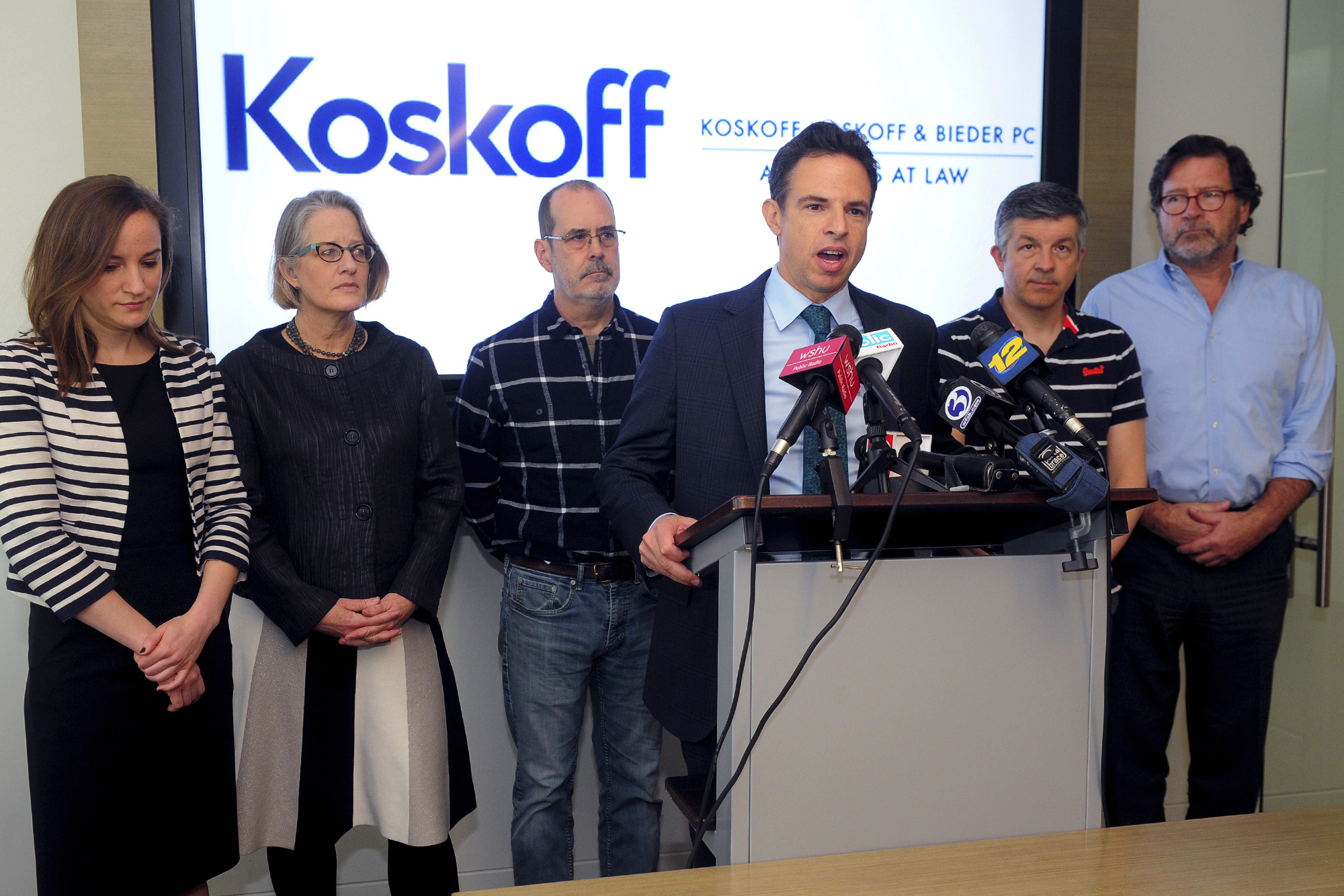
 Attorney Josh Koskoff speaks at a press conference in Bridgeport, Conn. Thursday, March 14, 2019. Gun-maker Remington can be sued over how it marketed the rifle used to kill 20 children and six educators at Sandy Hook Elementary School in 2012, a divided Connecticut Supreme Court ruled Thursday. (Ned Gerard/Hearst Connecticut Media via AP)
Gun-maker Remington can be sued over how it marketed the rifle used to kill 20 children and six educators at Sandy Hook Elementary School in 2012, a divided Connecticut Supreme Court ruled Thursday.
Gun control advocates touted the ruling as providing a possible roadmap for victims of other mass shootings to circumvent a long-criticized federal law that shields gun manufacturers from liability in most cases when their products are used in crimes. Gun rights supporters bashed the decision as judicial activism and overreach.
In a 4-3 decision, justices reinstated a wrongful death lawsuit against Remington and overturned the ruling of a lower court judge, who said the entire lawsuit was prohibited by the 2005 federal law. The majority said that while most of the lawsuit’s claims were barred by the federal law, Remington could still be sued for alleged wrongful marketing under Connecticut law.
“The regulation of advertising that threatens the public’s health, safety, and morals has long been considered a core exercise of the states’ police powers,” Justice Richard Palmer wrote for the majority, adding he didn’t believe Congress envisioned complete immunity for gun-makers.
Several lawsuits over mass shootings in other states have been rejected because of the federal law.