

CARROLLTON, Ala. — Annie Jackson can’t know whether her sister, Grena Prude, might have survived had an ambulance been more readily available when she went into cardiac arrest May 10. But Jackson is convinced her sister would have at least had a chance.
Prude, 55, died at the steps of Carrollton City Hall, less than a half-mile from her county’s only ambulance station. When someone called 911 to get her help, two ambulances were on duty: One was transporting a patient to Tuscaloosa, Alabama, 45 minutes away, and the other a patient to Columbus, Mississippi, a 30-minute drive.
“It was a horrible situation,” said Vicky McCrory, supervisor of the nonprofit Pickens County Ambulance Service, but not an isolated one. There have been multiple similar tragedies.
That single ambulance station in Carrollton serves all of Pickens County, dispatching one and sometimes two ambulances to serve just under 20,000 residents spread across 900 square miles. The farthest reaches of the county line are 25 to 30 miles away on two-lane country roads.

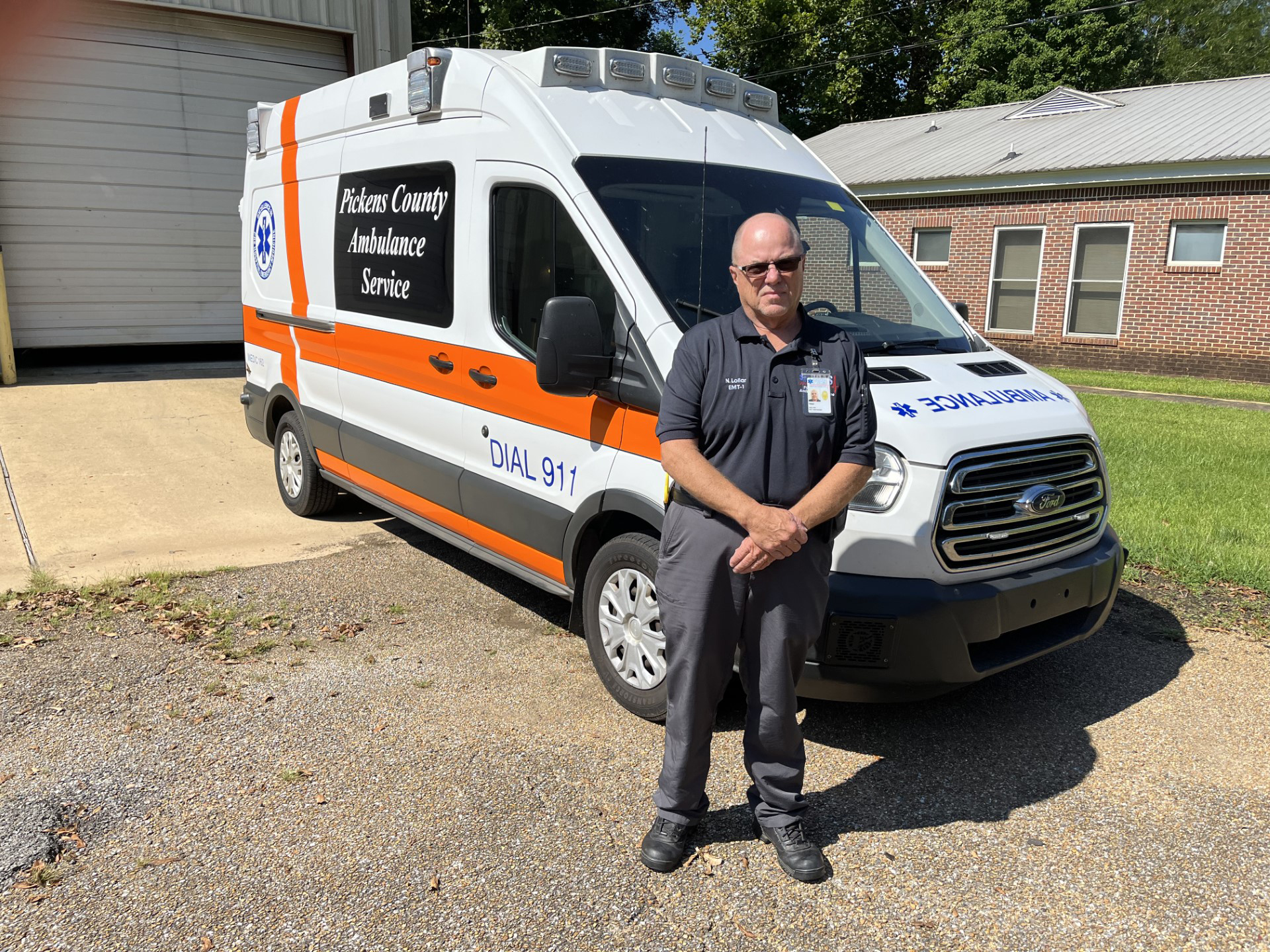


In rural areas where hospitals have shuttered, like Pickens County, the nearest surviving facilities are long drives away, ambulance coverage is sparse and residents in the throes of medical emergencies often find their situations even more precarious.