
Tuesday, November 10, 2026Nov 10

The ancient ways of natural wine are finding new fans

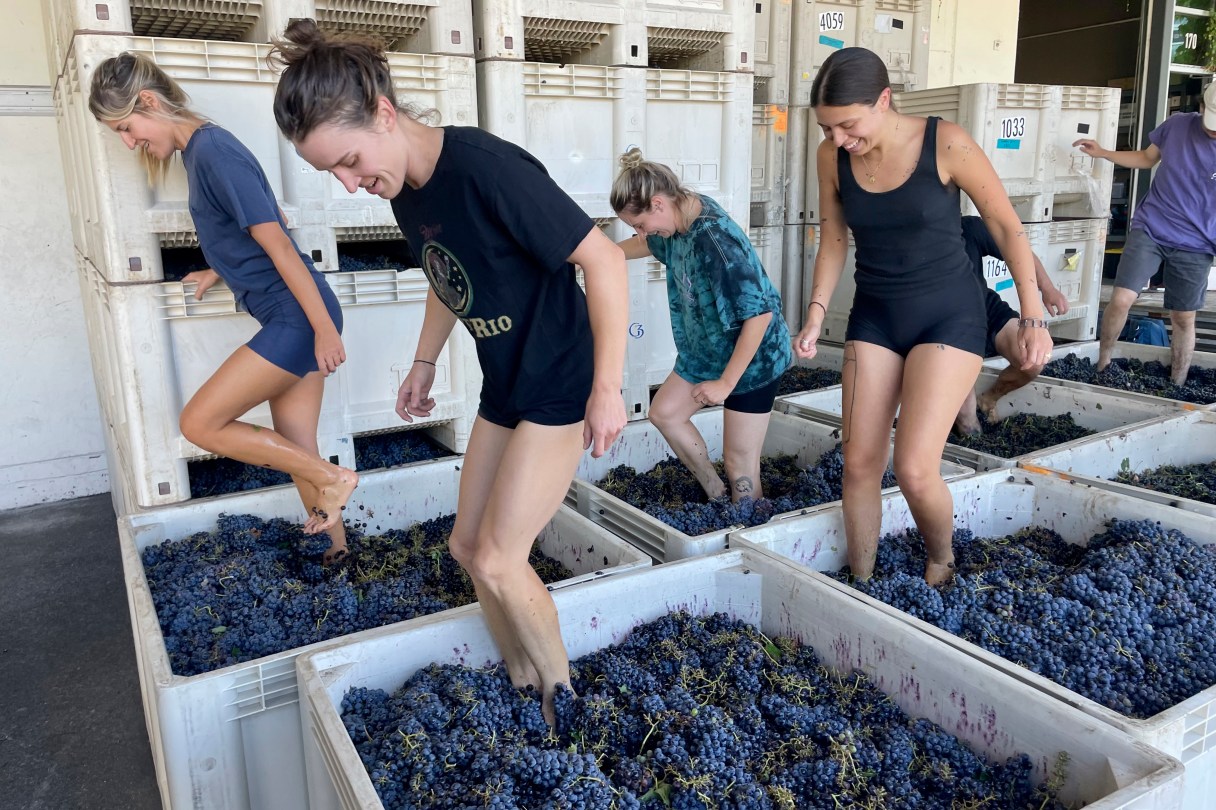
Interns at Pax Wines in Sebastopol, Calif., stomp organic grapes with their bare feet in large vats, pulling out the juice to start the fermentation process on Sept. 8, 2023. More wineries and wine bars dedicated exclusively to natural wine are opening in the U.S., with a focus on a back-to-basics approach, avoiding additives, pesticides and other manipulative techniques. (AP Photo/Haven Daley)
Interns at Pax Wines in Sebastopol, Calif., stomp organic grapes with their bare feet in large vats, pulling out the juice to start the fermentation process on Sept. 8, 2023. More wineries and wine bars dedicated exclusively to natural wine are opening in the U.S., with a focus on a back-to-basics approach, avoiding additives, pesticides and other manipulative techniques. (AP Photo/Haven Daley) Interns at Pax Wines in Sebastopol, Calif., stomp organic grapes with their bare feet in large vats, pulling out the juice to start the fermentation process on Sept. 8, 2023. More wineries and wine bars dedicated exclusively to natural wine are opening in the U.S., with a focus on a back-to-basics approach, avoiding additives, pesticides and other manipulative techniques. (AP Photo/Haven Daley)

SONOMA, Calif. (AP) — Wine made in ancient ways is gaining new fans.

Natural wine — which emphasizes sustainability and minimal processing — is seeing growing interest in the U.S even though overall wine consumption has been declining since 2015, according to IWSR Drinks Market Analysis, a research firm. While natural and other sustainable wines made up less than 1% of sales in 2021, demand was rising faster than the wine category as a whole, according to alcohol delivery site Drizly.

Generally, natural wine is made with hand-picked organic grapes that haven’t been sprayed with herbicides or pesticides. Once they’re crushed — sometimes by foot, the way they were crushed by ancient Romans — they are naturally fermented with no added water, yeast or other ingredients. Some natural winemakers add sulfites, a chemical found naturally in grapes, as a preservative; others don’t. Some filter their wines; others leave them cloudy and full of sediment.

The result is wines that are earthy, savory and less predictable than many of the wines churned out by big producers.

“The first time you taste it, you can tell it’s alive,” said John Keller, the owner and winemaker at Neu Cellars in Northern Michigan.