
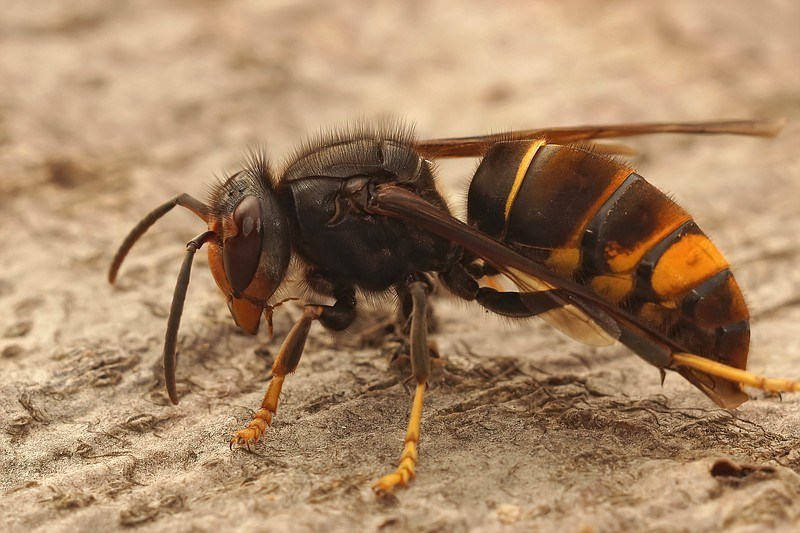
A tiny menace has been buzzing around Georgia’s coastal region and is trying to snatch up the state’s honeybees, but a team of scientists and state and federal employees are working to prevent the dangerous and disrespectful yellow-legged hornet from gaining a foothold in the Peach state.
The hornet, which can grow to about an inch long, was previously known as the Asian hornet. Two nests have so far been discovered near Savannah and destroyed by Georgia agriculture department staff and pest management professionals.
Adult yellow-legged hornets are vegans, living mostly off of sugars through nectar, but when they are young, they crave protein, and for that purpose, the adults have taken to hunting honeybees.
“Both the yellow-legged hornet and the giant hornet are somewhat unusual in that unlike most other wasps and hornets, which are kind of solitary hunters but all from one nest, the yellow-legged hornet and the northern giant hornet will both recruit their sisters once they’ve found the honeybee colony to go as a group and attack it, essentially,” said Lewis J. Bartlett, a professor at the University of Georgia’s College of Agricultural and Environmental Sciences Entomology Department.
(READ MORE: Chattanooga researcher says Joro spider could stretch population into Southern Canada)