
A bipartisan bill designed to update sex education curriculum for Georgia’s public school students faced skepticism in a House subcommittee last week amid questions of which side in the culture war can better educate youngsters on the birds and the bees.
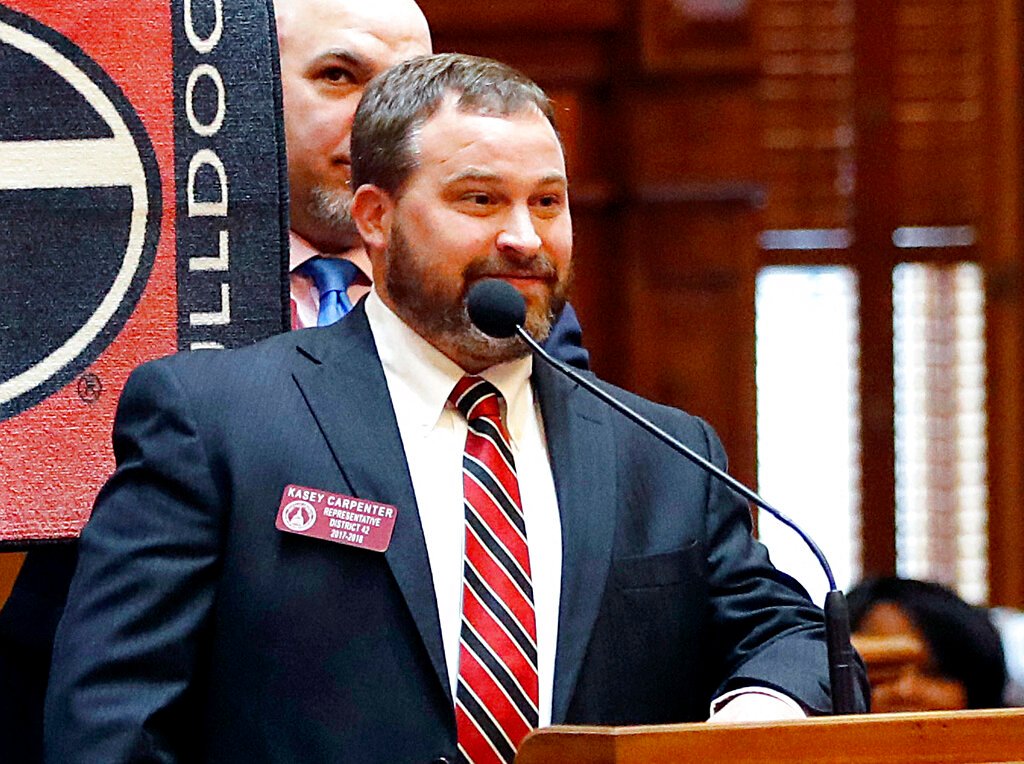
Dalton Republican Rep. Kasey Carpenter’s House Bill 822 adds language to state code requiring the sex education curricula created by Georgia’s local boards of education and the state Board of Education to be “age-appropriate and medically accurate” and to include the concept of consent. It also updates language about AIDS to include HIV, the virus that causes AIDS.
“Abstinence is still going to be discussed in sex education. That’s the best way, there’s no question about it,” Carpenter said. “It’s the best and the safest way for children not to experience any of the difficulties in this arena.”
“But I will tell you that 90% of people aren’t abstinent before marriage, and they do have sex,” he added. “And so we can continue to dig our head in the sand as a state and say let’s focus on this because it’s the best way when 90% of us, including a lot of Christians, are not following that path. And so I think it’s important to get real with kids, because they’re either gonna learn it in a nice controlled environment at school where locals will have some control over it, or they’re going to learn about it on their cellphone.”
(READ MORE: Chattanooga conference tackles local, state policies affecting women)
Keri Hill, a representative for the Georgia Campaign for Adolescent Power & Potential, a group that supports comprehensive sex education, said Georgia’s youngest students need basic lessons in consent to keep them safe and to prepare them for when they get older.
“Consent is included in the bill because it is incomplete to address sexual assault and sexual awareness education without discussing consent,” she said. “And a consent discussion in elementary grades, it includes information like how to identify a trusted adult, how to be a good friend and discussions on medically accurate words for body parts to give children the language they would need if they needed to report someone is harming them or touching them inappropriately.”
Buford Republican Rep. David Clark did not seem convinced.
“It has potential, a huge potential to shift it more to consent talk, which I think in the end could encourage more sex with these young kids,” he said. “What examples can you provide how the abstinence-based sex has failed to teach kids healthy boundaries?”
Carpenter pointed to data showing that 57% of teenagers have had sex.
“We try to attack stuff like this with the idea that everybody’s going home, and they got two parents that want to sit out and talk to them about that, and that’s just not the reality of the world that we live in,” he said. “I wish it was 1950 and everybody had two parents at home and everything was great and we wouldn’t have problems, but we got problems.”
(READ MORE: Stricter state laws are chipping away at sex education in K-12 schools)
Locust Grove Republican Rep. Lauren Daniel said that to some, “medically accurate” is not as neutral as it sounds.
“I think on the surface that sounds wonderful,” she said.
But she pointed to a 2023 law signed by Gov. Brian Kemp blocking hormone therapy for transgender minors. Hundreds of medical providers and organizations called the bill unnecessary and harmful for transgender youth.
Carpenter said that should not be a concern because local school boards will still be responsible for shaping curriculum.
“I think that piece is, to me, protected in that local piece, where the locals are involved in the conversation that says, ‘Well that guy says it’s medically accurate, but he’s not a real doctor, he’s a fake doctor,'” Carpenter said. “But I do think the input from the doctors are important. And you know, if it’s medically accurate for you when you go to your OB-GYN to have these conversations, then why should we not be presenting that same information to the kids in school?”
(READ MORE: A decades-long drop in teen births is slowing, and advocates worry a reversal is coming)
Daniel, who campaigned on her personal story of overcoming adversity as a former teenage mother, argued that parents should be the ones who decide what is presented to children, and many Georgia parents do not trust those who would likely decide what is age-appropriate or medically accurate.
“I think that teaching kids what’s appropriate and what’s not is important, and as a teen mom, I recognize that kids are going to do what they’re going to do in high school,” she said. “However, at the end of the day, I do believe that parents have the ultimate say of what is age-appropriate for their kids, and I think when we bring in different organizations that may or may not agree with the parents what is age appropriate — because we’re seeing that all over in books and some other areas — but what we historically believe is age appropriate isn’t what’s being taught in schools sometimes, and so I just want to caution you.”
Carpenter’s bill was not scheduled for a vote. Feb. 29 is crossover day, the last day for bills to pass from one chamber to the other.
Read more at GeorgiaRecorder.com.
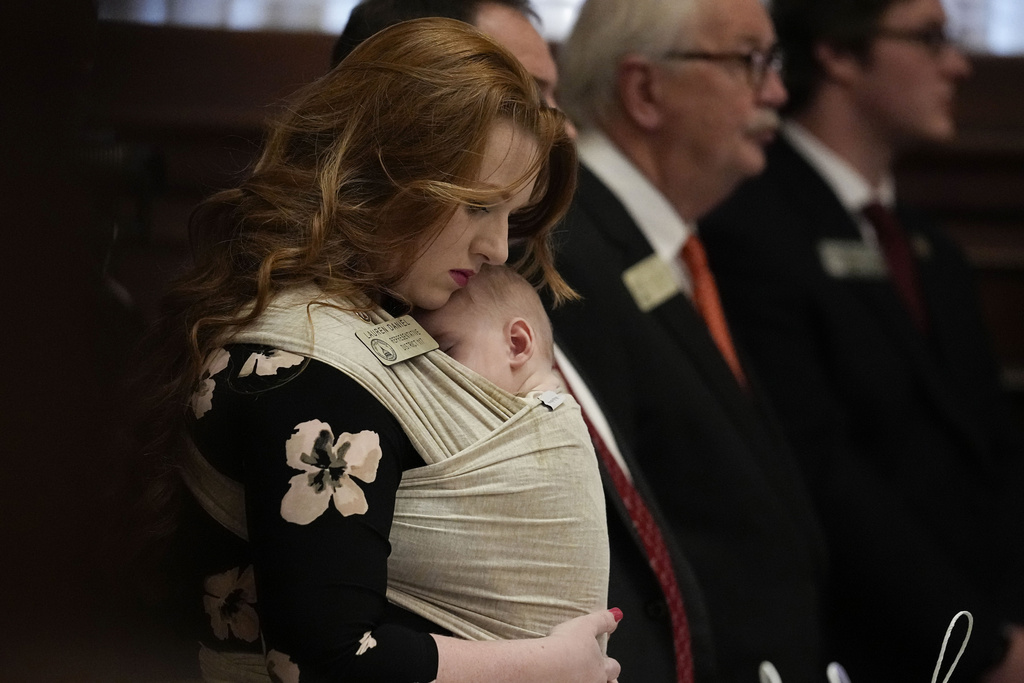 Rep. Lauren Daniel, R-Locust Grove, holds her sleeping baby during opening day of the Georgia General Assembly on Jan. 8 in Atlanta. During a subcommittee discussion last week, Daniel expressed skepticism at a new bill on sex education. (AP Photo/Brynn Anderson)